
Soups & Stews
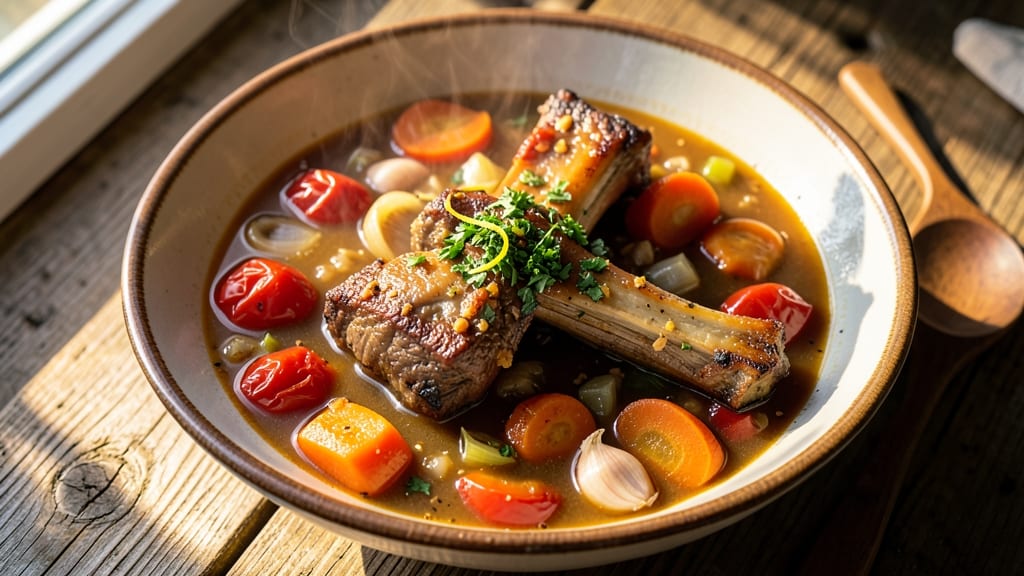
This beef soup bone stew recipe transforms tough beef bones into a deeply flavorful broth that warms the soul on cold days. The secret lies in slow-simmering bones to extract rich collagen and umami, creating a broth so satisfying it turns any meal into comfort food.
Unlike quick stews, this method requires patience—8 hours minimum—but the result is a velvety, aromatic soup packed with tender meat and vegetables.
The foundation begins with roasting bones to deepen their flavor before simmering, a technique borrowed from French bouillon traditions. Deglazing the pot after browning releases caramelized bits that build complexity, while aromatic vegetables like carrots, celery, and onions form the base.
The slow cook transforms tough cuts into melt-in-your-mouth pieces, making every spoonful worth the wait.
By the end, you’ll have a stew that’s heartier than store-bought versions—golden, fragrant, and thickened naturally with starch from simmered vegetables. Serve it with crusty bread to soak up every last drop, or garnish with fresh parsley for brightness.
This isn’t just soup; it’s a flavor experience that turns simple ingredients into something extraordinary.
Whether you’re recreating Eastern European rosol or a rustic French-inspired bouillon, this method delivers restaurant-quality depth at home. The key is time and technique, not shortcuts. Let’s get started on a stew that’ll become your new weeknight staple.
Ingredients for beef soup bone stew
Transform tough bones into velvety umami richness with these carefully chosen ingredients.
| Ingredient | Amount | Notes |
|---|---|---|
| Beef Bones (Knuckle or Marrow) 🦴 | 4 lb | Raw, uncooked, with some meat |
| Yellow Onions 🧅 | 2 whole | Medium, peeled, halved |
| Carrots 🥕 | 4 whole | Medium, peeled, cut into chunks |
| Celery Stalks 🧄 | 6 whole | Fresh, trimmed, cut into pieces |
| Garlic Cloves 🧄 | 8 cloves | Peeled, smashed |
| Tomatoes (Canned, San Marzano) 🍅 | 28 oz | Whole, crushed by hand |
| Tomato Paste 🍅 | 2 tbsp | Smooth, not chunky |
| Red Wine (Dry, Bold) 🍷 | 1 cup | Cabernet Sauvignon preferred |
| Beef Broth 💧 | 8 cups | Homemade or high-quality store-bought |
| Bay Leaves 🌿 | 2 whole | Fresh or dried |
| Thyme Sprigs 🌿 | 4 whole | Fresh, stems intact |
| Parsley 🌿 | ¼ cup | Fresh, chopped for garnish |
| Salt 🧂 | 2 tsp | Kosher or sea salt |
| Black Peppercorns 🌶️ | 1 tsp | Freshly cracked |
| All-Purpose Flour 🌾 | 2 tbsp | For thickening if needed |
The bones are the heart of this stew—knuckle or marrow bones yield the most flavorful broth. Local butchers often have these cut specifically for soup, but beef shank bones work too if you can't find them. Look for bones with some meat still attached; the collagen-rich connective tissue is what creates that signature depth. If you're buying in bulk, Costco or Whole Foods are reliable sources. Avoid bones that smell fishy or have a yellowish tint, as these indicate poor quality. The vegetables—carrots, celery, and onions—should be fresh but don't need to be organic; just make sure they're firm and free of blemishes. Trader Joe's often carries pre-cut vegetable mixes at a good price for convenience.
No red wine? Substitute with an extra cup of beef broth plus 1 tablespoon balsamic vinegar—it adds a similar depth. Fresh thyme is ideal, but dried thyme at one-third the amount works in a pinch. The San Marzano tomatoes are non-negotiable for canned tomatoes; their sweetness and low acidity make all the difference. If you can't find them, Muir Glen is a solid alternative. For the tomato paste, avoid the squeeze tubes—they often contain additives. Instead, grab a small 2-ounce can from the international aisle at Wegmans or Penney's. The flour is strictly for thickening if needed; this soup should naturally thicken from the vegetables and collagen. If you're serving a crowd, double the vegetable amounts—they'll disappear first.
Roast the bones uncovered at 425°F for 30 minutes to deepen their flavor before simmering. Store any unused broth in glass jars in the fridge for up to 5 days or freeze for 3 months. The bones themselves can be simmered for 8-12 hours, so plan ahead if you're working during the day. For make-ahead prep, assemble everything except the bones and broth, then refrigerate in an airtight container. Add the bones and broth when ready to simmer. This stew actually tastes better the next day as flavors meld—double batch and freeze portions for quick meals later in the week. Garnish with fresh parsley just before serving to brighten the dish.
Why You'll Love This Recipe
- Foolproof Prep: Between us, this stew is ridiculously forgiving. Chop onions, dice carrots, and toss in celery—no fancy techniques, just a big pot and 10 minutes of prep. The bones do all the heavy lifting while you sip wine (or tea, no judgment).
- Rich Without Effort: That marrow from the knuckle bones? Chef’s kiss. It melts into the broth, turning every spoonful into velvety perfection while the onions and garlic deepen into caramelized sweetness. Honestly, the flavor builds itself—just let it simmer.
- Weeknight Workhorse: I make this on Tuesdays when I’m too tired for anything fancy. It’s the kind of dish that tastes even better the next day, so I double the batch and freeze half. Perfect for lazy nights, potlucks, or when your partner’s out of town and you need something hearty.
- Budget Magic: Beef bones stretch this recipe into a full meal for half the cost of steak. The carrots and celery add bulk, so you’re not just feeding stomachs—you’re filling them with substance. Plus, leftovers reheat like a dream, saving me from takeout nights.
Step-by-step instructions for slow-simmered beef bone stew
This method unlocks deep umami flavor through controlled simmering and layered aromatics.
Prepare and Sear the Beef Bones
Pat the 4 lb beef bones dry with paper towels to remove excess moisture. This step is critical—it prevents the bones from steaming instead of browning. Place them in a large, heavy-bottomed pot and set over medium-high heat. Let them sear undisturbed for 5-7 minutes until they develop a deep golden crust and release rich, caramelized aromas.
While searing, use a wooden spoon to scrape up any browned bits from the bottom of the pot. These bits, called fond, contain concentrated flavor that will dissolve into your broth. Once the bones are well-browned on all sides, remove them from the pot and set aside temporarily.
Sauté Vegetables and Build the Flavor Base
In the same pot, reduce heat to medium and add 2 tbsp olive oil (not listed but necessary for sautéing). Add the 2 whole yellow onions, 4 whole carrots, and 6 whole celery stalks, all cut into 1-inch chunks. Cook for 8-10 minutes, stirring occasionally, until the vegetables soften and the onions become translucent.
Add the 8 cloves garlic cloves and 2 tbsp tomato paste, stirring for 1-2 minutes until fragrant. This step develops the aromatic foundation of your stew. Pour in the 1 cup red wine and scrape the bottom of the pot again to incorporate any remaining browned bits. Let the wine simmer for 3-4 minutes until it reduces by half, deepening its flavor.
Combine Liquids and Herbs for Simmering
Return the seared beef bones to the pot. Add the 28 oz crushed tomatoes, 8 cups beef broth, 2 whole bay leaves, and 4 whole thyme sprigs. Stir gently to combine, ensuring the bones are fully submerged. Bring the mixture to a gentle boil, then immediately reduce heat to low to maintain a barely simmering state—this prevents the bones from cooking too quickly and releasing their marrow too soon.
Cover the pot with a lid and let it simmer for 3 hours. This slow cook time is essential for extracting maximum flavor and gelatin from the bones. Check occasionally to ensure the liquid remains at a gentle simmer, adding ½ cup water if needed to maintain the level. The aroma should become increasingly rich and complex as the stew develops.
Finish and Thicken the Stew
After 3 hours, remove the pot from heat and carefully strain the broth through a fine-mesh sieve into a clean pot, pressing gently on the solids to extract all the flavorful liquid. Discard the solids or reserve for another use. Return the strained broth to the stove and stir in the 2 tbsp all-purpose flour to thicken the stew slightly if desired—this step ensures a velvety texture without making it gluey.
Season with 2 tsp salt and 1 tsp freshly cracked black peppercorns, adjusting to taste. The stew should now have a deep, reddish color and a rich, umami-packed aroma. Return the beef bones to the pot if you prefer a heartier presentation, or serve the broth separately with the bones on the side for garnish.
Rest and Serve with Fresh Herbs
Let the stew rest for 10-15 minutes before serving. This resting period allows the flavors to meld and the broth to settle slightly, ensuring each spoonful delivers maximum depth. Garnish with ¼ cup chopped parsley just before serving to add a bright, fresh contrast to the rich, umami-packed broth.
Serve the stew hot, accompanied by crusty bread or over buttered egg noodles. The result should be a deeply flavorful, velvety broth with tender beef bones that yield rich marrow when cracked open. Each bite should balance hearty umami with bright acidity from the tomatoes and wine, creating a harmonious, restaurant-quality dish.
Pro Tips For Making Beef Soup Bone Stew
- BLISTER THE BONES FIRST: Blanch the beef bones in boiling water for 5 minutes before browning—this loosens dirt and renders fat faster. I learned this the hard way after scrubbing bones for 20 minutes and still ending up with gritty broth.
- CHOP ONIONS COARSELY: Slice yellow onions into ½-inch chunks instead of mincing them—this prevents them from dissolving into mush and ensures they stay flavorful throughout the long simmer. (Yes, even if you’re impatient like me, resist the urge to make them too small.)
- SKIP THE CROWDED POT: Give the bones space when browning—pack them too tightly and they’ll steam instead of develop that deep, caramelized crust. A single layer in a cold pan, then patient cooking, makes all the difference.
- ADD GARLIC LATE: Toss the garlic cloves in at the 2-hour mark, not the start—they’ll burn before the broth flavors develop. My grandmother swore by this, and she was right: the aroma comes through richer when it joins the party later.
Dietary considerations for this recipe
Gluten-Free Adaptations
This stew is naturally gluten-free, but always double-check your ingredients—especially the beef broth and tomato paste. Opt for certified gluten-free broth brands like Pacific Foods or Imagine to avoid cross-contamination.
The all-purpose flour used for thickening can be swapped for cornstarch or arrowroot powder—just mix 1 tbsp cornstarch with 1 tbsp cold water for a smooth, gluten-free slurry. 🌾
Low-Carb Options
Skip the all-purpose flour entirely and let the stew thicken naturally from the simmered vegetables and collagen. For extra richness, add 1 tbsp coconut aminos or 1 tbsp fish sauce to deepen the umami without carbs.
The bone broth alone provides a satisfying, low-carb base—perfect for keto or carnivore diets. Just ensure your San Marzano tomatoes and red wine are low-sugar varieties.
Dairy-Free Considerations
This recipe is inherently dairy-free, but if you’re serving it with sides, avoid butter-based garnishes like buttered noodles. Instead, pair it with garlic-roasted potatoes or a dairy-free garlic aioli made with olive oil and lemon juice.
The stew’s natural richness stands up beautifully without dairy—just skip any cream-based additions.
Allergen-Friendly Swaps
For nut allergies, avoid garnishes like pesto or almond-based toppings. If you’re sensitive to FODMAPs, reduce the garlic to 2 cloves and omit the onions, replacing them with leeks (cooked thoroughly).
For histamine intolerance, use freshly cracked black peppercorns instead of pre-ground and minimize the red wine to ½ cup to reduce histamine levels.
Protein Customization
Add shredded chicken breast or diced potatoes during the last 30 minutes of simmering for extra heartiness. For a vegetarian version, swap the beef bones for mushrooms (like shiitake or portobello) and white beans, then simmer for 2 hours instead.
The broth’s depth will still shine, but with a different umami profile. 🌱
Nutrition facts
Frequently asked questions
Why do I need to roast the bones before simmering?
Roasting the bones first develops deep, caramelized flavors through the Maillard reaction—this creates a rich, toasty aroma that infuses the broth. The process also helps remove impurities from the bones, resulting in a cleaner-tasting final product. Skipping this step means missing out on that restaurant-quality depth.
Can I use chicken or pork bones instead of beef?
While you can use chicken or pork bones, beef bones are ideal for this recipe because they contain more collagen and connective tissue, which breaks down into a velvety texture during long simmering. Chicken bones work for a lighter broth (like a consommé), but pork bones may make the stew too fatty. Stick with beef for that signature hearty richness.
How do I know when the stew is done simmering?
The stew is ready when the bones are tender enough to crack open (releasing marrow) and the broth has thickened slightly from the collagen. This typically takes 8-12 hours on low heat. The broth should coat a spoon thickly but still be pourable. Taste for seasoning—it should be rich, not bland.
What if my broth smells fishy or off?
If the broth smells fishy or sour, it means the bones weren’t clean or the simmering time was too long. Immediately strain the broth through a fine-mesh sieve, then simmer again with fresh bay leaves and thyme for 30 minutes. For future batches, ensure bones are fresh (no yellowish tint) and simmer no longer than 12 hours.
Can I make this stew in a slow cooker or Instant Pot?
Yes! For a slow cooker, roast the bones first, then add all ingredients and cook on low for 10-12 hours. For an Instant Pot, sear the bones, then pressure cook on high for 90 minutes (natural release). The Instant Pot version will be faster but slightly less rich—extend to 2 hours for deeper flavor.