
Soups & Stews
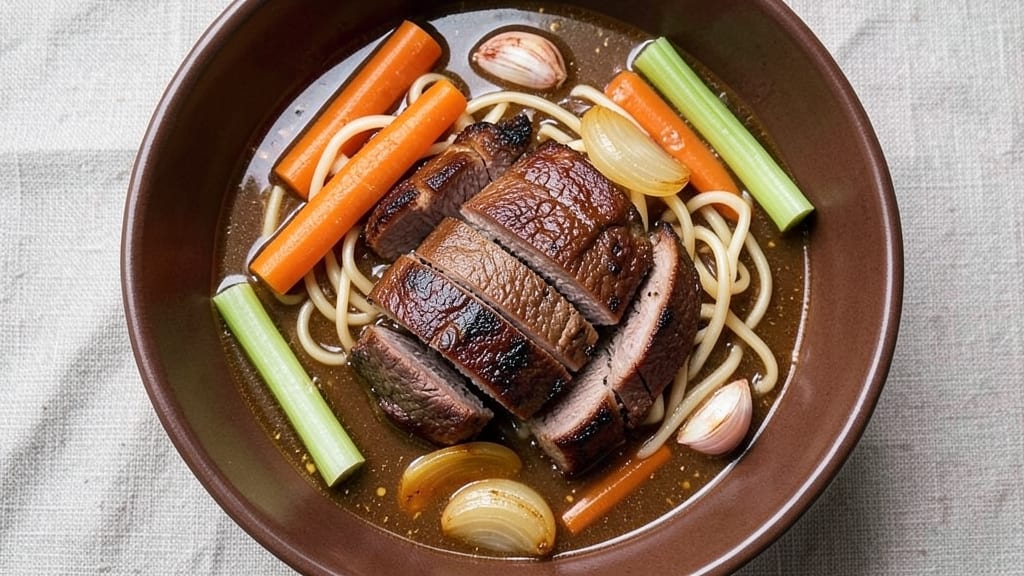
This beef stew noodle soup recipe delivers a hearty one-pot meal that transforms tough cuts of beef into melt-in-your-mouth tenderness while keeping the broth rich and flavorful. The secret lies in slow simmering aromatic vegetables and spices until they develop deep, complex flavors—no shortcuts, just time-tested technique.
What makes this recipe special is the celery crown crunch, a crispy garnish that adds texture and visual appeal without overpowering the dish.
The foundation begins with searing chuck roast in batches to create a flavorful crust, then deglazing the pan to capture every savory bit. Aromatic vegetables like carrots, onions, and celery form the base, while bay leaves, thyme, and black pepper build layers of warmth.
The broth reduces slowly, concentrating flavors into a velvety consistency that coats every noodle perfectly. This isn't just soup—it's a restaurant-quality experience in a single pot.
By the time you're ready to serve, you'll have tender beef that shreds easily, perfectly cooked egg noodles floating in a rich, aromatic broth, and those crispy celery crowns adding a delightful crunch.
The balance of textures and flavors makes this more than just a meal—it's comfort food at its finest, perfect for chilly evenings or when you need a nourishing dish that feels like a hug. The one-pot method ensures minimal cleanup while delivering maximum satisfaction.
This recipe scales beautifully for families or gatherings, and leftovers reheat just as well the next day. Whether you're feeding a crowd or treating yourself to a cozy dinner, this beef stew noodle soup will become a staple in your rotation. Let's get started on creating this hearty, flavorful masterpiece.
Ingredients for beef stew noodle soup
Here's what you need for this restaurant-quality beef stew noodle soup that simmers into rich perfection.
| Ingredient | Amount | Notes |
|---|---|---|
| Chuck Roast 🥩 | 2 lb | Pre-cubed for even cooking |
| Yellow Onions 🧅 | 2 whole | Medium size, chopped |
| Carrots 🥕 | 4 medium | Whole, peeled and sliced |
| Celery Stalks 🧄 | 3 whole | For broth and crowns |
| Garlic Cloves 🧄 | 6 cloves | Minced for depth of flavor |
| Egg Noodles 🍜 | 12 oz | Medium width preferred |
| Tomato Paste 🍅 | 2 tbsp | For richness and color |
| Red Wine 🍷 | 1 cup | Bold dry variety preferred |
| Beef Broth 💧 | 6 cups | Homemade or high-quality |
| Bay Leaves 🌿 | 2 whole | For aromatic depth |
| Fresh Thyme 🌿 | 1 tbsp | Leaves only, chopped |
| Black Peppercorns 🌶️ | 1 tsp | Freshly cracked |
| Salt 🧂 | 1 ½ tsp | Kosher or sea salt |
| Olive Oil 🫒 | 2 tbsp | For searing beef |
| All-Purpose Flour 🌾 | 1 tbsp | For celery crown coating |
The chuck roast is your flavor anchor—look for well-marbled cuts at Costco or your butcher shop. Pre-cubing saves time, but if you're buying whole, ask for 2-inch chunks. The celery crowns are the star garnish, so grab fresh, crisp stalks—avoid those wilted ones in the back of the produce section. For the tomato paste, Trader Joe's squeeze tubes are perfect—they last months and make measuring a breeze. The egg noodles should be medium-width; Barilla or De Cecco are my go-tos for that perfect al dente texture.
No red wine? Beef broth with a splash of balsamic works just as well. Fresh thyme is ideal, but dried thyme at one-third the amount gets you close. If you're short on celery, swap in leeks or fennel for the broth. The tomato paste can be skipped entirely if you're worried about acidity—just add an extra pinch of salt. For the celery crowns, use Panko breadcrumbs if you don't have flour on hand. And if your beef broth isn't homemade, Knox or Pacific Foods are the best store-bought options for that deep umami flavor.
This soup tastes even better the next day—honestly, the flavors meld into something magical after a night in the fridge. Store in an airtight container for up to 5 days, or freeze portions for 3 months. I always make a double batch because it reheats beautifully. For the celery crowns, fry them fresh right before serving so they stay crispy. The noodles can be cooked ahead and added back to the pot when reheating—just toss in a splash of broth to loosen them up.
Why You'll Love This Recipe
- Slow-Simmer Magic: I swear by the chuck roast—it gets fork-tender while I’m scrolling through my phone. The secret’s letting it melt for hours, turning tough meat into something so rich, you’ll forget to stir.
- Garlic Bomb Flavor: Crisp those garlic cloves until they’re golden, then toss them into the broth. That nutty, toasty depth? It’s the kind of flavor that makes people pause mid-bite and go, “What’s in this?”
- Leftovers That Save Me: This soup only gets better the next day. I make a double batch on Sundays, and by Wednesday, the fridge is my personal hero—no takeout, no stress, just warm bowls of comfort.
- Budget-Friendly Feast: Chuck roast stretches to feed four (or five if someone’s extra hungry), and the veggies? They’re the kind that don’t judge if you buy the slightly bruised ones. Big flavor, tiny cost.
Step-by-step instructions for beef stew noodle soup
This hearty one-pot wonder delivers rich, tender beef and crisp celery crowns in every bowl.
Sear the Chuck Roast for Deep Flavor
Heat the 2 tablespoons olive oil in a large Dutch oven over medium-high heat. Pat the 2 lb chuck roast dry with paper towels—this ensures a good sear. Working in batches if needed, brown the beef on all sides for 8-10 minutes total, until deeply caramelized and releasing from the pan easily. You're building flavor here, so don't rush.
Once browned, remove the beef and set it aside. Real talk: if the pan gets too crowded, the beef will steam instead of sear. That's why I always work in batches when needed. The goal is that golden crust that packs so much flavor into every bite.
Build the Aromatic Base
In the same Dutch oven, add the chopped 2 whole yellow onions, sliced 4 medium carrots, and 3 whole celery stalks. Cook for 8-10 minutes until softened and the vegetables begin to caramelize. Stir occasionally to prevent burning—this is where the sweet, deep flavors develop.
Add the 6 minced garlic cloves and cook for 30 seconds until fragrant. Here's the thing—don't let the garlic burn. It turns bitter fast, and you'll taste it in every spoonful. Now stir in the 2 tablespoons tomato paste and cook for 1 minute to remove its raw taste. This paste adds richness and that classic stew color.
Deglaze and Simmer the Broth
Pour in the 1 cup red wine, scraping up any browned bits from the bottom of the pot with a wooden spoon. Let it simmer for 3-4 minutes until reduced by half. This step concentrates the flavors and removes the alcohol. Add the 6 cups beef broth, 2 whole bay leaves, 1 tablespoon chopped fresh thyme, 1 teaspoon cracked black peppercorns, and 1.5 teaspoons salt. Return the beef to the pot.
Bring to a boil, then reduce heat to low, cover partially, and simmer for 2-2.5 hours. You want the beef to become fork-tender—it should fall apart easily when pierced with a fork. I know it seems like a long time, but this slow cooking transforms tough beef into melt-in-your-mouth goodness. Don't peek or stir too often; it keeps the meat tender and the broth clear.
Prepare the Celery Crowns
While the stew simmers, prepare the celery crowns for their crisp finish. Cut the 3 whole celery stalks into 1-inch pieces, leaving the leafy tops intact. Toss them in 1 tablespoon all-purpose flour to coat lightly. This creates a crispy texture that contrasts beautifully with the tender beef and noodles.
In a separate skillet, heat 1 tablespoon olive oil over medium heat. Add the floured celery crowns and fry for 3-4 minutes until golden and crispy. They'll look like little edible flowers—worth the effort! Remove and set aside on paper towels to drain excess oil. These crispy crowns add texture and visual appeal that makes this soup special.
Finish with Noodles and Serve
When the beef is tender, add the 12 oz egg noodles directly to the stew pot. Stir gently and simmer uncovered for 8-10 minutes until the noodles are al dente. The noodles will absorb some of the broth, so you might need to add ½ cup water if it gets too thick. Taste and adjust seasoning—you might need a little more salt or pepper.
Ladle the hot soup into bowls, topping each serving with 2-3 crispy celery crowns. The contrast of the tender beef, hearty noodles, and crispy celery crowns in every spoonful is what makes this soup extraordinary. Serve immediately while the celery crowns are still crisp and the broth is steaming hot—this is comfort food at its finest.
Pro Tips For Making Beef Stew Noodle Soup
- Sear the Chuck Roast: Don’t just toss that chuck roast in the pot raw—get it deep brown in a hot pan first. After patting it dry (yes, even if it’s cold), sear it on all sides with 1 tablespoon of oil until it releases a crust. I used to skip this, and the stew always tasted like it needed more depth—turns out, that crust locks in flavor when it braises.
- Slice the Onions Thin: Those yellow onions? Cut them paper-thin and in even strips—no big chunks. They’ll soften faster and distribute flavor evenly without turning to mush. I learned this the hard way when my first batch had a few stubborn, chewy slices that ruined the texture. A sharp knife and steady hand make this easier than you’d think.
- Deglaze with Beer (or Broth): After browning the meat, don’t just add water—scrape up those fond bits with a splash of beer (or beef broth) right away. It’s the difference between a rich, caramelized base and a bland one. I was skeptical until I tried it—I now keep a cold beer handy just for this.
- Add Noodles Last: Cook the noodles separately in the hot broth at the very end, or they’ll turn to glue. If you’re short on time, use pre-cooked noodles (like ramen or udon) and just warm them through. The stew will still be flavorful, and your noodles won’t turn into a sad, mushy mess. Trust me, I’ve seen it happen.
Essential equipment for great beef stew noodle soup
Dutch Oven Essentials
The Dutch oven is my non-negotiable tool for this recipe—its thick walls and tight lid create the perfect environment for even heat distribution and slow simmering. I swear by the Lodge 5.5-quart cast iron Dutch oven for its durability and heat retention, though any 5-7 quart capacity will work.
If you don't have cast iron, a heavy-duty enameled Dutch oven like Le Creuset works beautifully for easier cleanup. 🔥
Searing Pan Must-Haves
For that critical first step of searing the beef, you'll need a large, heavy skillet that can handle high heat without warping. My go-to is a 12-inch cast iron skillet (like Lodge or Victoria) for its ability to maintain even heat.
If you prefer stainless steel, a 10-12 inch All-Clad or Calphalon pan works well—just be prepared to monitor heat more closely. A meat thermometer is essential here—I recommend the Thermoworks Smoke for accuracy.
Broth and Liquid Tools
Measuring broth accurately is key, so grab a liquid measuring cup with clear markings. For the wine reduction, a small saucepan (like a 3-quart stainless steel saucepan) works perfectly for deglazing.
I also keep a wooden spoon handy for scraping up those flavorful browned bits from the pot—this is where the magic happens! A fine-mesh strainer comes in handy if you prefer a smoother broth texture. 💧
Noodle Prep Gear
For perfect egg noodles every time, I use a colander with large holes to drain them properly after cooking. A tongs makes stirring the noodles into the broth easier without breaking them.
If you're making the celery crowns ahead, a small baking sheet lined with parchment paper helps keep them crispy while cooling. And trust me, a sharp chef's knife (like Wüsthof or Shun) makes chopping the celery and onions a breeze—safety first!
Crispy Celery Crown Kit
Creating those crispy celery crowns requires a small frying pan (8-10 inches) for even cooking. I use a non-stick skillet for easier cleanup, but a well-seasoned cast iron works too. A slotted spoon helps remove the crowns without losing the oil.
For coating, a small bowl and whisk make mixing the flour with the celery pieces effortless. Pro tip: Keep a paper towel-lined plate nearby to drain excess oil immediately after frying. ✨
Optional Upgrades
If you want to take your stew to the next level, consider a meat grinder for perfectly shaped beef chunks or an instant-read thermometer to monitor the beef's internal temperature. For presentation, a ladle with a long handle makes serving easier, especially when topping with celery crowns.
And if you're making this often, a large spoon rest keeps your utensils organized while cooking. The right tools make all the difference in this comforting dish! 💡
Nutrition facts
Frequently asked questions
Can I use a different cut of beef instead of chuck roast?
While chuck roast is ideal for its marbling and flavor, you can substitute with brisket or stew meat (like short ribs). For leaner cuts like sirloin, marinate it first in 1 tbsp soy sauce + 1 tbsp Worcestershire for 30 minutes to prevent drying out. Avoid tender cuts like filet mignon—they'll turn mushy during long simmering.
How can I make this soup gluten-free?
Swap the egg noodles for gluten-free pasta (like brown rice or quinoa noodles) and use gluten-free flour for the celery crowns. Check your beef broth label too—many contain wheat. For extra richness, add ½ cup coconut milk at the end. The flavor remains just as hearty!
Why did my beef turn out tough instead of tender?
This usually happens from one of three issues: not enough simmering time (aim for 2.5+ hoursovercrowding the pan during searing, or adding noodles too early. The beef should be fork-tender before adding noodles. For next time, sear in batches and let the broth reduce uncovered for 10 minutes before adding noodles.
Can I prepare this ahead of time?
Yes! Make the stew 1-2 days ahead—it tastes even better as flavors meld. Store in an airtight container in the fridge. Reheat gently on low heat, adding ½ cup water if needed. Cook noodles fresh when reheating (they absorb too much broth when pre-cooked). The celery crowns should be fried fresh before serving to maintain crispness.
What if I don't have red wine?
No problem! Use 1 cup beef broth + 1 tbsp balsamic vinegar for depth, or 1 cup apple cider for subtle sweetness. For a non-alcoholic option, try 1 cup tomato juice + 1 tsp soy sauce. The key is acidity and richness—just ensure you deglaze properly to build flavor.