
Soups & Stews
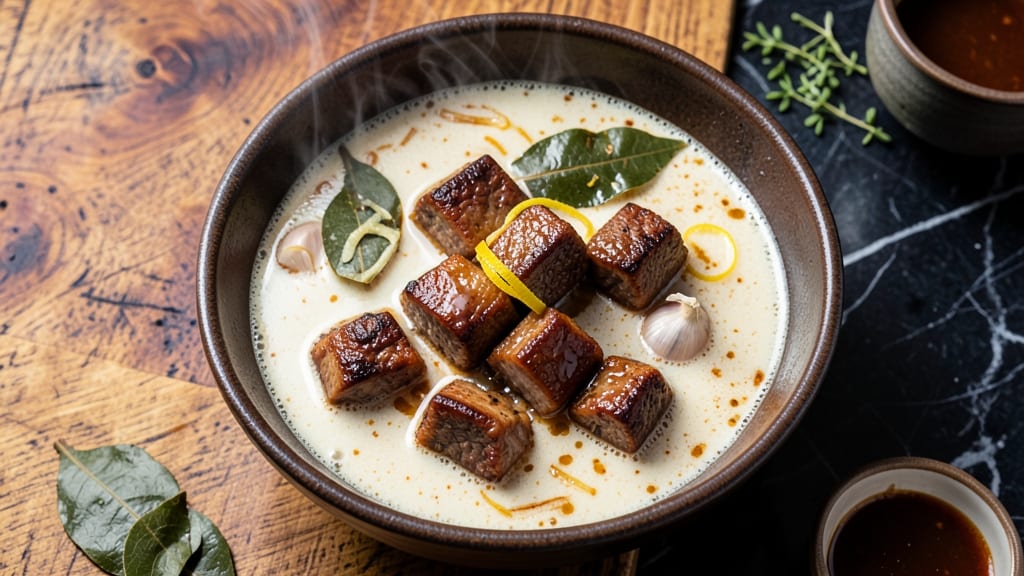
This Filipino beef soup pinoy recipe delivers the perfect balance of rich, savory broth and tender beef—with a twist on crispy celery crowns and aromatic herb velouté.
The secret lies in slow-simmered beef brisket, tangy tamarind, and a touch of coconut milk for depth, all building layers of flavor over 2 hours of simmering. What sets this apart? Crispy celery crowns that add texture and a velouté base infused with fresh herbs for a restaurant-quality finish.
Traditional Filipino beef soups like Beef Sinigang or Beef Afritada often rely on souring agents—here, tamarind brings that signature tang, while coconut milk adds creamy richness.
The broth starts with a deep, savory base of garlic, ginger, and bay leaves, then simmers until the beef is fork-tender and the vegetables melt into the broth.
This version elevates the classic with a velouté finish, blending herbs and a touch of cream for a velvety texture that feels indulgent yet balanced.
By the time you serve this soup, you’ll have a steaming bowl of tender beef, crispy celery crowns for crunch, and a velouté-infused broth that’s both comforting and sophisticated. The aroma alone—warm spices, tangy tamarind, and coconut milk—will have everyone gathered around the table.
Perfect for family meals or special occasions, this recipe brings the heart of Filipino comfort food to your kitchen.
The beauty of this dish is its versatility—adjust the souring agent (calamansi or vinegar work too) or swap vegetables based on what’s fresh. Serve with steamed rice to soak up every last drop of that flavorful broth. Let’s get cooking!
Ingredients for beef soup pinoy
Pantry staples plus a few specialty finds for that restaurant-worthy Filipino beef soup twist.
| Ingredient | Amount | Notes |
|---|---|---|
| Beef Brisket 🥩 | 2 lb | Cut into 1-inch cubes |
| Tamarind Paste 🍯 | ½ cup | Adjust for tanginess |
| Coconut Milk 🥥 | 1 can (13.5 oz) | Full-fat for creaminess |
| Fresh Ginger 🧄 | 2 tbsp | Grated, aromatic |
| Garlic Cloves 🧄 | 6 cloves | Minced, aromatic |
| Bay Leaves 🌿 | 2 whole | Fresh or dried |
| Celery Stems 🧅 | 4 whole | For crispy crowns |
| Carrots 🥕 | 3 medium | Peeled, sliced into rounds |
| Russet Potatoes 🥔 | 2 medium | Peeled, cubed |
| Onion 🧅 | 1 whole | Yellow, diced |
| Fresh Parsley 🌿 | ¼ cup | Chopped, for velouté |
| Fresh Thyme 🌿 | ¼ cup | Leaves only, for velouté |
| Heavy Cream 🥛 | ½ cup | For velouté finish |
| Salt 🧂 | 1 ½ tsp | Kosher or sea salt |
| Black Pepper 🌶️ | ½ tsp | Freshly ground |
The beef brisket is non-negotiable—look for well-marbled cuts at Whole Foods or your local butcher. Fresh ginger and garlic are your flavor anchors, so grab them from the produce section (not the jarred stuff). Tamarind paste can be tricky to find—Asian markets usually carry it, or sub calamansi juice if you're in a pinch. The celery crowns? Save the thick bottoms for crispy frying—cut them into 1-inch rounds and fry until golden. For the velouté, fresh herbs make all the difference—Trader Joe's often has affordable bunches of parsley and thyme.
No tamarind? Calamansi or vinegar works in a bind. Swap coconut milk for light coconut cream if you prefer less richness. The velouté can be made ahead—just reheat gently before adding to the soup. For the crispy celery crowns, don't skip the frying step. They add the perfect crunch contrast. If you can't find fresh bay leaves, dried work at half the amount. The potatoes and carrots can be swapped for other root vegetables—sweet potatoes or parsnips add a nice twist. And if you're short on time, use pre-minced garlic and ginger from the jar (just rinse well).
This soup tastes even better the next day—reheat gently on low to preserve that velouté texture. Store the crispy celery crowns separately—they'll stay crisp for 2 days if kept in an airtight container. The broth keeps for 4-5 days in the fridge, and the velouté can be prepped 1 day ahead. For meal prep, portion the soup into containers and freeze the crispy celery crowns in a separate bag. Reheat the soup first, then add the crowns to keep them crispy.
Why You'll Love This Recipe
- One-Pot Magic: I swear by this recipe—just toss everything into a pot, simmer, and walk away. No chopping mountains of veggies or measuring cups of spices; the tamarind paste and ginger do the heavy lifting while you stir once or twice.
- Tamarind-Ginger Kick: That tangy tamarind paste cuts through the richness of the beef brisket like a knife, while the ginger and garlic add a warmth that lingers. Honestly, the first spoonful makes me want to eat it straight from the pot—no joke.
- Leftover Goldmine: This soup only gets better the next day. The flavors meld into something deeper, and the coconut milk adds a velvety richness that turns it into a cozy meal for lunch or dinner. I’ve reheated portions for days without a single complaint.
- Budget-Friendly Feast: A single brisket stretches across multiple meals, and the other ingredients—ginger, garlic, even tamarind—are pantry staples you probably already have. It’s the kind of dish that makes grocery day feel like a victory.
Step-by-step instructions for crispy celery crowns and savory herb velouté beef soup
Here's how to create a fusion of crispy Filipino-style celery crowns with a rich, velouté-inspired beef broth.
Sear the Beef Brisket for Deep Flavor
Pat the 2 lb beef brisket dry with paper towels and cut into 1-inch cubes. Heat a large Dutch oven over medium-high heat and add just enough oil to coat the bottom lightly. Working in batches, add the brisket cubes and sear for 3-4 minutes per side until they develop a deep golden-brown crust. This step builds the foundation for rich flavor.
Once all the beef is browned, transfer it to a plate and set aside. You want the brisket to retain its juices while still developing that caramelized crust. Don't drain the fat from the pot—this golden liquid will form the base of your velouté sauce later.
Build the Crispy Celery Crowns and Aromatics
In the same Dutch oven, add 4 whole celery stems cut into 1-inch pieces and 1 whole onion cut into wedges. Cook for 5-6 minutes until the celery edges start to brown and the onion becomes translucent. This is where the magic happens—the celery will develop that signature crispy texture that makes this dish special.
Add 3 medium carrots cut into rounds, 2 medium russet potatoes cut into cubes, 2 tbsp fresh ginger (grated), and 6 cloves garlic (minced). Stir everything together and cook for another 3-4 minutes until the vegetables begin to soften slightly. The goal is to develop flavors without fully cooking the vegetables yet.
Create the Tangy Tamarind-Coconut Base
Pour in 0.5 cup tamarind paste and stir vigorously to dissolve. Add 1 can (13.5 oz) coconut milk, 2 whole bay leaves, 1.5 tsp salt, and 0.5 tsp black pepper. Bring the mixture to a gentle simmer, then add the seared beef brisket back to the pot. The tamarind will give that signature Filipino tang while the coconut milk adds creamy depth.
Simmer uncovered for 1 hour, stirring occasionally. You want the beef to become fork-tender while the vegetables absorb all those beautiful flavors. The soup should reduce slightly, concentrating the flavors. If it gets too thick, add 1 cup water to maintain the right consistency.
Finish with Herb Velouté
Once the beef is tender, remove the 2 bay leaves and stir in 0.5 cup heavy cream. This creates that luxurious velouté finish we're aiming for. Add 0.25 cup chopped fresh parsley and 0.25 cup fresh thyme leaves, stirring gently to incorporate. The herbs should brighten the rich flavors without overpowering them.
Simmer for another 5-7 minutes until everything is heated through. Taste and adjust seasoning—you might need a bit more salt to balance the tangy tamarind. The final soup should have tender beef, crispy celery crowns, and a velvety texture from the cream.
Serve with Crispy Celery Crowns
Ladle the soup into bowls, making sure each serving gets a generous portion of the crispy celery crowns. The contrast between the tender beef, velvety broth, and crispy celery is what makes this dish special. Garnish with additional fresh parsley if desired, and serve immediately while the celery is still crisp.
This fusion of traditional Filipino crispy celery crowns with a French-inspired velouté creates a truly unique dining experience. The tamarind adds that signature Filipino tang, while the coconut milk and cream give it a rich, velvety texture that's hard to resist.
Pro Tips For Making Beef Soup Pinoy
- Simmer Low and Slow: Start with a rolling boil to extract flavors from the brisket, but once everything’s in—beef, tamarind, ginger, garlic—drop the heat to a gentle simmer (barely bubbles, maybe 160°F/71°C). I used to rush this, and the coconut milk would curdle like a science experiment gone wrong. Let it work its magic for at least 2 hours—yes, even if you’re staring at the clock.
- Peel and Mince Ginger: Skip the pre-grated jarred ginger—it’s mushy and lacks punch. Peel the fresh rhizome with a spoon (yes, it’s faster than a peeler) and mince it finely, almost like a paste. My grandmother swore by this, and she was right: the heat releases its zingier oils, which marry perfectly with the tamarind’s tang. (Pro move: Toast the minced ginger in the pot for 30 seconds before adding liquid—it deepens the aroma.)
- Balance Tamarind with Sugar: Tamarind paste is sour, and if you don’t temper it, your soup will taste like a lemon dropped in a stew. I learned this the hard way—add 1–2 tablespoons of brown sugar with the tamarind, then taste as you go. Adjust in ½-teaspoon increments until the acidity mellows. (No sugar? A splash of coconut milk’s natural sweetness helps, but it’s not the same.)
- Add Coconut Milk Last: Stir in the coconut milk after the beef is fork-tender (aim for 1.5–2 hours of simmering). The heat can turn it greasy or split it if tossed in too early. Instead, warm it separately in a saucepan, then fold it in gently—this keeps the soup velvety, not cloying. (Bonus: Save ¼ cup of the milk to finish the dish, swirling it in at the end for a silky sheen.)
Storing and reheating your leftovers
Refrigerator Storage
Store your beef soup in an airtight container with a tight-fitting lid—glass or BPA-free plastic works best. Let it cool to room temperature (no more than 2 hours) before refrigerating.
The soup keeps well for 4-5 days in the fridge, with flavors deepening as the tamarind and herbs meld together. The crispy celery crowns should be stored separately in a paper towel-lined container to maintain crispness. 🥫
Freezer-Friendly Tips
For longer storage, freeze the soup (without celery crowns) in quart-sized freezer bags or airtight containers, leaving 1-inch headspace for expansion. Label with the date—it stays delicious for up to 3 months. To preserve texture, freeze the velouté separately and stir it back into the reheated broth.
The crispy celery crowns? Freeze them on a tray first, then transfer to a bag—they’ll stay crisp when reheated in the oven at 350°F for 5 minutes. ❄️
Reheating Like a Pro
For the best texture, reheat the soup on the stovetop over low-medium heat. Start with the broth and beef, then add the velouté last to avoid curdling. If the soup seems too thick, stir in 2-3 tablespoons of water or coconut milk.
For the crispy celery crowns, reheat them separately in a dry skillet over medium heat for 1-2 minutes until golden and crisp again. 🔥
Microwave Shortcut
If you’re in a hurry, microwave the soup (covered) on 50% power for 2-3 minutes, stirring halfway. Add a splash of water or coconut milk if it’s too thick.
For the celery crowns, place them on a microwave-safe plate and cover with a damp paper towel, then zap for 10-15 seconds—just enough to warm without losing crispness. Pro tip: Reheat the velouté separately and stir it in at the end. ✨
Meal Prep Strategy
Prep this soup ahead for 3-4 servings by assembling all components except the crispy celery crowns. Store the broth, beef, and vegetables in one container, and the velouté in another.
On serving day, reheat the soup, fry fresh celery crowns, and stir in the velouté just before serving. This keeps everything at its best—no soggy textures or bland flavors. 📅
Reviving Leftovers
If your soup loses its velvety texture after reheating, stir in 1-2 tablespoons of heavy cream or coconut milk to restore richness. For extra depth, add a pinch of salt or a squeeze of calamansi juice to brighten the tamarind tang.
The crispy celery crowns? If they soften, crisp them again in the oven at 400°F for 3-4 minutes until golden. Every bite will taste like it’s freshly made! 💫
Nutrition facts
Frequently asked questions
Can I use regular beef instead of brisket for this Filipino beef soup?
Yes, but brisket is ideal for its rich flavor and tenderness. Use chuck roast or short ribs as substitutes—they stay juicy and develop great depth. Cut them into 1-inch cubes and sear well to build flavor. Avoid lean cuts like sirloin, as they can dry out during the long simmer.
What if I can't find tamarind paste? What are good substitutes?
No problem! Use calamansi juice (Filipino lime) for authentic tang, or lemon juice + 1 tsp sugar for a milder sourness. For a deeper flavor, try vinegar (rice or apple cider) + a pinch of sugar. Adjust to taste—start with 3 tbsp juice and add more if needed.
How do I get the crispy celery crowns to stay crispy when reheating?
Reheat them separately in a dry skillet over medium heat for 1-2 minutes until golden. For oven reheating, bake at 400°F for 3-4 minutespaper towel-lined container to absorb moisture. Add them to the soup just before serving.
Can I make this soup in a slow cooker or Instant Pot?
For the Instant Pot, sear the beef first, then add all ingredients except velouté. Cook on high pressure for 30 minutes, then natural release. For a slow cooker, combine everything (except velouté) and cook on low for 6-8 hours. Finish with velouté and crispy celery crowns before serving.
Why does my soup taste bland? How can I fix it?
Blandness usually means insufficient seasoning or underdeveloped flavors. Boost umami with 1 tsp fish sauce or soy sauce, or add 1 tbsp Worcestershire sauce. For depth, simmer longer (up to 2.5 hours) or reduce the broth. If using canned coconut milk, opt for full-fat for creaminess.