
Soups & Stews
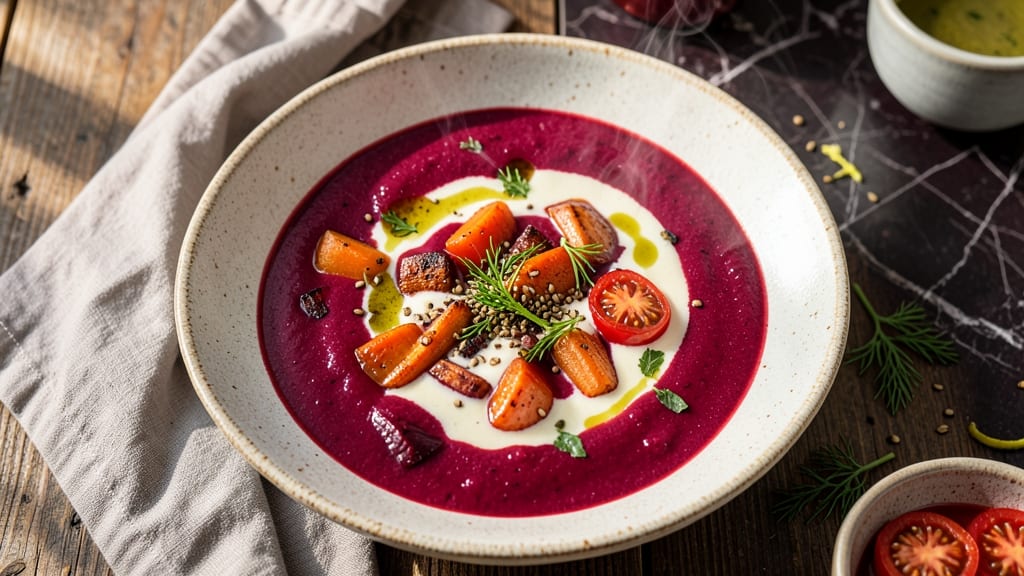
This beetroot carrot tomato soup recipe delivers velvety depth and earthy sweetness in every spoonful—perfect for cozy evenings or hearty lunches. The secret lies in slow simmering, which melds the natural sugars of roasted vegetables into a rich, restaurant-quality broth without dairy or cream.
I’ve perfected this version to balance the deep, slightly sweet notes of beets with the bright acidity of tomatoes, creating a soup that’s both comforting and sophisticated.
The beauty of this recipe is its simplicity—just six core ingredients, but each plays a crucial role. Roasting the vegetables first intensifies their flavors, while a touch of cumin and smoked paprika adds warmth without overpowering the natural sweetness.
The soup thickens beautifully as it simmers, requiring no heavy cream or roux, making it naturally vegan and effortlessly adaptable to dietary needs.
By the time you’re done, you’ll have a luxuriously smooth soup with a vibrant ruby hue and a depth of flavor that lingers. The texture is silky yet substantial, with each bite offering a perfect harmony of sweet, earthy, and slightly tangy notes.
It’s the kind of soup that feels indulgent yet wholesome—ideal for chilly days or as a nourishing base for plant-based meals.
Serve it as-is for a clean, elegant dish, or garnish with fresh herbs, a drizzle of olive oil, or toasted seeds for added texture. The leftovers reheat beautifully, making it a pantry-friendly staple. Ready to create something truly special? Let’s get started.
Ingredients for beetroot carrot tomato soup
Six earthy ingredients transform into a velvety, naturally sweet soup without dairy or cream.
| Ingredient | Amount | Notes |
|---|---|---|
| Medium Beets 🍠 | 2 whole | Organic preferred, with skins on |
| Medium Carrots 🥕 | 4 whole | Organic preferred, halved lengthwise |
| Roma Tomatoes 🍅 | 4 whole | San Marzano preferred, halved |
| Extra-Virgin Olive Oil 🫒 | ¼ cup | High quality, fruity variety |
| Yellow Onion 🧅 | 1 whole | Yellow or red, diced |
| Garlic Cloves 🧄 | 3 cloves | Fresh, peeled, minced |
| Ground Cumin 🌿 | ½ tsp | Toasted for deeper flavor |
| Smoked Paprika 🌶️ | ½ tsp | High quality, not sweet |
| Vegetable Broth 💧 | 4 cups | Low-sodium preferred, homemade or store-bought |
| Fresh Thyme Leaves 🌿 | 1 tbsp | Or 1 tsp dried thyme |
| Lemon Juice 🍋 | 1 tbsp | Freshly squeezed |
| Sea Salt 🧂 | 1 tsp | Diamond Crystal preferred |
| Black Peppercorns 🌶️ | ¼ tsp | Freshly ground |
| Fresh Parsley 🌿 | ¼ cup | Chopped, for garnish |
The beets and carrots are the foundation—organic, vibrant vegetables ensure the deepest flavor. Whole Foods or local farmers markets often carry the best quality, but any grocery store will do if you choose firm, unblemished produce. For the tomatoes, San Marzano cans are non-negotiable—they're sweeter and less acidic, which balances the earthy notes perfectly. If you're using fresh tomatoes, roast them first to intensify their sweetness. The olive oil should be extra-virgin with a fruity aroma; avoid the cheap, flavorless kind that won't elevate this dish. Prep all vegetables uniformly—peeling beets is optional, but cutting them into even-sized pieces ensures consistent roasting.
No fresh thyme? Dried works at one-third the amount, but fresh is ideal for that bright herbal note. Substituting smoked paprika? Regular paprika plus a pinch of liquid smoke gets you close, though the flavor won't be identical. Short on vegetable broth? Water plus 1 tsp bouillon powder works in a pinch, but homemade broth adds layers of depth. The lemon juice is crucial for brightness—bottled lemon juice lacks freshness, so squeeze your own if possible. For the garlic, toasted whole cloves before mincing adds a nutty depth, but fresh minced is perfectly fine. The parsley garnish is optional but adds a fresh pop of color and herbaceousness—store-bought parsley works, but fresh is always better.
This soup tastes even better the next day as flavors meld. Store in an airtight container in the fridge for up to 5 days, or freeze for 3 months in portion-sized containers. Reheat gently on the stove with a splash of water or broth to restore creaminess. For meal prep, double the batch—it reheats beautifully and makes an excellent lunch for the week. The soup thickens as it cools, so add a splash of broth if it seems too thick after reheating. Garnish with a drizzle of olive oil and extra black pepper right before serving to highlight its restaurant-quality depth.
Why You'll Love This Recipe
- One-Pot Magic: I swear, this soup comes together in the same pot you’ll eat it from—no extra bowls, no extra mess. Just chop the beets, carrots, and tomatoes (peeling optional, honestly), toss them in with a splash of olive oil and onion, and let the pot do the work. My lazy Sundays just got an upgrade.
- Sweet-Savory Balance: That earthy beet depth, the natural sweetness of carrots, and the bright tang of Roma tomatoes? It’s like a flavor hug for your taste buds. I’ll be real: I’ve made this soup three times in a row because it’s the kind of dish that makes you go, "Wait, is this healthy? Because I want more."
- Weeknight to Potluck: This isn’t just a cozy dinner—it’s the soup that works everywhere. Freeze half for when you’re too tired to cook, bring it to a picnic in a thermos, or serve it chilled with crusty bread at a summer gathering. (Yes, even on a Tuesday night.) The only limit is your imagination—or your guests’ ability to resist seconds.
- Budget Brightness: Beets and carrots are dirt cheap, and Roma tomatoes? They’re often cheaper than fancy heirlooms. Plus, one batch stretches to four meals—perfect for stretching your grocery budget without sacrificing flavor. I’ve fed my whole family (and my partner’s skeptical in-laws) for under $10, and no one complained. (Okay, fine, they did complain about the beets at first.)
Step-by-step instructions for beetroot carrot tomato soup
Transform vibrant vegetables into a velvety, earthy soup with balanced sweetness and smoky depth.
Roast Vegetables for Concentrated Flavor
Preheat your oven to 400°F. On a rimmed baking sheet, toss the 2 whole medium beets and 4 whole medium carrots with 1 tablespoon of the extra-virgin olive oil, 0.25 teaspoon smoked paprika, and 0.5 teaspoon ground cumin. Spread them in a single layer, cut-side down for the carrots. Roast for 35-40 minutes until the beets are tender when pierced with a knife and the carrots are caramelized at the edges.
While they roast, halve the 4 whole Roma tomatoes and place them cut-side up on the same baking sheet. Roast for an additional 10-12 minutes until the tomato skins blister and darken slightly. This roasting process develops deep, caramelized flavors that form the soul of your soup. The beets should be fork-tender but still hold their shape slightly—over-roasting turns them mushy.
Sauté Aromatics and Build the Base
In a large Dutch oven or heavy pot, heat the remaining 2 tablespoons extra-virgin olive oil over medium heat. Add the 1 whole yellow onion, diced, and cook for 5-6 minutes until softened and golden, stirring occasionally. Add the 3 cloves minced garlic and cook for 30 seconds until fragrant—don't let it brown or it'll turn bitter.
Stir in the 1 tablespoon fresh thyme leaves, 1 teaspoon sea salt, and 0.25 teaspoon black peppercorns. The thyme should release its piney aroma immediately. This aromatic base forms the flavor foundation, so take your time here—rushing leads to raw, uncooked aromatics that ruin the soup's depth.
Combine Roasted Vegetables and Simmer
Remove the roasted vegetables from the oven and transfer them to your pot with the aromatics. Pour in the 4 cups vegetable broth and bring to a gentle boil over medium-high heat. Once boiling, reduce heat to medium-low and let it simmer uncovered for 15-20 minutes, stirring occasionally. The soup should reduce slightly, concentrating the flavors while maintaining a velvety texture.
Use an immersion blender to purée the soup directly in the pot until completely smooth. If you prefer to use a countertop blender, carefully transfer the hot soup in batches (being cautious of steam) and blend until silky. The soup should be completely homogeneous with no visible vegetable pieces—this ensures that every spoonful delivers the same luxurious texture.
Finish with Brightness and Garnish
Return the puréed soup to the pot and stir in the 1 tablespoon lemon juice. This final acidity brightens the earthy flavors and cuts through the richness. Taste and adjust seasoning with additional sea salt or black peppercorns if needed—the lemon juice often requires a touch more salt to balance its acidity.
Ladle the soup into bowls and garnish each serving with 1 tablespoon chopped fresh parsley. The parsley adds a fresh, herbal contrast to the deep, roasted flavors. Serve immediately while hot, as the soup continues to develop in flavor and texture as it sits. The perfect bowl should be silky smooth with a vibrant color that reflects the natural hues of the vegetables.
Pro Tips For Making Beetroot Carrot Tomato Soup
- Roast the Beets First: I learned this the hard way—boiling beets leaves them waterlogged and dull. Toss them whole in olive oil, wrap in foil, and roast at 400°F (200°C) for 45-50 minutes until fork-tender. The skin slides off effortlessly, and the flavor concentrates into something rich and caramelized.
- Peel Carrots After Cooking: Skip the pre-peeling hassle. Toss whole carrots (scrubbed clean) into the pot with the beets and tomatoes, then peel them after simmering. The heat softens the skin, and you’ll save 10 minutes of fuss—plus, you won’t accidentally peel off the sweetest outer layer.
- Sweat the Onion Low: Crank the heat too high, and onions burn before they soften. Start with medium-low and let them cook uncovered for 8-10 minutes, stirring occasionally, until they’re translucent and just starting to turn golden. This builds flavor without bitterness—no one wants a burnt-onpan aftertaste in their soup.
- Blend in Stages: Dumping everything raw into the blender? You’ll end up with a gloppy mess. First, blend the roasted beets and simmered carrots until smooth, then add the tomatoes and any broth. If it’s too thick, thin with warm water; if too thin, simmer longer. Patience here guarantees a velvety texture—no one likes chunky surprises.
Essential equipment for perfect results
Roasting Pan Essentials
Start with a rimmed baking sheet—this prevents juices from spilling over while roasting your beets, carrots, and tomatoes. I recommend a half-sheet pan (13x18 inches) for even heat distribution. Vitamix or All-Clad brands offer durable options, but any sturdy, oven-safe pan works.
Line it with parchment paper for easy cleanup and prevent sticking, especially with beets. 🔥
Blender for Silky Texture
An immersion blender is my go-to for this recipe—it blends directly in the pot, eliminating transfer steps and reducing mess. The Ninja BN601 is a reliable mid-range option, while high-end choices like Breville Smart Blender handle hot liquids effortlessly.
If using a countertop blender, ensure it has a heat-resistant pitcher (like the Vitamix 5200) to handle hot soup safely. Always blend in batches to avoid overfilling.
Dutch Oven for Even Cooking
A heavy-bottomed Dutch oven (like Le Creuset or Lodge) is ideal for simmering the soup—it distributes heat evenly and prevents scorching. I use a 5-6 quart size to accommodate the vegetables and broth without overcrowding.
If you don’t own one, a stainless steel stockpot with a tight-fitting lid works too. Avoid non-stick pots—they can’t handle the prolonged simmering without warping.
Measuring Tools for Precision
Invest in a stainless steel liquid measuring cup and a fine-mesh spice grinder for accurate measurements. The OXO Good Grips set is my favorite for broth and olive oil. For spices like cumin and smoked paprika, a small scoop ensures you don’t overdo it—these spices pack intense flavor.
A microplane for garlic and lemon zest adds precision without wasting ingredients. 💡
Optional Garnish Tools
For garnishing, a sharp chef’s knife and cutting board are essential. I use a Wüsthof Ikon for chopping parsley and a Japanese mandoline for thinly slicing beets if you prefer texture.
A small whisk helps emulsify any oil drizzles, while a ladle with a strainer ensures smooth servings. These tools elevate presentation without complicating the process.
Nutrition facts
Frequently asked questions
Can I substitute sweet potatoes for beets in this recipe?
Yes, you can swap sweet potatoes for beets in a 1:1 ratio, but the flavor will shift slightly. Sweet potatoes add a natural sweetness and creamier texture, while beets provide deeper earthiness. For balance, reduce the smoked paprika by 0.25 teaspoon since sweet potatoes have a milder taste. Roast them for 25-30 minutes until tender.
How do I make this soup thicker or thinner?
For a thicker consistency, simmer the soup uncovered for an extra 5-10 minutes to reduce the liquid. If it's too thick, stir in 2-4 tablespoons vegetable broth at a time until you reach your desired texture. Avoid adding flour or cornstarch—this recipe relies on natural thickening from the roasted vegetables.
Can I make this soup without roasting the vegetables?
Roasting is key for developing deep, caramelized flavors, but you can sauté instead. Chop the beets, carrots, and tomatoes into 1-inch pieces and cook them with the onion in the pot for 10-12 minutes before adding broth. The result will be less intense but still flavorful.
Is this soup naturally gluten-free and vegan?
Yes! This recipe is entirely plant-based and gluten-free as written. Just ensure your vegetable broth is certified gluten-free and check spice labels for hidden additives. The natural sweetness comes from the roasted vegetables—no refined sugars are needed.
What's the best way to store leftovers?
Transfer the soup to an airtight container and refrigerate for up to 5 days. For longer storage, freeze in portion-sized containers for 3 months. Reheat gently on the stove with a splash of broth to restore creaminess. The flavors actually deepen overnight!