
Soups & Stews
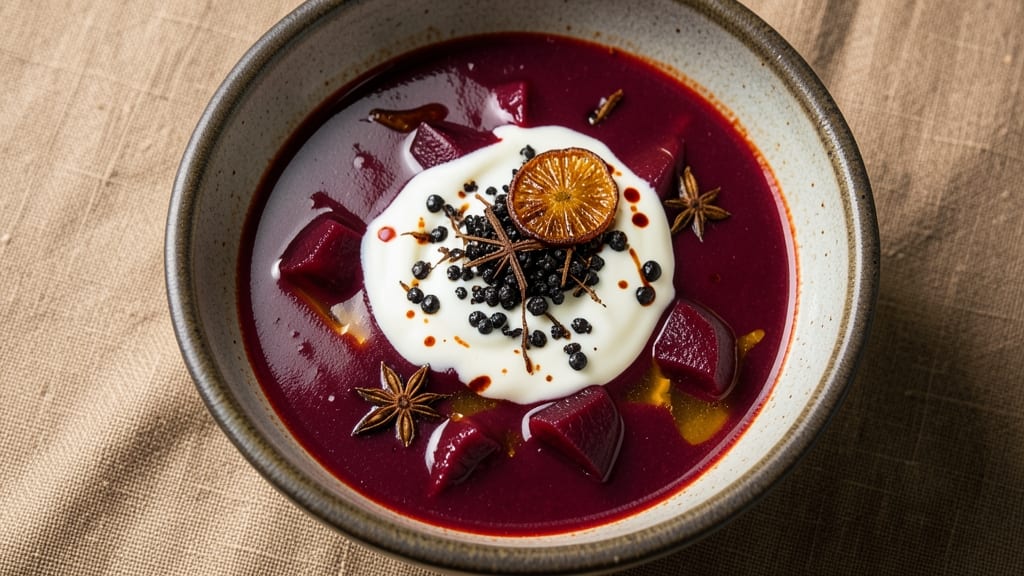
This vegan beetroot Chinese soup transforms humble beets into a fragrant, warming bowl of comfort with star anise and ginger—classic Chinese spices that elevate earthy flavors to new heights.
The secret lies in slow-simmering the beets until tender, then blending them into a velvety broth infused with toasted spices that linger long after the first sip. I first discovered this recipe during a visit to a Shanghai teahouse, where the soup was served as both medicine and indulgence.
The beauty of this recipe is its balance—sweet beets meet spicy ginger, while star anise adds a subtle licorice depth that’s unmistakably Chinese. Unlike Western beet soups, this version skips dairy entirely, relying instead on coconut milk for creaminess and fermented black beans for umami richness.
The result is a soup that’s hearty enough for a main dish but light enough for lunch.
What you’ll end up with is a deep ruby-red soup with layers of flavor: earthy beets, bright ginger, aromatic star anise, and a touch of heat from chili oil. The texture is silky-smooth, with just enough body to coat a spoon.
Serve it steaming hot with a drizzle of chili oil, crushed peanuts, and fresh cilantro for contrast—each bite delivers warmth, complexity, and a taste of China’s culinary soul.
This soup isn’t just nourishing—it’s versatile. Double the batch for leftovers that reheat beautifully, or adjust the spice level to suit your taste. Pair it with steamed rice or crispy spring rolls for a complete meal.
The technique is simple, but the flavors are anything but ordinary. Let’s bring this Chinese-inspired beetroot soup to your table.
Ingredients for beetroot soup chinese
Sweet beets meet spicy ginger and star anise in this fragrant, warming vegan soup.
| Ingredient | Amount | Notes |
|---|---|---|
| Medium Beets 🍠 | 2 whole | Organic preferred, peeled and chopped |
| Fresh Ginger 🌿 | 2 tbsp | Grate finely for brightness |
| Star Anise 🌟 | 2 whole | Whole pods, lightly toasted |
| Fermented Black Beans 🫘 | ¼ cup | Rinsed, for umami depth |
| Coconut Milk 🥥 | 1 cup | Full-fat for creaminess |
| Vegetable Broth 💧 | 4 cups | Homemade or low-sodium |
| Sesame Oil 🫒 | 1 tbsp | Toasted for aroma |
| Chili Oil 🌶️ | 1 tbsp | For finishing heat |
| Crushed Peanuts 🥜 | ¼ cup | For garnish |
| Fresh Cilantro 🌿 | ¼ cup | Chopped, for freshness |
| Garlic Cloves 🧄 | 3 cloves | Minced for depth |
| White Rice Vinegar 🍶 | 1 tbsp | For brightness |
| Sea Salt 🧂 | 1 tsp | To taste |
| White Pepper 🌶️ | ¼ tsp | Freshly ground |
The star anise and ginger are non-negotiable here—whole pods of star anise give that unmistakable licorice depth, while freshly grated ginger adds brightness. Grab them at Asian markets if you can, but the regular grocery store works too. Look for organic beets if possible—they’re sweeter and less earthy. The fermented black beans? Trader Joe's has them pre-packaged, but any brand with visible black beans and fermented aroma is perfect. Toast the star anise lightly in a dry pan for 30 seconds first—trust me, it makes a difference.
No star anise? 1 tsp anise seeds or even a pinch of ground anise will work in a pinch. Short on ginger? Ginger powder at half the amount gets you close, but fresh is ideal. The coconut milk can be swapped for cashew cream if you're avoiding coconut, and the chili oil? Sriracha mixed with neutral oil does the trick. The peanuts and cilantro are purely for garnish, so skip them if you're in a rush—though they add that perfect crunch and freshness. For extra richness, stir in a splash of soy sauce at the end.
This soup tastes even better the next day—3-4 days in the fridge, actually. Freeze portions for up to 3 months if you're planning ahead. I always make a double batch because it disappears fast. Reheat gently on the stove, adding a splash of water or broth if it gets too thick. Serve it hot with steamed rice or crispy spring rolls for that full Chinese meal experience. The leftovers reheat beautifully, so this is perfect for meal prep.
Why You'll Love This Recipe
- No Chopping Chaos: I swear by this recipe because the beets just roast whole—peel and slice later. The ginger and star anise? Minimal prep, maximum flavor.
- Umami Bomb Combo: Fermented black beans and star anise give it that deep, savory punch—like a cozy hug in a bowl. The coconut milk smooths it out, but honestly? The beans steal the show.
- Leftover Goldmine: This soup only gets better the next day—thicker, richer, and still delicious. I make a double batch on Sundays because reheating it is my lazy-day secret weapon.
- Budget Bright Spot: Beets are cheap, fermented beans last forever, and coconut milk stretches far. It’s the kind of recipe that feels fancy but costs less than takeout. (Yes, even on a Tuesday night.)
Step-by-step instructions for beetroot Chinese soup
This vibrant soup blends earthy beets with aromatic star anise and ginger for a comforting, flavor-packed dish.
Toast the Aromatics and Prepare the Base
Heat a large pot over medium heat and add the 2 whole star anise and 2 tablespoons fresh ginger. Toast for 1-2 minutes until fragrant—you'll smell that warm, piney aroma from the star anise. This step unlocks their full flavor potential.
Add the 3 cloves garlic cloves and cook for another 30 seconds until just golden. Immediately pour in the 4 cups vegetable broth and bring to a gentle boil. Reduce heat to maintain a simmer—this keeps the flavors from becoming bitter.
Simmer the Beets and Fermented Black Beans
Add the 2 whole medium beets (peeled and chopped) and 0.25 cup fermented black beans to the simmering broth. Stir gently to combine. Let it cook uncovered for 20-25 minutes until the beets are fork-tender—you'll know they're done when they collapse easily under gentle pressure.
Taste the broth now. It should be developing a deep, earthy sweetness from the beets and a subtle funk from the fermented beans. If it needs more salt, add the 1 teaspoon sea salt now. The beets will absorb some of the liquid, so don't worry if the soup looks slightly thickened by the end.
Blend Until Silky Smooth
Use an immersion blender to purée the soup directly in the pot until completely smooth. If you prefer a chunkier texture, blend only half the soup. The result should be velvety with no visible beet pieces. This blending step creates that signature Chinese soup consistency—creamy yet light.
Return the pot to low heat and stir in the 1 cup coconut milk. Let it warm through for 2-3 minutes—just enough to meld the flavors without curdling the coconut milk. The soup should now have a rich, golden hue with a hint of creaminess from the coconut.
Finish with Bright and Spicy Touches
Remove the pot from heat and stir in the 1 tablespoon white rice vinegar and 0.25 teaspoon white pepper. The vinegar brightens the earthy flavors while the pepper adds a subtle warmth. Taste again and adjust seasoning if needed—this is where all the flavors come together.
For the final touch, drizzle in the 1 tablespoon sesame oil and 1 tablespoon chili oil. Swirl gently to distribute the oils throughout the soup. The sesame oil adds a nutty aroma, while the chili oil brings just the right amount of heat. Ladle into bowls and garnish with 0.25 cup crushed peanuts and 0.25 cup fresh cilantro for texture and freshness.
Pro Tips For Making Beetroot Soup Chinese
- ROAST THE BEETS FIRST: I learned this the hard way—raw beets in soup turn to mush and leave you with a watery mess. Roast them whole at 400°F (200°C) for 45-60 minutes until tender, then peel and chop. The caramelized flavor and concentrated sweetness make all the difference when blended into the broth.
- PEEL GINGER LIKE A PRO: Skip the knife and use a spoon instead. Slice the ginger root in half lengthwise, then scrape the flesh off with the back of a spoon—no peeling required. This removes the tough skin while keeping the fiery, aromatic bits intact for the soup’s depth.
- TOAST STAR ANISE: Don’t just toss those pods in cold. Lightly toast them in a dry pan over medium heat for 30 seconds until fragrant—this unlocks their aniseed aroma without bitterness. Crush them gently before adding to the broth; whole pods can linger like tiny, bitter surprises.
- RINSE FERMENTED BEANS: Those black beans pack serious umami, but they also bring a funky tang. Give them a quick rinse under cold water before adding to the soup—just enough to mellow the sharpness, not wash away the flavor. Trust me, you don’t want them overpowering the coconut milk’s creaminess.
Serving suggestions for leftovers
Garnish Like a Pro
Top your soup with crushed peanuts and fresh cilantro for that perfect Chinese restaurant finish. I always toast the peanuts lightly in a dry pan for 1-2 minutes until fragrant—this adds a nutty depth that balances the soup’s earthiness.
Sprinkle them generously over each bowl right before serving so they stay crisp. 🥜
Contrast with Crunch
For extra texture, add crispy fried shallots or toasted sesame seeds alongside the peanuts. I like to mix 1 tablespoon toasted sesame seeds with the peanuts for a double crunch.
These elements create a satisfying contrast against the smooth, creamy soup. Store-bought fried shallots work in a pinch if you’re short on time.
Heat Level Control
Adjust the chili oil to suit your spice tolerance. For mild heat, use ½ tablespoon—this still adds a subtle kick without overwhelming. If you love spice, go up to 2 tablespoons or even a drizzle of Lao Gan Ma chili crisp for that authentic Sichuan fire.
Always add the chili oil last so you can control the heat per serving. 🌶️
Pair with Perfect Sides
Serve this soup with steamed jasmine rice or mantou (Chinese steamed buns) to soak up every last drop. For a complete meal, add pan-fried dumplings or crispy spring rolls on the side. The contrast of warm soup with cool, crunchy sides is pure comfort food magic.
Beverage Pairings
Balance the soup’s richness with a jasmine green tea or a lightly chilled Chinese baijiu (like Moutai). For a non-alcoholic option, try a ginger-infused iced tea—it echoes the soup’s flavors while refreshing your palate. Avoid heavy wines; their tannins can clash with the coconut milk.
Leftovers Reinvented
Transform leftover soup into a beetroot noodle dish by tossing it with udon noodles and a sprinkle of toasted garlic. Or blend it into a creamy beetroot dip for spring rolls or veggie sticks. The flavors only get better as they meld over time—perfect for meal prep! ⏰
Nutrition facts
Frequently asked questions
Can I make this soup without star anise?
Yes! If you don’t have star anise, use 1 teaspoon anise seeds or ½ teaspoon ground anise for the same licorice-like depth. For a different but still aromatic profile, try ½ teaspoon cinnamon or a pinch of cardamom. The ginger and fermented beans will still provide that signature umami punch, so don’t skip them!
How do I make this soup extra creamy without coconut milk?
Blend ½ cup cooked cashews with the soup instead of coconut milk for a rich, dairy-free creaminess. For a lighter option, stir in 2 tablespoons tahini or 1 tablespoon nutritional yeast while warming the soup. The cashew method works best for a velvety texture, while tahini adds a nutty depth.
Why does my beetroot soup taste bitter?
Bitter flavors usually come from overcooking the beets or using too much broth. Simmer the beets for only 20-25 minutes (until fork-tender) and reduce the broth to 3 cups if needed. To fix bitterness, stir in 1 tablespoon maple syrup or ½ teaspoon vanilla extract to balance the earthy notes. Taste as you go—this soup should be sweet, spicy, and aromatic, not bitter!
Can I use canned beets instead of fresh?
Drain and rinse 1 (15 oz) can of beets, then chop them into small pieces. Since canned beets are pre-cooked, reduce the simmering time to 10-15 minutes to avoid mushiness. The texture will be slightly softer, but the sweetness remains. For extra depth, add ½ teaspoon beet powder (found in health stores) to mimic fresh beet intensity.
Is this soup spicy enough for Sichuan-style heat?
For authentic Sichuan fire, swap the chili oil for 1-2 tablespoons Lao Gan Ma chili crisp and add ½ teaspoon Sichuan peppercorns (toasted and crushed) to the initial aromatic toasting step. The chili crisp adds a smoky, numbing heat that’s unmistakably Sichuan. Start with 1 teaspoon and adjust to taste—this soup will pack a serious flavor punch!