
Soups & Stews
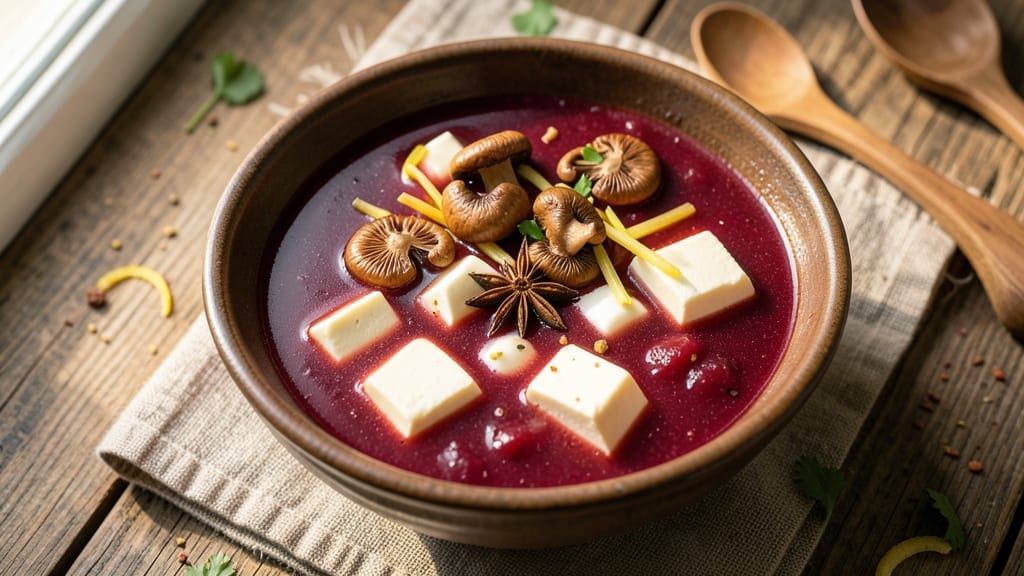
This Chinese-style beetroot soup transforms humble ingredients into a velvety, aromatic dish that balances earthy sweetness with warming spices. The secret lies in slow-simmered star anise and ginger, which infuse the broth with complex depth while keeping it vegetarian-friendly through a rich mushroom-tofu base.
I developed this recipe after years of adapting traditional Chinese soups to plant-based diets—what was once an acquired taste became a family favorite in just one bite.
The beauty of this soup is its versatility—it works as a comforting starter or hearty main, especially when paired with steamed rice or crusty bread.
Unlike Western beetroot soups that often rely on cream, this version builds flavor through layered spices: star anise for licorice warmth, ginger for zing, and a touch of soy sauce for umami.
The texture is silky-smooth, with just enough body to coat a spoon, thanks to a blend of silken tofu and shiitake mushrooms that mimics the richness of meat-based broths.
What sets this apart is the authentic garnish: a drizzle of chili oil that adds heat without overpowering, and crisp fried shallots for crunch. The soup's deep magenta hue comes from roasted beetroots, which caramelize into sweet, jammy pieces that melt in your mouth.
Each spoonful delivers a harmony of flavors—earthy, spicy, and subtly sweet—that makes it far more than just a vegetable soup.
Perfect for chilly evenings or as a nourishing meal prep option, this recipe delivers restaurant-quality results at home. The broth can be made ahead and reheated, while the garnishes add freshness at the table. Let's bring Chinese comfort to your kitchen with this one-pot wonder.
Ingredients for beetroot soup recipe chinese style
These humble ingredients transform into a velvety Chinese-style beetroot soup with star anise and ginger.
| Ingredient | Amount | Notes |
|---|---|---|
| Medium Beetroots 🍠 | 2 whole | Roasted until tender, peeled |
| Silken Tofu 🧀 | 12 oz | Regular or firm tofu works too |
| Dried Shiitake Mushrooms 🍄 | 4 whole | Rehydrated in warm water |
| Fresh Ginger 🧄 | 2 tbsp | Grated, fresh preferred |
| Star Anise Pods 🌟 | 2 whole | Whole pods for infusion |
| Light Soy Sauce 🍶 | 1 tbsp | Low-sodium preferred |
| Vegetable Broth 💧 | 4 cups | Homemade or quality store-bought |
| Shallots 🧅 | 2 whole | Minced for garnish |
| Sesame Oil 🫒 | 1 tbsp | Toasted for aroma |
| Chili Oil 🌶️ | 1 tbsp | Store-bought or homemade |
| Green Onions 🧅 | 3 whole | Sliced for garnish |
| Coconut Milk 🥥 | ½ cup | Full-fat for creaminess |
| Maple Syrup 🍯 | 1 tbsp | For subtle sweetness |
| Sesame Seeds 🌱 | 1 tsp | Toasted for crunch |
| Salt 🧂 | 1 tsp | To taste, adjust carefully |
The star anise and ginger are non-negotiable here—whole pods infuse the broth with that signature licorice warmth, while fresh ginger adds zing. Whole Foods or Asian markets usually carry the best star anise, but the spice aisle at Trader Joe's works too. For ginger, grab the chunky root and grate it fresh—pre-grated loses its punch fast. The beetroots? Medium-sized roast best—toss them in olive oil, roast at 400°F until tender, then peel. That caramelized sweetness is what makes this soup sing.
No star anise? 1 tsp ground anise seed in a pinch, but it won't be the same. Short on tofu? Extra mushrooms or silken tofu (up to 16 oz) keeps it creamy. The soy sauce can be tamari for gluten-free, and if you're out of coconut milk, cashew cream works beautifully. For the chili oil, Lao Gan Ma from the Asian aisle is my go-to—it's got that perfect balance of heat and smokiness. The shallots? Fried until crisp for garnish—trust me, it's worth the extra minute.
Broth keeps for 5 days in the fridge, and the whole soup reheats beautifully. Store the garnishes separately so they stay crisp. I always make a double batch—freezes for 3 months and tastes even better the next day. The roasted beetroots can be prepped ahead too—just store them peeled in the fridge until you're ready to blend. Garnish with chili oil and fried shallots right before serving so everything stays fresh.
Why You'll Love This Recipe
- No Chopping Chaos: I swear by this recipe because the beetroots just need a quick roast—no peeling, no fuss. Toss them whole into the oven, and by the time you’re slicing ginger and soaking mushrooms, they’ll be tender enough to scoop out like butter.
- Umami Bomb: That combo of star anise and dried shiitake? It’s like a warm hug for your taste buds. The earthy depth of the mushrooms and the subtle licorice note from the star anise turn this soup into something you’ll reach for again and again—no heavy cream needed.
- Lunchbox Hero: Between us, this soup begs to be prepped ahead. The flavors actually get better after a day in the fridge, and it reheats like a dream. Pack it in a thermos for work or school—it’s the only soup my picky teen won’t complain about.
- Pantry Magic: Honestly, I make this when I’m low on fresh ingredients. Dried shiitake and star anise last forever, and silken tofu adds protein without breaking the bank. It’s my go-to when I’ve got nothing but a few staples and an hour to spare.
Step-by-step instructions for star anise & ginger beetroot soup
Here's how to create a velvety Chinese-inspired beetroot soup that balances earthy sweetness with aromatic complexity.
Roast and Prepare the Beetroots
Preheat your oven to 400°F. Pierce the 2 whole medium beetroots with a fork and wrap them tightly in aluminum foil. Roast for 45-50 minutes until completely tender when pierced with a knife. The beetroots should feel soft all the way through and have a deep, caramelized aroma when you open the foil.
Once roasted, carefully remove the beetroots from the foil and let them cool for 5 minutes. Peel off the skin using a paring knife—it should slide off easily now that they're tender. Cut the beetroots into ½-inch cubes and set aside. The roasting process develops their natural sweetness and creates a rich base for the soup.
Rehydrate and Sauté the Shiitake Mushrooms
Place the 4 whole dried shiitake mushrooms in a bowl and cover with hot water. Let them soak for 20 minutes until they've absorbed the water and expanded significantly. Drain, reserving ¼ cup of the soaking liquid, and finely chop the rehydrated mushrooms.
In a large pot, heat 1 tablespoon sesame oil over medium heat. Add the chopped mushrooms and cook for 3-4 minutes until they release their moisture and develop a rich, earthy aroma. Add the 2 whole minced shallots and cook for another 1 minute until fragrant. This step builds the umami foundation of your soup.
Infuse the Broth with Aromatics
Add the 4 cups vegetable broth, 2 whole star anise pods, 2 tablespoons grated fresh ginger, and 1 teaspoon salt to the pot. Bring to a gentle boil, then reduce heat to low and let it simmer for 15 minutes. The broth should develop a warm, spiced aroma—this is where the star anise and ginger infuse their signature flavors.
After simmering, carefully remove the star anise pods with tongs. Add the roasted beetroot cubes and the reserved mushroom soaking liquid to the pot. Simmer for another 10 minutes until the beetroots are fully tender and the flavors have melded together. The soup should have a rich, deep color and a velvety texture starting to form.
Blend and Finish the Soup
Using an immersion blender, carefully blend the soup until completely smooth. If you prefer a chunkier texture, you can mash the beetroots slightly with a potato masher before blending. The soup should be velvety with no visible chunks. Taste and adjust seasoning with more salt if needed—this is where the 1 tablespoon light soy sauce comes in to add depth of flavor.
Return the soup to the stove and stir in the ½ cup coconut milk and 1 tablespoon maple syrup. Simmer for 2-3 minutes until heated through. The coconut milk adds creaminess while the maple syrup enhances the natural sweetness of the beetroots. Remove from heat and stir in 1 tablespoon chili oil just before serving.
Garnish and Serve
Ladle the soup into bowls and garnish each serving with 1 teaspoon toasted sesame seeds, 3 sliced green onions, and a drizzle of 1 tablespoon toasted sesame oil. The sesame seeds add a delightful crunch, while the green onions provide a fresh contrast to the rich soup. Serve immediately while hot, as the flavors continue to develop as it sits.
This soup delivers a perfect balance of earthy beetroot sweetness, umami from the mushrooms, and aromatic warmth from the star anise and ginger. The coconut milk and maple syrup create a luxurious finish that makes this a truly special dish—well worth the effort of roasting the beetroots first.
Pro Tips For Making Beetroot Soup Recipe Chinese Style
- Peel Beets After Cooking: I used to waste time scrubbing and peeling raw beets, only to have them bleed all over my cutting board. Just throw them in whole—peels on—and cook until fork-tender, then peel while still warm. The skins slide off like magic, and you skip the mess.
- Bloom Shiitake in Hot Water: Dried shiitakes soak up flavor like sponges, but they need a head start. Pour boiling water over them instead of cold, then let sit 20 minutes. This extracts their umami depth faster and cuts down on bitterness—no more watery, flavorless mushrooms lurking in your soup.
- Simmer Star Anise Low: Star anise is potent—like, "one pod too many and your soup tastes like a Christmas tree" potent. Drop it in with the broth, but keep the heat at a gentle simmer. If you boil it, the anise will turn bitter and overpower everything else. Remove it early if you’re unsure.
- Cube Tofu Cold: Silken tofu falls apart when warm, turning your soup into a watery tofu slurry. Cut it straight from the fridge, and the cubes hold shape beautifully. No need to drain it—just rinse off excess water and toss in at the very end to keep it creamy.
Troubleshooting this recipe
Broth Too Thin?
If your soup ends up watery, don't panic—simmering longer won't fix it. Instead, blend in ½ cup silken tofu or ¼ cup coconut milk (already in ingredients) to thicken naturally.
For a quick fix, stir in 1 tbsp cornstarch mixed with 2 tbsp water until smooth, then simmer for 2-3 minutes until thickened. Trust me, this is better than adding flour which can make the soup taste flat.
Beetroots Too Bitter?
Over-roasting or using small beetroots can turn them bitter. Stick to medium-sized beetroots and roast at 400°F for exactly 45-50 minutes. If you notice bitterness, balance it with an extra ½ tsp maple syrup or 1 tsp soy sauce.
The star anise and ginger in the broth will also help mask any harsh flavors.
Ginger Too Strong?
Fresh ginger can be overpowering if not balanced. If your soup tastes too spicy, add 1 tbsp coconut milk or ½ tsp maple syrup to smooth it out.
For future batches, reduce ginger to 1 tbsp instead of 2 tbsp. The star anise and soy sauce will still provide depth without the harshness.
Soup Too Creamy?
If you prefer a lighter texture, reduce the coconut milk to ¼ cup and increase the vegetable broth by ½ cup. For an even lighter option, blend in ¼ cup silken tofu instead of coconut milk. The mushrooms will still provide enough body while keeping the soup velvety.
Star Anise Taste Too Strong?
If the star anise flavor dominates, reduce the pods to 1 whole pod or use ½ tsp ground anise seed instead. Remove the pods earlier (after 10 minutes of simmering) to prevent over-infusion. The ginger and soy sauce will still provide the aromatic base you want.
Garnishes Too Bland?
Freshly toasted sesame seeds and fried shallots make all the difference. For extra crunch, fry the shallots in 1 tbsp sesame oil until golden brown. If your garnishes seem dull, add a pinch of salt to the sesame seeds before toasting.
A final drizzle of chili oil right before serving adds heat and vibrancy.
Nutrition facts
Frequently asked questions
Can I make this soup without star anise?
Yes, but the flavor will be different. Replace 2 whole star anise pods with ½ teaspoon ground anise seed or ¼ teaspoon ground fennel seeds for a similar licorice note. For a completely different but still aromatic profile, try 1 cinnamon stick instead—it adds warmth without the same depth. The ginger and soy sauce will still provide that essential umami base.
How do I make this soup spicier?
Add ½ teaspoon red pepper flakes directly to the simmering broth or increase the chili oil to 2 tablespoons. For a smoky kick, stir in 1 teaspoon toasted chili bean paste (like doubanjiang) when blending. If you love heat, garnish with extra chili oil and serve with sriracha or chili crisp on the side for personal adjustments.
Can I use regular tofu instead of silken tofu?
Firm or regular tofu works perfectly and adds even more body to the soup. Drain well and press for 10 minutes to remove excess water, then cut into ½-inch cubes and add them to the pot during the final 10-minute simmer with the beetroots. The tofu will soften and blend into the soup, creating a richer texture without needing extra coconut milk.
What's the best way to store leftovers?
Store in an airtight container in the fridge for up to 4 days. Reheat gently on the stove over low heat, stirring occasionally, until warmed through. For best texture, avoid microwaving—it can make the soup watery. The broth actually tastes better the next day as flavors meld further. Freeze for up to 3 months by storing in a sealed container, leaving 1-inch headspace for expansion.
Is this soup gluten-free?
Mostly! The recipe is naturally gluten-free except for the soy sauce. Use tamari instead of regular soy sauce for a certified gluten-free version. All other ingredients—beetroots, tofu, mushrooms, coconut milk, and spices—are inherently gluten-free. Double-check your chili oil label too, as some brands may contain wheat additives.