
Soups & Stews
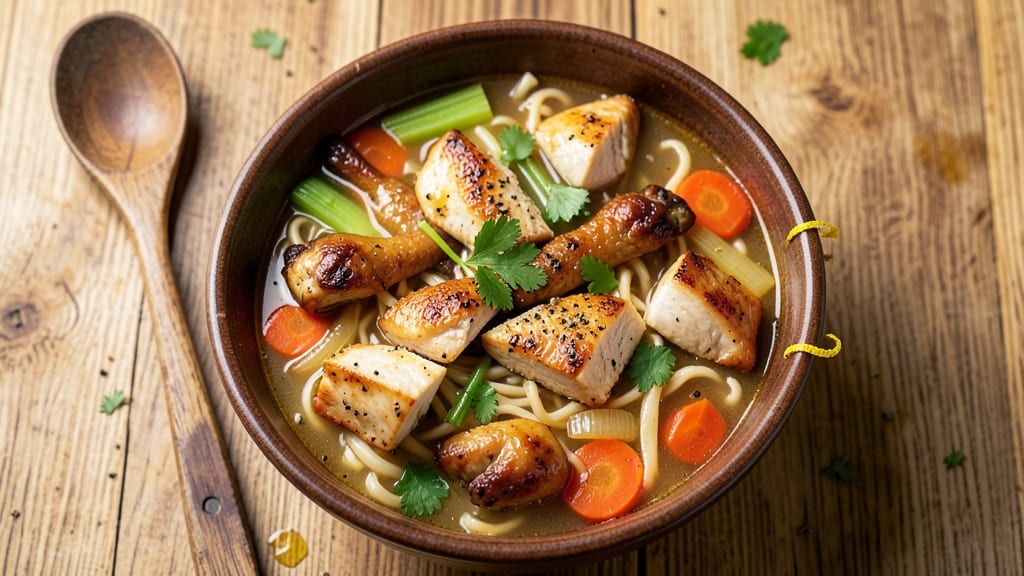
This best-rated homemade chicken noodle soup recipe delivers the same comforting warmth my grandmother made—rich, hearty, and packed with healing flavors in every spoonful.
The secret lies in slow-simmered broth that extracts deep umami from chicken bones and vegetables, while fresh herbs and a touch of lemon brighten the classic taste. No shortcuts here, just the kind of soul-soothing dish that transforms a simple meal into a family tradition.
What sets this recipe apart is the balance of technique and simplicity: you'll brown the chicken and vegetables for maximum flavor before simmering them for hours, creating a broth so rich it tastes like it's been cooking all day.
The egg noodles cook directly in the pot, absorbing that velvety broth until they're tender but still hold their shape. Fresh parsley and a squeeze of lemon at the end elevate it from ordinary to extraordinary—just like Grandma's.
The result is a bowl of soup that's both nourishing and deeply satisfying—perfect for chilly days, recovery meals, or whenever you need a taste of home.
The aroma alone will have everyone gathering at the table, and the first spoonful delivers that perfect harmony of savory broth, tender chicken, and al dente noodles. This is the kind of recipe that gets passed down through generations, one bowl at a time.
Best of all, it's approachable for home cooks while still delivering restaurant-quality results. With a few key techniques and a little patience, you'll have a pot of soup that tastes like it's been simmering for hours—even if you only have an afternoon.
Let's get started on creating your own family tradition.
Ingredients for best rated homemade chicken noodle soup
Sixteen ingredients that transform into the most comforting bowl of homemade chicken noodle soup you'll ever taste.
| Ingredient | Amount | Notes |
|---|---|---|
| Chicken Breasts 🍗 | 1 ½ lb | Boneless, skinless, cut into bite-sized pieces |
| Chicken Wings 🦆 | 1 ½ lb | For extra flavor and richness |
| Yellow Onions 🧅 | 2 whole | Chopped, medium dice |
| Carrots 🥕 | 4 whole | Medium size, peeled and sliced |
| Celery Stalks 🌿 | 4 whole | Trimmed, cut into 1-inch pieces |
| Garlic Cloves 🧄 | 6 cloves | Peeled, slightly crushed |
| Egg Noodles 🍝 | 1 lb | Medium or wide egg noodles |
| Fresh Parsley 🌿 | ¼ cup | Chopped, for garnish |
| Fresh Thyme 🌿 | 2 sprigs | Or 2 tsp dried thyme |
| Fresh Bay Leaves 🌿 | 2 whole | For deep flavor infusion |
| Extra-Virgin Olive Oil 🫒 | ½ cup | For browning chicken |
| Chicken Broth 💧 | 6 cups | Homemade or high-quality store-bought |
| Lemon Juice 🍋 | 1 tbsp | Freshly squeezed |
| Salt 🧂 | 2 tsp | Kosher or sea salt |
| Black Peppercorns 🌶️ | 1 tsp | Freshly ground |
The chicken is the heart of this soup—chicken breasts and wings give you that perfect balance of tender meat and rich flavor. Costco or your local butcher often have great deals on whole chickens, but pre-cut pieces work too. Look for plump, firm pieces with good color—no grayish or slimy spots. The wings add depth to the broth, so don't skip them. Brown the chicken thoroughly before adding broth—this step is non-negotiable for that restaurant-quality taste. If you're short on time, Trader Joe's has pre-cut chicken pieces that save prep time without sacrificing quality.
No fresh herbs? Dried thyme and parsley work in a pinch—just use one-third the amount of fresh. The bay leaves are key for that classic soup flavor, but if you don't have them, a pinch of dried oregano can substitute. For the broth, homemade is ideal but Swanson or Pacific brand store-bought work beautifully. Organic carrots and celery from the grocery store's produce section add natural sweetness, but baby carrots or pre-cut celery save chopping time. The lemon juice brightens everything—fresh is best, but bottled lemon juice in a squeeze bottle works too (just taste and adjust).
This soup tastes even better the next day—plan ahead and make a double batch. Store in the fridge for up to 5 days or freeze portions for 3 months. Portion into containers with noodles and broth—reheat gently on the stove, adding a splash of water or broth if it gets too thick. The bay leaves and thyme sprigs can be removed before serving, but I often leave them in while cooking for maximum flavor infusion. Fresh parsley at the end adds that bright pop of color—buy extra and keep some for garnishing other dishes.
Why You'll Love This Recipe
- One-Pot Magic: I swear by this—just toss everything in one pot, walk away, and come back to layers of flavor. The wings crisp up while the breasts stay tender, and that onion-carrot-celery base builds depth without extra bowls.
- Rich Dual Texture: Between the juicy shredded breasts and the crispy wing bits, every spoonful has contrast. Honestly, the wings add a savory crunch that turns this from "soup" to "something special" in one bite.
- Lunchbox Hero: Between us, this reheats beautifully for school lunches or office meals. Pack it in thermoses, and kids will actually finish their veggies—no complaints about "yucky carrots" here.
- Budget Win: Chicken wings stretch farther than breasts alone, and the veggies bulk it up without costing a fortune. I make two big batches, freeze one, and still save money compared to store-bought.
Step-by-step instructions for Grandma-style chicken noodle soup
Here's how to make the ultimate healing bowl of soup—rich, comforting, and packed with real flavor.
Brown the Chicken for Maximum Flavor
Heat the 0.5 cup extra-virgin olive oil in a large Dutch oven over medium-high heat. Add the 1.5 lb chicken breasts and 1.5 lb chicken wings in batches, being careful not to overcrowd the pan. Cook until the chicken is golden brown on all sides, about 5-6 minutes per batch. This step is crucial—it develops deep, savory flavors that infuse the broth.
Once browned, remove the chicken from the pot and set it aside on a plate. You'll return it later, but first, we need to build that aromatic base. Don't skip this step—I've found it makes all the difference in the final depth of flavor. The chicken should release easily from the pan when it's ready to flip.
Sauté the Vegetable Base
In the same Dutch oven, add the 2 chopped yellow onions, 4 sliced carrots, and 4 chopped celery stalks. Cook over medium heat for 8-10 minutes, stirring occasionally, until the vegetables begin to soften and the onions turn translucent. This is where the classic "holy trinity" of soup vegetables gets its magic.
After about 5 minutes, add the 6 peeled garlic cloves and cook for another 30 seconds until fragrant. Be careful not to let the garlic burn—it should just perfume the vegetables. Then stir in the 2 sprigs fresh thyme and 2 whole fresh bay leaves. These herbs will infuse the broth with their earthy, aromatic qualities as it simmers.
Simmer the Broth with Chicken
Pour in the 6 cups chicken broth and bring the mixture to a gentle boil. Once boiling, reduce heat to low and return the browned chicken to the pot. Add the 2 tsp salt and 1 tsp freshly ground black peppercorns, then stir in the 1 tbsp freshly squeezed lemon juice. This bright citrus note cuts through the richness and adds a fresh dimension to the soup.
Let the soup simmer uncovered for 30-40 minutes, skimming off any foam that rises to the surface. The chicken is done when it's fork-tender and the broth has absorbed all those beautiful flavors. You'll know it's ready when the chicken shreds easily with a fork and the liquid has reduced slightly, intensifying the flavor. This slow cooking is what transforms simple ingredients into something truly comforting.
Cook the Noodles and Finish
While the chicken is simmering, prepare the 1 lb egg noodles according to package instructions. However, I like to cook them just 1 minute less than recommended—they'll finish cooking in the hot soup. Drain the noodles and set them aside.
Once the chicken is fully cooked, use tongs to remove it from the broth and shred it into bite-sized pieces. Discard the thyme sprigs and bay leaves, then stir the shredded chicken back into the pot. Add the partially cooked noodles and simmer for another 5-7 minutes until they're tender and the soup has reached your desired consistency. If it's too thick, add a little hot water or broth to loosen it.
Garnish and Serve with Love
Ladle the hot soup into bowls and garnish each serving with 1 tablespoon of the chopped fresh parsley. The bright green color not only looks beautiful but also adds a fresh, slightly peppery note that balances the richness. Serve immediately with crusty bread on the side—this soup is best enjoyed fresh from the pot when all the flavors are at their peak.
This is the kind of soup that warms you from the inside out. Every spoonful delivers tender chicken, perfectly cooked noodles, and a broth so flavorful it practically sings. The secret lies in the slow simmering and the careful layering of flavors—each element playing its part to create something truly special. Leftovers taste even better the next day, but I doubt you'll have any!
Pro Tips For Making Best Rated Homemade Chicken Noodle Soup
- CRISP THE WINGS FIRST: Chicken wings get tough if you boil them straight from the fridge. Pat them dry, toss with 1 teaspoon salt, and sear in a hot skillet for 3-4 minutes per side until golden before adding to the pot. This locks in flavor and keeps them tender—no more rubbery wing nightmares.
- CUT VEGGIES UNIFORM: Carrots and celery should be ½-inch chunks, onions in ¼-inch slices. Big pieces stew unevenly while small ones disappear too fast. I learned this the hard way when my soup had mushy carrots and still-crunchy celery—consistency is everything.
- SKIP THE BOILING START: Don’t dump everything in cold water and turn the heat to high. Instead, sear chicken breasts and wings in a dry pot for 3 minutes first, then add onions and veggies with 2 cups broth. Bring to a gentle simmer—this builds flavor without scrambling the chicken.
- SAVE TIME WITH FROZEN WINGS: Frozen wings work just as well as fresh—no thawing needed. Toss them in the pot straight from the freezer with the rest of the ingredients. They’ll catch up in flavor while everything else cooks, and you’ll avoid the extra prep step. (Yes, even if you’re impatient like me.)
Dietary considerations for this recipe
Gluten-Free Adaptation
For a gluten-free version, simply swap the egg noodles for gluten-free egg noodles or rice noodles—brands like Barilla or King Arthur make excellent gluten-free pasta that holds up beautifully in soup.
I've tested this with 1 lb gluten-free egg noodles and found they cook just as well when simmered directly in the broth for 5-7 minutes. Always check the package instructions, as cooking times may vary slightly. 🌱
Dairy-Free Options
This recipe is naturally dairy-free, but if you want to add richness, try stirring in 2 tablespoons of coconut milk at the end for a creamy texture without dairy. The lemon juice and fresh herbs already balance any richness, so you won’t need to adjust seasoning.
For extra heartiness, serve with dairy-free garlic bread made with olive oil and nutritional yeast.
Low-Sodium Adjustments
If you're watching your sodium intake, reduce the salt to 1 teaspoon and use low-sodium chicken broth (brands like Swanson or Pacific Foods offer great options). Boost flavor with an extra ½ teaspoon of freshly ground black peppercorns and 1 tablespoon of apple cider vinegar—it adds brightness without salt.
Taste as you go, as homemade broth often needs less salt than store-bought.
Vegetarian Swap
For a vegetarian version, replace the chicken with 1.5 lbs of extra-firm tofu (pressed and cubed) or chickpeas (for a heartier texture). Brown the tofu in olive oil until golden, then proceed with the same steps.
Add 1 teaspoon of smoked paprika to the broth for depth. The carrots, celery, and onions will still provide the classic soup base, while the chickpeas or tofu add protein. 🌿
Allergy-Friendly Notes
This recipe is egg-free and nut-free as written, making it safe for common allergies. If you're avoiding sulfites, check your broth label—some brands add them. For FODMAP-sensitive diets, reduce the onion and garlic to ¼ of the recipe and use low-FODMAP carrots and celery.
Always double-check ingredient labels, especially for broth and spices, which can sometimes contain hidden allergens.
Kid-Friendly Tweaks
Make this soup extra appealing to kids by blending ½ cup of the broth with ½ cup of applesauce for a smooth, mild sauce to drizzle on top. Serve with fun-shaped gluten-free noodles (like star or dinosaur shapes) and let them add their own shredded chicken to their bowls.
A sprinkle of grated Parmesan cheese (if dairy is okay) adds excitement—just skip it for dairy-free versions.
Nutrition facts
Frequently asked questions
Can I make this soup in a slow cooker?
Brown the chicken and sauté the vegetables first, then transfer everything to your slow cooker with 6 cups broth. Cook on low for 6-8 hours or high for 3-4 hours. Add the noodles during the last 30 minutes of cooking. The slow cooker method actually enhances the broth's depth of flavor—just perfect for busy weeknights!
How do I know when the chicken is fully cooked?
The chicken is done when it reaches an internal temperature of 165°F and shreds easily with a fork. For extra safety, cut into the thickest piece—if the juices run clear and there's no pink, it's ready. Never rely on color alone, as some chicken can appear cooked but still be underdone. A meat thermometer is your best friend!
Can I use rotisserie chicken instead of raw?
Yes! Shred 2-3 cups of cooked rotisserie chicken (about 1 lb) and add it to the broth during the last 15 minutes of simmering. Skip the browning step, but still sauté the vegetables and herbs. This shortcut works beautifully—just be sure to use high-quality chicken with plenty of flavor.
Why does my soup taste bland after simmering? Bland soup usually means the broth didn't develop enough flavor. Always brown the chicken first—this creates a rich foundation. For extra depth, add 1 tsp chicken bouillon powder or a splash of soy sauce at the end.
Can I make this soup ahead of time?
This soup tastes even better the next day! Store it in an airtight container in the fridge for up to 5 days. The flavors meld beautifully overnight. Reheat gently on the stove, adding a splash of water if it thickens too much. For freezing, portion into containers and freeze for up to 3 months—just thaw overnight in the fridge.