
Soups & Stews
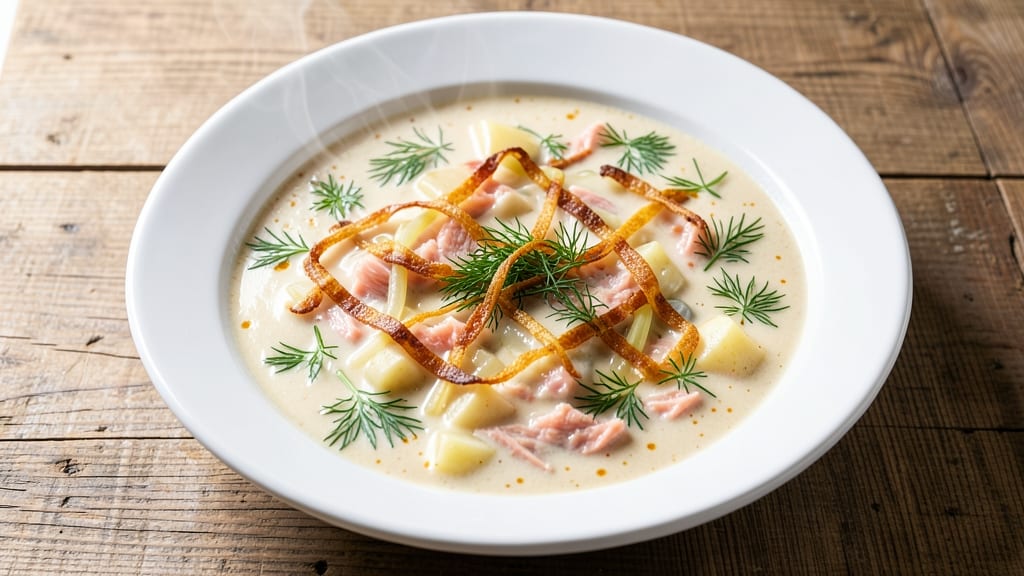
This canned salmon chowder soup recipe transforms simple pantry staples into a creamy, ocean-inspired comfort dish that’s surprisingly sophisticated. The secret lies in balancing rich dairy with the subtle sweetness of canned salmon, creating a velvety texture that feels luxurious without requiring hours of prep.
I developed this version after realizing how often home cooks overcomplicate chowder—this method delivers restaurant-quality results in one pot with minimal effort.
The foundation starts with sautéed onions and potatoes until golden, then simmered in broth until tender. Canned salmon adds protein and depth without the fuss of fresh fillets, while a touch of cream (or coconut milk for a lighter option) ensures that signature creamy consistency.
What sets this apart is the way the salmon’s natural oils enrich the broth, creating a flavor that’s both comforting and refined.
By the time you ladle this into bowls, you’ll have a soup with tender potatoes, flaky salmon pieces, and a sauce so smooth it practically melts on your spoon. The aroma alone—warm broth mingling with herbs and dairy—will have everyone at the table asking for seconds.
It’s the kind of dish that feels indulgent yet effortless, perfect for chilly evenings or as a hearty appetizer.
For those who prefer vegetarian options, simply swap the salmon for chickpeas or white beans while keeping the same creamy base. Garnish with fresh herbs or crispy crackers to elevate the presentation. Ready in under 45 minutes, this chowder proves that comfort food can be both nourishing and impressive.
Ingredients for canned salmon chowder soup
Pantry staples meet ocean freshness—just 14 simple ingredients for velvety chowder magic.
| Ingredient | Amount | Notes |
|---|---|---|
| Canned Salmon 🐟 | 2 cans | Wild-caught preferred, drained |
| Russet Potatoes 🥔 | 2 lbs | Cut into 1-inch cubes |
| Yellow Onion 🧅 | 1 whole | Diced, medium size |
| Celery Stalks 🌿 | 3 whole | Diced, fresh preferred |
| Heavy Cream 🥛 | 1 cup | Full-fat for richness |
| Chicken Broth 💧 | 4 cups | Low-sodium preferred |
| Butter 🧈 | 4 tbsp | Unsalted, for sautéing |
| Fresh Dill 🌿 | ¼ cup | Chopped, or dried at 1 tbsp |
| Garlic Cloves 🧄 | 3 cloves | Minced, fresh preferred |
| Salt 🧂 | 1 ½ tsp | Kosher or sea salt |
| Black Pepper 🌶️ | ½ tsp | Freshly ground preferred |
| Lemon Juice 🍋 | 1 tbsp | Freshly squeezed |
| Coconut Milk 🥥 | ½ cup | Full-fat, optional for lighter version |
| Rice Wine Vinegar 🍶 | 1 tsp | For brightness, optional |
The salmon makes this chowder shine. Wild-caught has better flavor, but any canned salmon works—just drain it well. I grab Wild Planet or Vital Choice at Whole Foods when I can, but the store brand at Trader Joe's is solid too. The potatoes should be russets—they hold up better than reds. Cut them into even cubes so they cook uniformly. For the broth, low-sodium is key so you can control the seasoning. I keep a big carton of Swanson or Pacific Foods in the freezer for quick meals like this.
No heavy cream? Coconut milk keeps it creamy while cutting calories—just don't skip the lemon juice to balance the richness. Fresh dill is ideal, but dried works at one-third the amount. The garlic can be pre-minced from a jar (no judgment), but fresh is always better. For extra depth, add a splash of rice wine vinegar—it brightens everything up. If you're vegetarian, swap the salmon for chickpeas or white beans and use vegetable broth instead. The celery can be frozen if you're in a pinch, but fresh tastes so much better.
This soup tastes even better the next day—let it sit overnight so all the flavors meld. Keeps for 4-5 days in the fridge, or freeze portions for up to 3 months. I like to double the batch and freeze half for lazy weeknights. Garnish with extra dill or a drizzle of cream right before serving. The aroma alone will have everyone rushing to the table.
Why You'll Love This Recipe
- No Chopping Nightmare: I swear by this recipe because the potatoes and celery just need dicing once, then you dump them in. No peeling, no fuss—just chop, simmer, and forget about it while the salmon flakes itself apart.
- Creamy Without Trying: That heavy cream and canned salmon? Pure magic. The salmon adds this bright, flaky richness, while the cream smooths it out—like a hug in a bowl. Honestly, my picky husband doesn’t even ask for seconds… okay, fine, he does.
- Lunchbox Hero: Pack this chowder in thermoses for work or school—it’s hearty enough to fill you up but light enough to carry. (Yes, even on a Tuesday night.) The potatoes stay warm, the salmon stays flaky, and no one complains about soggy sandwiches.
- Budget-Friendly Luxury: Canned salmon and russets stretch this recipe into three meals for the price of one fancy dinner. Between us, this is how I feed my family without breaking the bank—and no one realizes it’s not some Pinterest-perfect creation.
Step-by-step instructions for creamy salmon chowder
Here's how to build a velvety, comforting bowl that balances ocean freshness with homey warmth.
Sauté the Aromatic Base
Melt the 4 tablespoons butter in a large Dutch oven over medium heat. Add the 1 whole yellow onion and 3 whole celery stalks, both already diced. Cook for 8-10 minutes until the vegetables soften and the onion becomes translucent.
Here's the thing—don't rush this step. You want the vegetables to break down completely so they blend seamlessly into the soup. Add the 3 cloves garlic cloves and cook for 30 seconds until fragrant. The garlic should smell pungent but not burn—if it darkens too quickly, reduce the heat slightly.
Build the Potato Foundation
Add the 2 lbs russet potatoes, cut into 1-inch cubes, to the pot. Pour in the 4 cups chicken broth and bring everything to a gentle boil. Once boiling, reduce heat to medium-low and let it simmer uncovered for 15 minutes. You want the potatoes to soften but not fall apart—they should still have a slight bite.
Real talk: If the broth reduces too quickly, add a splash of water to keep the potatoes submerged. The potatoes should be tender enough to pierce with a fork but still hold their shape. This ensures your chowder has texture without being mushy.
Incorporate the Salmon and Cream
Gently stir in the 2 cans canned salmon, drained, breaking up any large chunks with a spoon. Add the 1 cup heavy cream and 0.5 cup coconut milk (if using), then season with 1.5 teaspoons salt and 0.5 teaspoon black pepper. Simmer for 5 minutes on low heat—just enough to warm through and let the flavors meld.
This is where the magic happens: The cream and coconut milk create that signature creamy texture while the salmon adds protein and oceanic depth. If you're using the 1 teaspoon rice wine vinegar and 1 tablespoon lemon juice, add them now for a bright, balanced finish. Taste and adjust seasoning—you might need a touch more salt or a squeeze of lemon.
Finish with Fresh Herbs and Rest
Remove the pot from heat and stir in the 0.25 cup fresh dill, chopped. Let the chowder sit for 5 minutes—this resting period allows the flavors to settle and the soup to thicken slightly. The dill will release its aroma, adding a fresh, herbal note that cuts through the richness.
Give it one final taste before serving. The soup should be creamy but not heavy, with a perfect balance of salty, tangy, and herbal flavors. If it's too thick, thin it with a splash of warm broth or water. Ladle into bowls and serve immediately with crusty bread—every spoonful should be rich, comforting, and packed with flavor.
Pro Tips For Making Canned Salmon Chowder Soup
- PRE-COOK POTATOES: Toss diced Russets in cold water for 10 minutes before simmering—this cuts down on cooking time later and keeps them from turning to mush. I used to skip this, and the soup always ended up gluey.
- CRUSH SALMON GENTLY: Use a fork to break up canned salmon into flakes, not a blender—you want texture, not a paste. Overworking it turns the soup into a sad, homogenous gray blob.
- SALT THE POTATOES: Add a pinch of salt to the water when parboiling potatoes—it seasons them before they even hit the soup. Trust me, the flavor builds better this way.
- TEMPER THE CREAM: Warm heavy cream separately in a small saucepan until steaming, then whisk it into the soup. Cold cream curdles like a drama queen, and nobody wants that.
Essential equipment for this dish
Dutch Oven Essentials
Your large Dutch oven is the workhorse of this recipe—it needs to hold at least 6 quarts to accommodate the potatoes and broth without overflowing. I swear by Le Creuset’s 6-quart stoneware Dutch oven for even heat distribution, but All-Clad’s stainless steel version is my backup for quick weeknight meals.
The deep sides prevent splattering when adding broth, and the heavy base maintains steady temperatures. 🔥
For budget-friendly options, Farberware’s enameled Dutch oven delivers similar performance at half the price. Avoid thin, lightweight pots—they can’t handle the medium-low simmer for 15 minutes without scorching. If you’re using a nonstick pot, skip the butter and use olive oil instead to prevent sticking.
Precision Tools
A measuring spoon set (like OXO’s Good Grips) ensures you add exactly 1.5 teaspoons salt and 0.5 teaspoon black pepper—over-salting is the fastest way to ruin a chowder. For garlic, a microplane gives you the perfect 3 cloves minced without the mess of a knife.
I also recommend a fine-mesh strainer if you’re using canned salmon with bones—it catches any debris before adding the fish to the pot.
Don’t skip the instant-read thermometer (I use Thermoworks’ ThermoPop). It helps you confirm the broth reaches a gentle simmer without boiling over, which is critical for even potato cooking. A wooden spoon with a long handle keeps your hands safe from the hot pot while stirring.
Creamy Texture Upgrades
For the heavy cream, I reach for Organic Valley’s full-fat version—it adds the richest flavor, but Trader Joe’s organic heavy cream is a great budget alternative. If you’re using coconut milk, Thai Kitchen’s full-fat can blends seamlessly without curdling.
A handheld immersion blender (like Ninja’s 1000-watt) lets you achieve a silky texture by blending directly in the pot if you prefer extra smoothness.
For extra depth, keep a small bowl of lemon juice and rice wine vinegar on hand—they brighten the chowder in seconds. A zester makes quick work of adding lemon zest for aromatic complexity.
Pro tip: Warm the cream and coconut milk separately before adding to prevent curdling when combined with hot broth.
Garnish & Serve
Fresh dill is a must—Williams Sonoma’s dried dill works in a pinch, but fresh is non-negotiable for that bright, herbal finish. A small pair of kitchen shears makes chopping dill effortless. For serving, deep soup bowls (like Corelle’s stoneware) hold the chowder’s generous portions without spilling.
I also keep crusty baguette slices and water crackers on hand for dipping—Trader Joe’s Everything Bagel Seasoning on crackers adds a fun crunch.
Don’t overlook a ladle with a deep well (I love OXO’s Good Grips)—it scoops up the creamy broth and flaky salmon pieces perfectly. A small pitcher for extra cream or lemon wedges on the table lets guests customize their bowls.
For presentation, a sprinkle of freshly cracked black pepper and a drizzle of olive oil elevate the dish to restaurant-worthy levels. ✨
Nutrition facts
Frequently asked questions
Can I make this chowder without heavy cream for a lighter version?
Swap the 1 cup heavy cream for 1 cup full-fat coconut milk to keep it creamy while reducing calories and dairy. The coconut milk adds a subtle sweetness that pairs beautifully with the salmon. For extra richness, blend in ½ cup Greek yogurt at the end—it thickens the soup naturally without overpowering the flavors.
How do I prevent the chowder from getting too thick or separating?
Stir in a splash of warm broth or water if the chowder thickens too much, and always warm the cream or coconut milk separately before adding it to the hot broth. This prevents curdling. For extra insurance, whisk the dairy into the broth gradually while stirring constantly. If separation happens, blend briefly with an immersion blender to restore smoothness.
Can I use frozen salmon instead of canned?
Yes, but you’ll need to thaw and cook the salmon separately first. Poach 2 salmon fillets in broth for 8-10 minutes until flaky, then flake the meat into the chowder. This method gives you more control over seasoning, but canned salmon saves time and adds natural oils that enhance the broth’s richness.
What’s the best way to reheat leftovers?
Reheat gently on the stovetop over low heat with a splash of broth or water to restore creaminess. Avoid microwaving—it can make the soup watery. For extra flavor, add a pinch of lemon juice or a pat of butter when reheating. Store leftovers in an airtight container for up to 5 days or freeze for 3 months.