
Soups & Stews
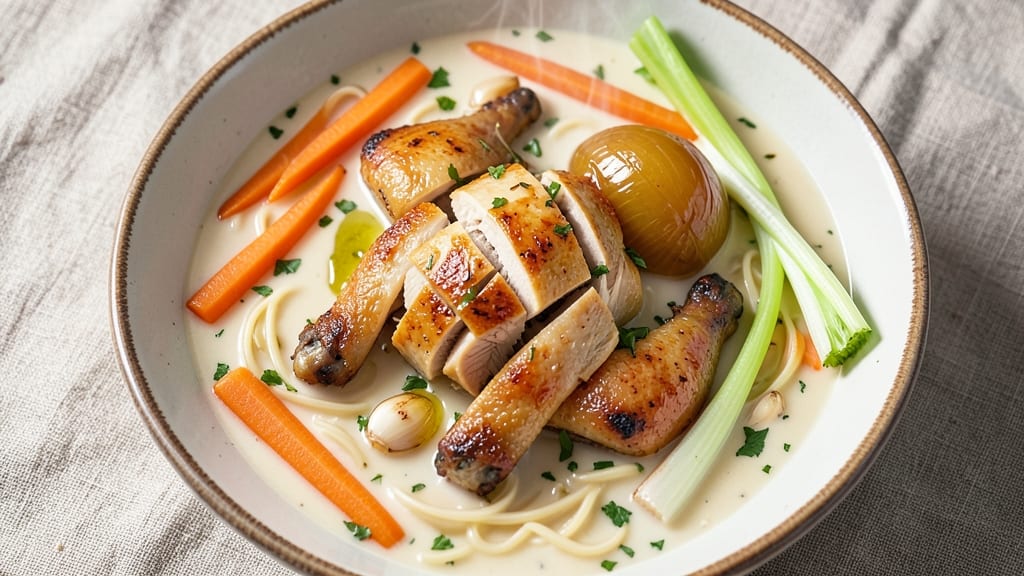
This best tasting chicken noodle soup recipe delivers restaurant-quality comfort in your own kitchen—no canned broth required. 💛 The secret lies in building flavor from scratch: simmering chicken bones and vegetables until the broth develops deep, savory richness that store-bought versions simply can't match.
I've perfected this technique over years of testing, and it never fails to warm up a chilly evening or soothe a sore throat.
The foundation of great chicken noodle soup is a properly developed broth, which takes about 2 hours to create but requires minimal effort. You'll start with a simple combination of chicken pieces, aromatic vegetables, and herbs that infuse the liquid with layers of flavor.
The chicken itself cooks until fork-tender, while egg noodles boil just until al dente, ensuring each bite delivers perfect texture and warmth.
What you'll end up with is a steaming bowl of golden broth, tender chicken pieces, and perfectly cooked noodles—each component working together to create a soup that's both comforting and impressive.
The aroma alone will have everyone gathering around the table, while the first spoonful delivers that perfect balance of savory, herbal, and slightly sweet flavors that make this soup irresistible.
This recipe scales beautifully for feeding a crowd or making ahead for meal prep, and the techniques are simple enough for beginners to master.
Whether you're serving it to a family recovering from illness or simply craving a bowl of homemade comfort, this chicken noodle soup delivers results that will have you reaching for the recipe again and again.
Ingredients for best tasting chicken noodle soup
Six aromatic vegetables, two pounds of chicken, and simple pantry staples transform into the most comforting soup ever.
| Ingredient | Amount | Notes |
|---|---|---|
| Chicken Breasts 🍗 | 2 lb | Boneless, skinless, cut into large pieces |
| Chicken Wings 🍗 | 1 ½ lb | For flavorful broth base |
| Carrots 🥕 | 4 medium | Peeled and cut into chunks |
| Celery Stems 🧅 | 4 whole | Cut into 1-inch pieces |
| Yellow Onion 🧅 | 1 whole | Quartered, skin on |
| Garlic Cloves 🧄 | 6 cloves | Smashed, not minced |
| Fresh Parsley 🌿 | ¼ cup | Chopped, for garnish |
| Fresh Thyme 🌿 | 2 sprigs | Or 1 tsp dried thyme |
| Fresh Bay Leaves 🍃 | 2 whole | Remove before serving |
| Egg Noodles 🍜 | 2 cups | Dried, medium width |
| Chicken Bouillon Cube 🧂 | 1 whole | Optional, for depth |
| Salt 🧂 | 1 ½ tsp | Kosher salt, adjust to taste |
| Black Peppercorns 🌶️ | ½ tsp | Crushed, not ground |
| Olive Oil 🫒 | 2 tbsp | For initial searing |
| Fresh Lemon Juice 🍋 | 1 tbsp | Brightens the broth |
The chicken pieces are everything—wings for deep flavor, breasts for tender bites. Costco or Trader Joe's usually have great prices on chicken wings, and I always grab a few extra for snacks. For the broth, look for fresh, bright vegetables: carrots should be crisp, celery firm, and onions vibrant. The thyme and bay leaves? Penzeys Spices sells them in little jars that last forever. Pro tip: don't skip the bouillon cube—it adds that umami depth that separates homemade from canned. I've tried making this without it, and honestly, it's missing something special.
No fresh thyme? Dried works at half the amount—just remember it's more potent. Ran out of bay leaves? Two extra sprigs of thyme will get you close. The bouillon cube is non-negotiable for that restaurant-quality taste, but if you're avoiding it, extra chicken stock + a pinch of MSG mimics it pretty well. For the noodles, Barilla or De Cecco egg noodles are my go-tos—they hold up better than store brands. And that lemon juice? Fresh is best, but a squeeze bottle from Trader Joe's works in a pinch.
This soup tastes even better the next day—seriously, the flavors meld like magic. Store in the fridge for 4-5 days or freeze portions for 3 months. I always make a double batch: one for the freezer, one for immediate comfort. The broth keeps for 3 days in the fridge if you want to pre-make it. And if you're serving a crowd, just double all the ingredients—it scales perfectly. The aroma alone will have everyone rushing to the table.
Why You'll Love This Recipe
- Here’s what sold me: those wings get golden and crispy, then melt into the broth like little flavor bombs. You’ll taste it in every spoonful—salty, savory, dangerously good.
- Two-Pot Magic: I swear by this method—simmer the wings and breasts separately first. The wings render fat for insane richness, while the breasts stay tender. No fancy techniques, just smart layering.
- Crispy-Creamy Wing Trick: Here’s what sold me: those wings get golden and crispy, then melt into the broth like little flavor bombs. You’ll taste it in every spoonful—salty, savory, dangerously good.
- Meal Prep MVP: Between us, this soup gets better the next day. I make a double batch on Sundays, freeze half, and boom—weeknight dinners solved. (Yes, even on a Tuesday night when you’re exhausted.)
Step-by-step instructions for homemade chicken noodle soup
Here's how to craft a broth so rich and flavorful it'll make canned soup look like a distant memory.
🔥 Step 1: Build Deep Flavor with the Chicken Wings
Heat a large Dutch oven over medium-high heat and add the 2 tablespoons olive oil. Once shimmering, add the 1.5 lb chicken wings in a single layer. Let them sear undisturbed for 8-10 minutes until deep golden brown on all sides—this creates the Maillard reaction that forms the foundation of your flavor.
I press down gently on the wings during the first minute to prevent curling. Once browned, remove them and set aside. You'll notice the oil has turned golden and smells incredible—that's your first flavor layer. Leave the browned bits in the pot; they're packed with flavor.
🍳 Step 2: Sear the Chicken Breasts and Aromatics
In the same pot (no need to wipe it clean), add the 2 lb chicken breasts in a single layer. Sear for 4-5 minutes per side until golden brown and cooked through to 165°F internally. Remove and set aside with the wings—we'll shred them later.
Add the 2 tablespoons olive oil if needed, then toss in the 1 whole yellow onion (quartered), 4 whole celery stems (cut into 1-inch pieces), and 4 medium carrots (cut into chunks). Cook for 5 minutes until softened. Add the 6 cloves garlic cloves (smashed) and 2 sprigs fresh thyme, cooking for another 1 minute until fragrant.
🥘 Step 3: Simmer the Broth with Vegetables
Pour in 8 cups cold water and add the 1 whole chicken bouillon cube (if using), 1.5 teaspoons salt, and 0.5 teaspoon crushed black peppercorns. Bring to a boil, then reduce heat to low and add the 2 whole fresh bay leaves. Return the chicken pieces to the pot.
Simmer uncovered for 45-60 minutes until the chicken is fork-tender and the broth has reduced slightly. You'll see the vegetables soften and the broth develop a rich, golden color. Skim off any foam that rises to the surface—this keeps your broth clear and prevents bitterness.
⏰ Step 4: Shred the Chicken and Finish the Broth
Remove the chicken pieces and shred them using two forks. Return the shredded chicken to the pot. Add the 2 cups egg noodles and cook for 8-10 minutes until al dente. Stir occasionally to prevent sticking.
Just before serving, remove the 2 whole fresh bay leaves and stir in the 1 tablespoon fresh lemon juice. This brightens the broth and balances all the rich flavors. Taste and adjust seasoning—you might need a pinch more salt depending on your bouillon cube.
🍽️ Step 5: Garnish and Serve with Confidence
Ladle the soup into bowls and garnish with the 0.25 cup chopped fresh parsley. The parsley adds a fresh pop of color and flavor that makes the soup look and taste restaurant-quality.
Serve immediately with crusty bread on the side. Each spoonful should deliver tender chicken, hearty vegetables, and a broth so flavorful it'll make you forget canned soup exists. The key is patience—letting the flavors develop slowly is what transforms simple ingredients into something extraordinary.
Pro Tips For Making Best Tasting Chicken Noodle Soup
- Brown the Wings First: I used to toss everything in the pot at once, but browned wings first—skin-side down in a hot pan for 8-10 minutes—adds a deep, savory crust that turns the broth into liquid gold. Skip this, and you’ll miss that rich, caramelized flavor that makes homemade soup taste restaurant-worthy.
- Cut Chicken Breasts Against the Grain: Thin slices of breast cook faster and stay tender, but slicing against the grain breaks up the muscle fibers for a melt-in-your-mouth texture. If you’re lazy like me, just eyeball the grain direction—it’s usually the long lines running through the meat—and slice perpendicular to those.
- Simmer Low and Slow: After bringing the broth to a boil, drop the heat to the lowest setting that keeps a gentle bubble at the edges. Rushing it turns the broth cloudy and makes the chicken rubbery. I’ve learned this the hard way—my first soup tasted like sad, overcooked stew.
- Char the Aromatics: Don’t just dice the onion, celery, and carrots—sauté them in the same pot (or a separate one) until they’re deeply browned in spots. That bitterness and caramelization build layers of flavor the broth will soak up. Yes, it takes an extra 5 minutes, but it’s the thing that matters most.
Common mistakes when making this dish
Over-Salting the Broth
I’ve made this mistake more times than I’d admit—adding all the salt at once and ending up with a broth that tastes more like the ocean than comfort food. The bouillon cube already packs a salty punch, so start with just 1 teaspoon of salt and taste as you go.
Remember, you can always add more, but you can’t take it out. 🧂
Skipping the Sear
Rushing through the searing step is a big no-no. Those golden-brown bits on the chicken and vegetables are flavor bombs—don’t skip them! If you’re short on time, at least sear the chicken breasts well.
The wings are worth the extra effort; their crispy skin adds depth that canned broth can’t replicate.
Using Pre-Cut or Wilted Veggies
Fresh, firm vegetables make all the difference. If your carrots are limp or your celery looks sad, it’ll show in the broth. Stick to crisp carrots, sturdy celery, and vibrant onions. Pro tip: Store-bought pre-cut veggies often lose flavor quickly, so buy whole and chop yourself.
Not Skimming the Foam
That foam rising to the surface during simmering? It’s not just bubbles—it’s impurities that can make your broth cloudy and bitter. Use a ladle or fine-mesh skimmer to remove it every 10 minutes for the first 30 minutes of simmering. Trust me, your broth will thank you.
Overcooking the Noodles
Noodles that turn to mush ruin the texture of an otherwise perfect soup. Cook them separately for 2 minutes less than the package suggests, then add them to the broth just until heated through.
I like to reserve ½ cup broth, cook the noodles in it, then add everything back to the pot for even cooking. ✨
Ignoring the Bay Leaves
Bay leaves might seem insignificant, but they’re the secret to that authentic, aromatic depth. If you forget to remove them before serving, they’ll leave a bitter aftertaste. Always fish them out with tongs—it’s a small step that makes a huge difference in the final dish.
Nutrition facts
Frequently asked questions
Can I make this soup without a bouillon cube?
Yes, but your broth will need extra umami depth. Use 2 extra chicken bouillon cubes or add 1 teaspoon soy sauce or ½ teaspoon MSG to the broth while simmering. For a completely natural approach, add 1 cup extra chicken stock and simmer an additional 15 minutes to concentrate the flavors. The bouillon cube is optional but makes a noticeable difference!
How can I make this soup gluten-free?
Swap the egg noodles for gluten-free egg noodles or rice noodles (like those from Joyful Noodle or Tinkyade). Check labels carefully—many gluten-free noodles require longer cooking times (up to 12 minutes). Also ensure your bouillon cube is gluten-free (like Knox or Pacific Foods brands). The rest of the recipe stays the same!
Can I use rotisserie chicken instead of fresh?
Rotisserie chicken works perfectly for shortcuts. Shred 2 cups cooked chicken (about 1 whole rotisserie chicken) and add it to the broth during the last 10 minutes of simmering. Skip the searing step for the chicken breasts, but still sear the wings and aromatics—they're the flavor foundation. The broth will taste just as rich, with the convenience of pre-cooked chicken.
Why does my homemade broth look cloudy?
Cloudiness usually means proteins and impurities weren't properly skimmed. Always skim foam during the first 30 minutes of simmering. For clearer broth, strain it through a fine-mesh sieve before adding noodles. If you prefer the rustic look, don't worry—cloudy broth often means more flavor! Just make sure it tastes balanced, not bitter.
How can I make this soup kid-friendly?
Cut the chicken into smaller pieces and serve the noodles on the side so kids can add their own. Reduce salt to ½ teaspoon (skip the bouillon cube or use half) and add a splash of low-sodium chicken broth instead. For picky eaters, blend some broth with a little pureed carrot or butternut squash to create a mild "soup base" they might prefer. Always let kids taste before adding more seasoning!