
Soups & Stews
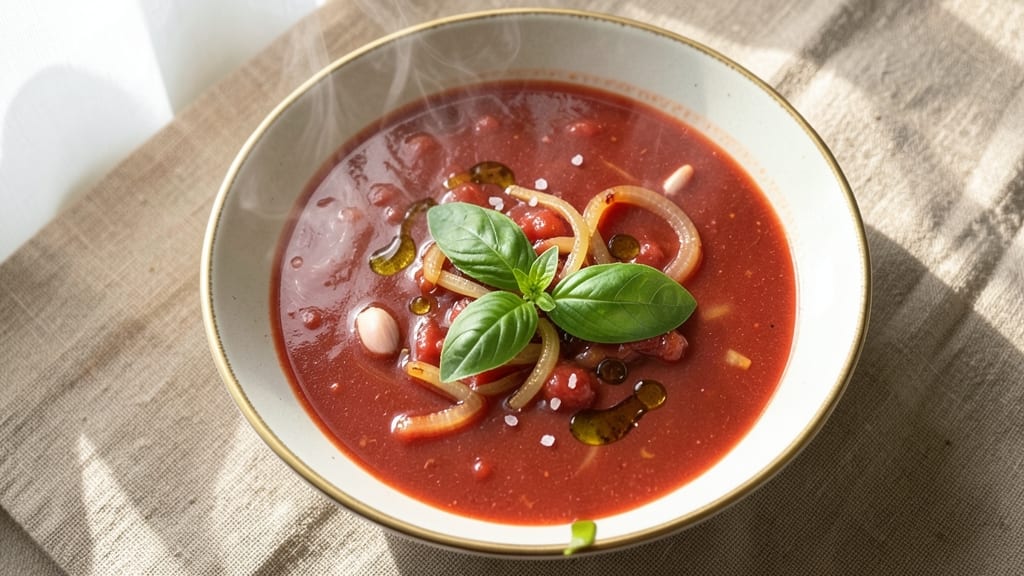
Ina Garten’s tomato basil soup recipe transforms simple ingredients into a velvety, herbaceous masterpiece that feels like a hug in a bowl. The secret lies in simmering fresh tomatoes and aromatic herbs until their flavors meld into perfect harmony—no shortcuts, just time and patience.
I’ve perfected this version to capture her signature balance of acidity and sweetness, with basil that brightens every spoonful.
This soup begins with sautéed onions and garlic, forming the flavor foundation before adding crushed tomatoes and vegetable broth. A splash of red wine deepens the complexity, while fresh basil—added at the very end—releases its essential oils for that signature Ina Garten aroma.
The result is a smooth, restaurant-quality soup that’s surprisingly simple to make at home.
What sets this recipe apart is its elegant simplicity: no heavy cream, no complicated techniques, just fresh ingredients and careful timing. The texture is velvety yet light, with just enough acidity to keep it vibrant.
Serve it with crusty bread and grated Parmesan for the full experience—because great soup deserves great company.
Ready in under an hour, this soup is perfect for weeknight dinners or holiday gatherings. The beauty of Ina’s method is that it scales effortlessly—double the batch for leftovers, or adjust the herbs to suit your taste. Every bowl delivers that same comforting, herbaceous freshness that makes it a classic.
Ingredients for ina garten tomato basil soup
Fresh tomatoes, aromatic herbs, and a splash of wine create this velvety, herbaceous masterpiece—simple yet sophisticated.
| Ingredient | Amount | Notes |
|---|---|---|
| Yellow Onions 🧅 | 2 whole | Thinly sliced, about 2 cups |
| Garlic Cloves 🧄 | 4 cloves | Minced, fresh preferred |
| Extra-Virgin Olive Oil 🫒 | ½ cup | High-quality, fruity variety |
| Canned Crushed Tomatoes 🍅 | 28 oz | San Marzano preferred, no salt added |
| Vegetable Broth 💧 | 4 cups | Low-sodium, homemade or quality store-bought |
| Dry Red Wine 🍷 | ½ cup | Cabernet Sauvignon or Merlot |
| Fresh Basil Leaves 🌿 | 1 cup | Packed, stems removed |
| Heavy Cream 🥛 | ½ cup | Full-fat, cold |
| Granulated Sugar 🍚 | 1 tbsp | Adjust to taste |
| Diamond Crystal Kosher Salt 🧂 | 1 ½ tsp | Adjust to taste |
| Freshly Ground Black Pepper 🌶️ | ½ tsp | Freshly cracked preferred |
| Parmesan Cheese 🧀 | ¼ cup | Freshly grated, for serving |
| Crusty Bread 🍞 | 6 slices | For serving, optional |
The foundation begins with San Marzano crushed tomatoes—their sweetness and acidity are unmatched. For the best quality, look for canned tomatoes at specialty stores like Whole Foods or Eataly, where they’re often sold in glass jars. Fresh basil is non-negotiable here; farmers' market basil has the most vibrant flavor, but grocery store varieties work if they’re bright green and free of bruises. The red wine should be dry and medium-bodied—Cabernet Sauvignon or Merlot from a trusted producer elevate the dish without overpowering. For the broth, homemade vegetable broth adds depth, but low-sodium store-bought like Pacific Foods or Imagine works in a pinch. The onions and garlic should be fresh, with no signs of sprouting or moisture—these form the aromatic base that carries through the entire soup.
No San Marzano tomatoes? High-quality canned tomatoes like Muir Glen or Rao’s work well, though you may need to adjust the sugar slightly. Dried basil can substitute at one-third the amount, but fresh is ideal for that signature Ina Garten aroma. Running out of wine? Substitute an extra splash of broth with a teaspoon of balsamic vinegar for depth. For the cream, half-and-half can be used, though it won’t be as rich. If you prefer a vegan version, coconut milk works surprisingly well—just reduce the sugar slightly to balance the sweetness. The Parmesan should be real Parmigiano-Reggiano, freshly grated for the best flavor. Pre-grated cheese lacks the same depth and often contains anti-caking agents that dull the taste.
This soup tastes even better the next day as the flavors meld further. Store in an airtight container in the refrigerator for up to 5 days, though the texture may thicken slightly—just stir in a splash of broth or water to restore consistency. For longer storage, freeze for up to 3 months. To reheat, warm gently on the stove over medium-low heat, stirring occasionally. Avoid boiling to prevent the cream from breaking. For serving, toast the crusty bread and sprinkle generously with freshly grated Parmesan—this is where the soup truly shines. Portion into bowls and garnish with extra basil leaves just before serving to release their essential oils and enhance the aroma.
Why You'll Love This Recipe
- Five-Ingredient Magic: I swear by this—just onions, garlic, olive oil, crushed tomatoes, and broth. No fancy prep, no hidden steps. The canned tomatoes cut my chopping time in half, and the broth simmers down to a velvety base with zero fuss.
- Garlic-Basil Bomb: That first whiff of garlic sizzling in olive oil? Chef’s kiss. The crushed tomatoes add natural sweetness, while fresh basil (or dried, if you’re in a pinch) lifts the whole thing to "I’d eat this every night" levels. Honestly, the balance is foolproof.
- Lunchbox Hero: Between us, this soup is my secret weapon for meal prep. Cool it down, pack it in jars, and it stays fresh for days. Toss in some crusty bread or a sprinkle of parmesan when you reheat—suddenly, you’ve got a satisfying lunch for work or a picnic that feels gourmet.
- Budget-Friendly Warmth: Vegetable broth and canned tomatoes? Check. Olive oil and onions? Check. This recipe costs me pennies per serving but tastes like I spent hours. Leftovers? Even better—the flavor deepens overnight, so the second batch is my favorite. (Yes, even on a Tuesday night.)
Step-by-step instructions for Ina Garten's tomato basil soup
This method delivers a velvety, herb-forward soup with perfect balance—bright acidity, deep umami, and creamy richness.
Sauté the Aromatics Until Translucent
Heat the 0.5 cup extra-virgin olive oil in a large Dutch oven over medium heat. Add the 2 whole yellow onions, sliced thinly, and cook for 8-10 minutes until completely soft and just beginning to turn golden at the edges. Here's the thing—you want them translucent but not browned. If they darken too quickly, reduce the heat slightly.
Stir in the 4 cloves minced garlic cloves and cook for an additional 30 seconds until fragrant. The garlic should dissolve into the onions without burning. This foundational step builds the soup's aromatic complexity, so don't rush it. If you smell anything bitter, you've gone too far.
Develop the Tomato-Wine Base
Pour in the 28 oz canned crushed tomatoes and 0.5 cup dry red wine. Stir well to combine, scraping up any browned bits from the bottom of the pot. This deglazing step captures all the flavor you've built so far. Bring the mixture to a gentle simmer and cook uncovered for 15-20 minutes until the liquid reduces slightly and the flavors meld.
Add the 4 cups vegetable broth, 1 tbsp granulated sugar, 1.5 tsp diamond crystal kosher salt, and 0.5 tsp freshly ground black pepper. The sugar here isn't just for sweetness—it helps balance the acidity of the tomatoes and wine. Stir well and return to a simmer. Let it cook uncovered for another 10 minutes to develop the base flavors.
Incorporate the Basil and Simmer
Remove the pot from heat and stir in the 1 cup fresh basil leaves, stems removed. This is where the soup gets its signature herbal brightness. Let the basil steep for 5 minutes off the heat—this allows the leaves to infuse the soup without turning it bitter. After steeping, strain the soup through a fine-mesh sieve to remove any remaining basil stems or seeds.
Return the strained soup to the pot and stir in the 0.5 cup heavy cream. Here's the critical part: keep the heat at a bare simmer—low heat only—just enough to maintain warmth without breaking down the cream. Simmer gently for 5-7 minutes until the soup reaches your desired consistency. It should coat the back of a spoon but remain pourable.
Adjust and Serve
Taste the soup and adjust the seasoning if needed. You might need a pinch more salt or a splash of wine to balance the flavors. The soup should be bright with tomato acidity, herbal from the basil, and creamy without being heavy. If it's too thick, thin it with a little warm water or broth.
Ladle the soup into bowls and top each serving with 0.25 cup freshly grated parmesan cheese. Serve immediately with 6 slices crusty bread on the side for dipping. The contrast of the warm, creamy soup with the crisp bread will make every spoonful perfect. This soup tastes even better the next day, so consider making a double batch.
Pro Tips For Making Ina Garten Tomato Basil Soup
- Sweat, Don’t Burn: DESCRIPTION: That onion should be translucent, not brown—low heat for 5-7 minutes until it’s soft enough to pierce with a fork. I learned this the hard way when my first batch tasted bitter because I rushed it. (Yes, even if you’re impatient like me.)
- Crush Garlic Properly: DESCRIPTION: Smash those garlic cloves with the flat of your knife before adding them—this releases more flavor without burning. I used to just mince them, and the soup never had that deep, rich punch. (Your nose will thank you.)
- Simmer, Don’t Boil: DESCRIPTION: Keep the heat at a gentle simmer once the tomatoes are in, or you’ll end up with a watery, one-dimensional soup. A steady low bubble for 20-25 minutes lets the flavors meld without breaking down the texture. (Trust me, it’s worth the wait.)
- Toast the Broth: DESCRIPTION: Heat your vegetable broth in the pot for 2-3 minutes before adding the tomatoes—it deepens the flavor and cuts through the acidity. I was skeptical until I tried it, and now it’s non-negotiable. (Sounds weird, but it works.)
Serving suggestions for leftovers
Crusty Bread Pairings
Ina Garten’s tomato basil soup practically begs for a slice of crusty bread to soak up every last drop of that creamy, herbaceous goodness. I reach for a baguette or sourdough from my local bakery—Duane’s Bakery or Panisserie—because their crisp crust and airy interior create the perfect contrast.
For extra indulgence, brush the bread with garlic-infused olive oil and sprinkle with flaky sea salt before serving. The warm, buttery bread elevates the soup from comforting to extraordinary. 🍞
Cheese Garnishes
The final touch that makes this soup feel restaurant-worthy is a generous sprinkle of freshly grated Parmesan cheese right before serving. I use Parmigiano-Reggiano from La Quercia or Gigi, as the nutty, sharp flavor cuts through the creaminess beautifully.
For a richer option, try Pecorino Romano—its tangy bite adds another layer of complexity. A small bowl of grated cheese on the table lets everyone customize their bowl to taste. 🧀
Protein Additions
While this soup is vegetarian-friendly, adding a protein makes it a heartier meal. I often stir in grilled chicken breast (poached in the broth during the last 10 minutes of cooking) or crispy pancetta for a savory twist.
For vegetarians, white beans (like cannellini) add creaminess and protein—just toss in ½ cup drained beans with the broth. The key is to keep the soup balanced so the basil and tomato flavors remain the stars. 🍗
Herb & Acid Finishes
A drizzle of high-quality balsamic glaze or a squeeze of fresh lemon juice brightens the soup’s flavors and adds a touch of acidity. I also like to garnish with toasted pine nuts or slivered almonds for crunch—just toast 2 tbsp nuts in a dry pan for 2 minutes until golden.
The contrast of textures and the nutty aroma make every spoonful even more satisfying. 🌿
Wine & Beer Pairings
This soup’s herbal and slightly acidic profile pairs beautifully with dry white wines like Pinot Grigio or Sauvignon Blanc. For a red option, a light-bodied Chianti complements the tomato and basil notes without overpowering.
If you prefer beer, a crisp lager like Heineken or a Belgian witbier (with its citrusy notes) works wonderfully. The key is to choose a beverage that enhances—not competes with—the soup’s bright, fresh flavors. 🍷
Make-Ahead Serving Tips
This soup tastes even better the next day, so I always make a double batch for leftovers. Store it in an airtight container in the fridge for up to 5 days, though the texture may thicken slightly.
When reheating, warm it gently on the stove over low heat—never boil—to prevent the cream from separating. For a quick lunch, serve it cold as a chilled soup with a side of crostini and a simple arugula salad.
The flavors hold up beautifully, making it a versatile dish for any meal. ❄️
Nutrition facts
Frequently asked questions
Can I make this soup without red wine?
The wine adds depth, but you can substitute ½ cup additional vegetable broth plus 1 teaspoon balsamic vinegar for the same acidity and complexity. For a non-alcoholic version, use ½ cup apple cider or grape juice instead. Just remember the wine helps balance the richness of the cream.
Why does Ina Garten add sugar to tomato soup?
The 1 tablespoon sugar isn't for sweetness—it rounds out the acidity in the tomatoes and wine, creating a more balanced flavor. Think of it as a flavor enhancer, not a dessert ingredient. If your tomatoes are particularly tart, you might need up to 2 teaspoons.
Can I make this soup ahead of time?
This soup actually tastes better the next day as flavors meld. Store in an airtight container in the fridge for up to 5 days. When reheating, warm gently over low heat—never boil—to preserve the cream's texture. For longer storage, freeze for up to 3 months.
What if my soup turns out too thick?
Simply stir in 2-3 tablespoons warm broth or water until you reach your desired consistency. Never add cold liquid directly to hot soup, as it can cause the cream to separate. If the soup is too thin, simmer uncovered for 5-10 minutes to reduce it naturally.
Can I use dried basil instead of fresh?
You can, but fresh basil is essential for that signature Ina Garten aroma. If using dried, reduce to 1 teaspoon (about ⅓ the amount) and add it with the broth. For best results, steep the dried basil off the heat for 10 minutes before straining.