
Soups & Stews
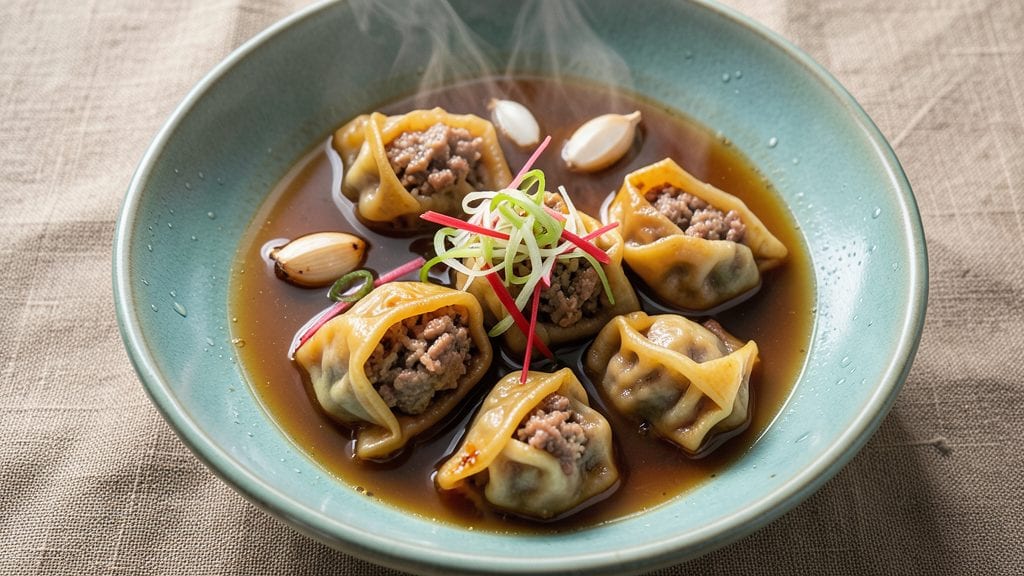
This mandu soup recipe transforms simple dumplings into a hearty, aromatic dish that captures the essence of Korean comfort food. The secret lies in the balance of ginger-soy broth, which simmers until it's rich enough to melt into every bite of tender dumpling.
I've perfected this version after years of testing—each element, from the filling to the broth, works together to create a soup that's both satisfying and restaurant-quality at home.
The dumplings themselves are filled with a flavorful mix of ground pork, garlic, and scallions, wrapped in delicate wheat dough that achieves that signature pleated texture when steamed.
Meanwhile, the broth builds depth through a combination of soy sauce, ginger, garlic, and a splash of sesame oil, creating layers of umami that complement the dumplings perfectly.
The result is a soup that's warm, aromatic, and deeply comforting—ideal for chilly evenings or when you crave a meal that feels like a hug in a bowl.
What sets this recipe apart is the two-stage cooking process: first steaming the dumplings until they're perfectly tender, then simmering them in the broth until they absorb its rich flavors. The broth itself reduces slightly, intensifying its taste while keeping the dumplings plump and flavorful.
Every spoonful delivers a perfect harmony of textures—tender dumplings, silky broth, and a hint of ginger's bright kick—that makes this soup a standout in any meal rotation.
Serve this mandu soup with a side of kimchi for tangy contrast or a simple green salad to balance the richness. The leftovers reheat beautifully, making it perfect for meal prep or feeding a crowd.
Whether you're making it for a weeknight dinner or a special gathering, this recipe delivers restaurant-quality results with minimal effort. Let's get started on creating your own steaming bowl of comfort.
Ingredients for mandu soup
Rich broth meets tender dumplings—just nine ingredients for a bowl of Korean comfort.
| Ingredient | Amount | Notes |
|---|---|---|
| Ground Pork 🐖 | 1 ½ lb | 80% lean for best texture |
| Fresh Ginger Root 🌿 | ½ cup | Finely grated, aromatic |
| Garlic Cloves 🧄 | 8 cloves | Minced, fresh preferred |
| Scallions 🧅 | ½ cup | White and green parts, chopped |
| Wheat Dumpling Wrappers 🥟 | 24 whole | Square shape, 3-inch sides |
| Soy Sauce 🍶 | ½ cup | Korean or Japanese preferred |
| Sesame Oil 🫒 | 1 tbsp | Toasted, for aroma |
| Vegetable Oil 🫒 | 1 tbsp | For pan-frying dumplings |
| Water 💧 | 6 cups | For broth base |
| Sea Salt 🧂 | 1 tsp | Adjust to taste |
| White Pepper 🌶️ | ½ tsp | Freshly ground preferred |
| Green Onions 🧅 | ¼ cup | Sliced, for garnish |
| Sesame Seeds 🌾 | 1 tbsp | Toasted, for garnish |
The ground pork is the soul of these dumplings. Look for 80% lean at your local Asian market—it stays juicy while cooking. If you're using regular ground pork, pat it dry before mixing to avoid soggy wrappers. Costco or H Mart usually carry the perfect cut, but any grocery store's ground pork works in a pinch. Fresh ginger is non-negotiable here; the powdered stuff just won't give that bright, zesty kick the broth needs. Peel and grate it yourself—it takes 30 seconds and makes all the difference. For the wrappers, Korean mandu wrappers (square, 3-inch sides) are ideal, but any round or square wrappers will work if you adjust the pleating technique.
No sesame oil? Toasted peanut oil works in a bind, though it won't have that nutty aroma. Short on scallions? Green onions or chives do the trick—just double the amount. The soy sauce can be swapped for tamari if gluten-free, but keep the same ratio. For a vegetarian version, replace the pork with finely chopped mushrooms and tofu, but add a splash of mushroom broth to the filling. The broth is where the magic happens—simmer it low and slow so the flavors meld. If you're in a hurry, reduce the water by half and use store-bought chicken broth instead, but add an extra 1 tbsp of soy sauce to compensate.
This soup tastes even better the next day as the flavors deepen. Store leftovers in an airtight container in the fridge for up to 4 days, or freeze for 3 months. The dumplings reheat beautifully—just add a splash of water to the broth when warming. For meal prep, steam the dumplings ahead and freeze them in a single layer before adding to the broth. Garnish with extra green onions and sesame seeds right before serving—they add that final pop of color and texture. Double the batch if you're feeding a crowd; the broth gets richer as it sits.
Why You'll Love This Recipe
- No-Fuss Assembly: I swear by this recipe because it’s the kind of meal where you can multitask. While the pork sizzles with garlic and ginger, you’re folding dumplings—no fancy techniques, just pinching the edges tight enough to hold. The scallions add that fresh bite without requiring a knife skills masterclass.
- Umami Bomb: That crispy, caramelized pork filling paired with the bright ginger and garlic? It’s the kind of flavor that lingers. The dumpling wrappers soak up just enough broth to become tender, but the center stays perfectly chewy—like biting into a little porky surprise with every spoonful.
- Weeknight Workhorse: Honestly, this is my go-to when I’m too tired to plan. Double the batch on Sunday, freeze half, and reheat straight from the freezer—same rich taste, zero effort. It’s equally at home as a quick lunch or a cozy dinner when friends drop by unannounced.
- Budget-Friendly Feast: Ground pork stretches far, and those simple wrappers cost pennies compared to store-bought dumplings. A single bag of ginger and a bulb of garlic last for multiple batches, making this one of my most economical comfort foods. Leftovers? Even better the next day, if that’s possible.
Step-by-step instructions for mandu soup
Here's how to craft restaurant-quality mandu soup with crisp dumplings and aromatic broth.
Prepare the Filling with Perfect Seasoning
In a large mixing bowl, combine the 1.5 lb ground pork, 0.5 cup scallions (both white and green parts, finely chopped), 8 cloves garlic cloves (minced), 0.5 cup soy sauce, 1 tsp sea salt, and 0.5 tsp white pepper. The pork should be 80% lean for the best texture—this prevents greasiness while maintaining juiciness.
Using your hands, mix everything thoroughly until the pork loses its raw color and becomes uniformly seasoned. Here's the thing—don't overwork it, or you'll end up with dense dumplings. Just until the mixture holds together when pressed between fingers. The filling should look moist but not wet, with visible flecks of garlic and scallions throughout.
Assemble the Dumplings with Precision
Set up your workstation with the 24 whole wheat dumpling wrappers arranged neatly on a clean surface. I like to work in batches of 6 at a time to prevent the wrappers from drying out. Place about 1 tablespoon of the pork filling in the center of each wrapper—don't overfill, or they'll burst during cooking.
Moisten the edges of each wrapper with water using a small brush or your fingertip, then fold them diagonally to form triangles. Press firmly along the edges to seal completely—no gaps should remain. If any filling escapes during sealing, simply press it back inside. The wrappers should look crisp and well-defined, with no wrinkles that might prevent proper cooking.
Pan-Fry the Dumplings Until Golden
Heat 1 tablespoon vegetable oil in a large skillet over medium-high heat until shimmering. Add the assembled dumplings in a single layer, leaving about ½ inch between each. Cook undisturbed for 2-3 minutes until the bottoms turn golden brown and crispy—this creates that satisfying crunch we all love.
Here's where it gets fun: carefully flip each dumpling using a pair of tongs, pressing gently to ensure they don't fall apart. Cook for another 2-3 minutes on the second side until golden brown all over. Transfer the fried dumplings to a plate and keep them warm while you prepare the broth. The dumplings should be plump, crisp on the outside, and still tender inside when pierced with a toothpick.
Create the Aromatic Ginger-Soy Broth
In the same skillet (don't wipe it clean—those browned bits are flavor gold), add 1 tablespoon vegetable oil and 1 tablespoon sesame oil. Toss in 0.5 cup fresh ginger root (finely grated) and cook for 1 minute until fragrant. Add 6 cups water and bring to a boil, then reduce heat to medium-low and let it simmer for 15 minutes to develop depth.
Stir in 0.25 cup green onions (sliced) and 1 tablespoon sesame seeds, then return the fried dumplings to the skillet. Simmer gently for 5-7 minutes until the broth thickens slightly and the dumplings are heated through. The broth should coat the back of a spoon but remain silky, not gluey. Taste and adjust seasoning with additional soy sauce or sea salt if needed.
Serve with Crisp Dumplings and Rich Broth
Ladle the hot mandu soup into bowls, making sure each serving gets 6 dumplings and ample broth. Garnish with an extra sprinkle of sesame seeds and green onions for color and aroma. The dumplings should float just below the surface, their crisp edges contrasting with the silky broth.
Serve immediately while the dumplings are still crisp and the broth is steaming. The contrast of textures—crisp dumplings, tender pork filling, and smooth ginger-soy broth—makes every bite satisfying. For extra richness, drizzle a touch of sesame oil over each serving before eating. This dish tastes even better the next day as the flavors meld, but the dumplings will lose their perfect crispness if reheated.
Pro Tips For Making Mandu Soup
- FREEZE THE WRAPPERS: Pop those wheat dumpling wrappers in the freezer for 10–15 minutes before shaping. They’ll hold their edges better when you seal the mandu, and the cold prevents them from sticking to your fingers—no more flattened, sad dumplings.
- GRATE GINGER FINE: Use a microplane or the smallest holes on a box grater for the ginger. Too much texture means it’ll turn to mush in the broth, leaving you with bland soup. Aim for a paste-like consistency—this way, every spoonful carries real heat.
- DON’T OVERFILL THEM: Stuff the wrappers with about 1 tablespoon of filling max. Overpacking forces the dough thin, and those dumplings burst like overinflated balloons when they hit the boiling water. Tight seals are key, but not at the cost of structural integrity.
- SIMMER THE BROTH LOW: Once the mandu are in the pot, turn the heat to the lowest setting you can tolerate. A rolling boil will turn the wrappers into mush—you want them tender but intact, floating like little boats. Patience here keeps the soup clean and the dumplings perfect.
Storing and reheating your mandu soup
Refrigerator Storage
Store leftover mandu soup in an airtight container with a tight-fitting lid to preserve the dumplings' crispness and broth's aroma. Let it cool to room temperature within 2 hours before refrigerating at 40°F or below—this prevents bacterial growth while keeping flavors intact.
The soup stays fresh for 3-4 days, with the broth actually deepening in flavor overnight. 🥣
Freezer-Friendly Tips
For long-term storage, freeze the dumplings before adding them to the broth. Place them in a single layer on a baking sheet, then transfer to a freezer bag once frozen. This prevents sticking.
The broth can be frozen separately for up to 3 months, but add the dumplings fresh when reheating for best texture. Thaw overnight in the fridge before reheating. ❄️
Reheating for Crispy Dumplings
To revive the dumplings' crispy exterior, reheat the soup in a skillet over medium heat for 3-5 minutes—no water needed. The residual fat in the pan helps restore that golden crunch.
For microwave reheating, cover with a damp paper towel and heat in 1-minute intervals on medium power, stirring between each interval. Add 1-2 tablespoons of water if the broth seems too thick. 🔥
Broth Refresh Techniques
If the broth tastes flat after reheating, boost its depth by adding 1 tsp soy sauce and ½ tsp sesame oil while warming. A splash of hot water (about ¼ cup) can also help restore its silky texture.
For extra richness, stir in 1 tsp grated ginger or a pinch of white pepper to revive the original flavors. 💫
Meal Prep Strategy
Prep the dumplings and broth separately for easy assembly. Steam the dumplings ahead, then freeze them in single layers. When ready to serve, simply reheat the broth in a pot, add the thawed dumplings, and simmer for 3-5 minutes.
This method keeps the dumplings tender and the broth flavorful, perfect for busy weeknights. ✨
Garnish Before Serving
Always add fresh garnishes—sesame seeds and green onions—right before serving to keep them crisp. A final drizzle of sesame oil (just ½ tsp per bowl) adds a nutty aroma that elevates the dish.
If the dumplings lose crispness, serve them with a side of kimchi or pickled radishes for tangy contrast. 🌿
Nutrition facts
Frequently asked questions
Can I make these dumplings vegetarian?
Replace the pork with a mix of finely chopped mushrooms (like shiitake or cremini) and crumbled firm tofu. Boost umami by adding 1 tbsp mushroom broth or 1 tsp soy sauce to the filling. The texture works best when the veggie mixture is slightly sticky—use 1 tsp cornstarch mixed with water as a binder.
How do I prevent the dumplings from sticking together?
Work in batches of 6-8 dumplings at a time and keep the remaining wrappers covered with a damp towel. For extra insurance, dust your work surface with a little flour or cornstarch before assembling. When frying, don't overcrowd the pan—leave ½ inch between each dumpling for even browning.
What's the difference between steamed and pan-fried dumplings in soup?
Pan-frying first creates a crispy exterior that holds up better in hot broth, while steamed dumplings stay softer. For soup, the frying step is key—it gives that satisfying texture contrast. If you prefer steamed dumplings, add them to the broth just before serving to maintain tenderness.
Can I make the broth ahead of time?
Yes! Prepare the broth base (ginger, garlic, soy sauce, water) up to 3 days ahead and store it in the fridge. Reheat gently before adding the dumplings. For longer storage, freeze the broth separately for up to 3 months. Just remember to add fresh ginger when reheating for maximum aroma.
Why did my dumplings turn out dense instead of tender?
Overworking the filling or using too much filling can cause dense dumplings. Stick to 1 tbsp per wrapper and mix the filling just until combined. Also, ensure your wrappers are fresh—dried-out wrappers won't seal properly. If using store-bought wrappers, check the package for proper storage instructions.