
Soups & Stews
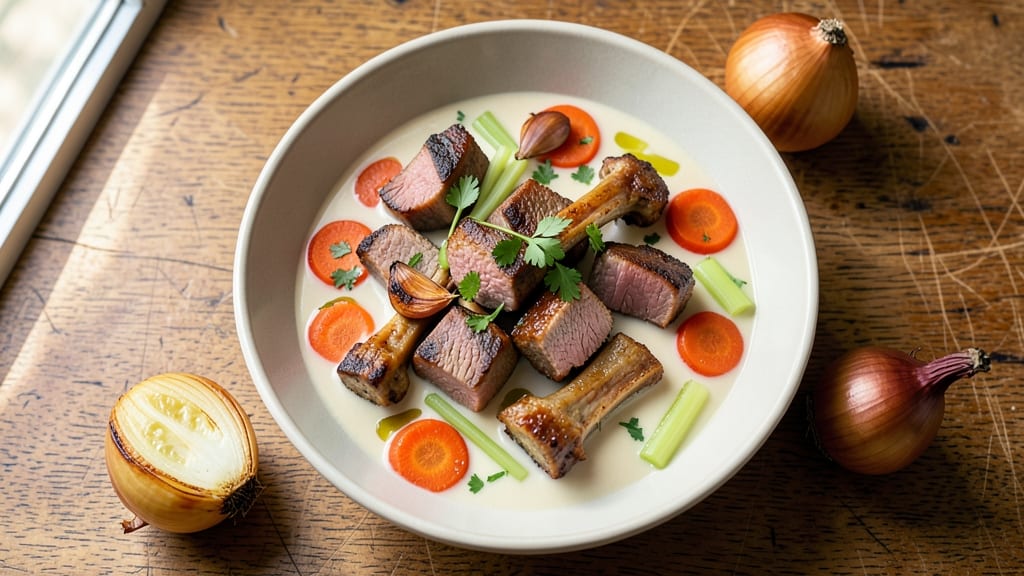
This mutton soup recipe delivers the slow-simmered richness and herbed gravy depth that transforms simple ingredients into a hearty, restaurant-quality meal. The key lies in tenderizing the mutton through a long, gentle simmer that extracts every bit of flavor, creating a broth so deep it practically sings on the tongue.
What sets this recipe apart is the precise balance of warming spices and aromatic herbs—cinnamon, cloves, and fresh parsley—that infuse the broth with layers of complexity.
Unlike quick-cooked soups, this version requires patience: the mutton needs at least two hours of slow cooking to become fork-tender, while the vegetables develop a caramelized sweetness that elevates the dish beyond basic comfort food.
By the time you serve this soup, you’ll have a velvety, herb-infused broth with succulent mutton pieces and perfectly tender root vegetables. The depth of flavor makes it perfect for chilly evenings, and the rich texture pairs beautifully with crusty bread or a crisp white wine.
The beauty of this recipe lies in its adaptability—whether you lean toward Middle Eastern spices or South Asian aromatics, the foundation remains the same. Each variation keeps the slow-simmered essence intact while offering new flavor dimensions for your table.
Ingredients for mutton soup
The backbone of this mutton soup lies in its aromatic bones and slow-cooked richness.
| Ingredient | Amount | Notes |
|---|---|---|
| Mutton Neck Bones 🥩 | 2 lb | For rich bone broth base |
| Mutton Shoulder Meat 🍖 | 1 ½ lb | Cut into 1.5-inch cubes |
| Yellow Onions 🧅 | 2 whole | Chopped, medium dice |
| Carrots 🥕 | 3 whole | Peeled, cut into chunks |
| Celery Stalks 🌿 | 3 whole | Cut into 1-inch pieces |
| Garlic Cloves 🧄 | 6 cloves | Smashed, not minced |
| Cinnamon Sticks 🌿 | 2 whole | For aromatic depth |
| Ground Cumin 🌶️ | 1 tbsp | Toasted for intensity |
| Ground Coriander 🌿 | 1 tbsp | Freshly ground preferred |
| Whole Cloves 🌶️ | 4 whole | For subtle warmth |
| Fresh Parsley 🌿 | ¼ cup | Chopped, flat-leaf preferred |
| Tomato Paste 🍅 | 2 tbsp | High-quality, not powdered |
| Dry Red Wine 🍷 | ½ cup | Bold, like Cabernet Sauvignon |
| Chicken or Vegetable Broth 💧 | 4 cups | Homemade preferred |
| Extra-Virgin Olive Oil 🫒 | 2 tbsp | For initial searing |
| Salt 🧂 | 1 ½ tsp | Diamond Crystal kosher |
| Black Peppercorns 🌶️ | ½ tsp | Freshly cracked |
The mutton selection is critical. Look for well-marbled shoulder cuts at specialty butchers or Middle Eastern markets—these yield the most tender, flavorful meat. Neck bones, often overlooked, provide the deep umami base that separates this soup from ordinary broths. Whole spices like cinnamon sticks and cloves should be sourced from reputable brands like Penzeys Spices or Burlap & Barrel for their superior aromatic intensity. Fresh parsley isn't just garnish here—it's the bright, herbaceous finish that balances the rich mutton. For the broth, homemade chicken or vegetable stock delivers superior depth compared to store-bought versions.
Substitutions should maintain the soup's complex flavor profile. No mutton? Lamb shoulder works equally well, though cooking time may extend slightly. Dried coriander can replace fresh at one-third the amount, but toast it first in a dry pan for 30 seconds to unlock its full potential. The red wine can be swapped for additional broth plus 1 tbsp balsamic vinegar, though the acidity will differ. Pre-minced garlic lacks the aromatic intensity of smashed cloves—peel and lightly crush them instead. For a vegetarian adaptation, mushroom stems and smoked paprika can mimic the meaty depth, though the texture will vary significantly.
This soup rewards patience—the mutton requires at least 2.5 hours of simmering to achieve true tenderness. Portion into airtight containers and refrigerate for up to 5 days, or freeze for 3 months in heavy-duty freezer bags. The flavor intensifies overnight, making it ideal for meal prep. For serving, warm gently on the stovetop—microwaving can make the broth cloudy. Freshly cracked pepper should be added just before serving to preserve its piquancy, while the parsley can be stirred in during the final 5 minutes of cooking for maximum freshness.
Why You'll Love This Recipe
- Here’s what sold me: that deep, savory broth from the bones and meat, with onions caramelizing slowly. It’s the kind of flavor that builds as it cooks—no fancy techniques, just time and patience paying off in every spoonful.
- I’ll be real: mutton’s cheaper than beef, and this recipe stretches it across multiple meals. The bones add body without breaking the bank, and leftovers taste just as good reheated the next day—proof that good food doesn’t need to cost a fortune.
Step-by-step instructions for mutton soup
This method transforms simple ingredients into a deeply flavorful mutton soup with layers of aromatic complexity.
Sear the Mutton Shoulder and Neck Bones
Heat the 2 tablespoons extra-virgin olive oil in a large Dutch oven over medium-high heat until shimmering. Working in batches to avoid crowding, sear the 1.5 lb mutton shoulder meat in 1.5-inch cubes for 3-4 minutes per side until deeply browned. Remove and set aside.
In the same pot, sear the 2 lb mutton neck bones for 4-5 minutes per side until they develop a rich mahogany crust. This step is critical—it builds the soup's foundational depth. The bones should be well-browned before proceeding, as this releases collagen and Maillard reactions that create complex flavors.
Build the Aromatic Base
Add the 2 whole yellow onions, 3 whole carrots (peeled and cut into chunks), and 3 whole celery stalks (cut into 1-inch pieces) to the Dutch oven. Cook for 8-10 minutes, stirring occasionally, until the vegetables soften slightly and release their natural sweetness.
Add the 6 smashed garlic cloves, 2 whole cinnamon sticks, 1 tablespoon ground cumin, 1 tablespoon ground coriander, 4 whole cloves, 1.5 teaspoons salt, and 0.5 teaspoon black peppercorns. Stir for 1 minute until fragrant. The spices should meld into the vegetables, creating a warm, earthy aroma that will infuse the broth. Here's where the soup's signature depth begins to develop.
Deglaze and Simmer the Broth
Pour in the 0.5 cup dry red wine and scrape up any browned bits from the bottom of the pot with a wooden spoon. This deglazing step captures all the concentrated flavors that would otherwise burn. Let the wine simmer for 3-4 minutes until reduced by half, deepening its intensity.
Add the 2 tablespoons tomato paste and stir for 1 minute until fully incorporated. This step adds a subtle umami richness that balances the spices. Pour in the 4 cups chicken or vegetable broth and bring the mixture to a gentle boil. Once boiling, reduce heat to low and cover partially, allowing for a slight escape of steam.
Slow-Simmer for Tender Perfection
Return the seared mutton shoulder meat to the pot. Partially cover and simmer for 1.5 hours, stirring occasionally, until the meat is fork-tender and easily pulls apart. The mutton should have a rich, deep color and a texture that's almost falling-apart tender. If the liquid reduces too much, add ½ cup water at a time to maintain a broth-like consistency.
Remove the mutton shoulder meat and set it aside. Strain the broth through a fine-mesh sieve into a clean pot, pressing gently on the solids to extract maximum flavor. Discard the solids in the sieve. This step ensures a silky, refined broth without any unwanted textures.
Finish and Serve
Return the strained broth to the Dutch oven and bring it to a gentle simmer over medium-low heat. Add the mutton shoulder meat back to the pot and heat through for 5 minutes. Stir in the 0.25 cup chopped fresh parsley and adjust seasoning if needed. The soup should be rich, aromatic, and deeply flavorful with a balance of spice and umami.
Ladle the soup into bowls and garnish with additional parsley if desired. Serve immediately while hot, ensuring each serving captures the soup's slow-simmered richness and herbed gravy depth. The mutton should be tender, the broth velvety, and the spices harmoniously balanced.
Pro Tips For Making Mutton Soup
- Brown the Bones First: Don’t rush this step—get those neck bones searing deep golden in a hot pot for 10-15 minutes. I learned the hard way that skipping this means flavorless broth, no matter how long you simmer. Use enough oil to coat the bottom, and resist the urge to stir constantly (just let them crisp).
- Cut Meat Against Grain: Slice the mutton shoulder into 1-inch chunks, then cut each piece against the grain for tender bites. Thick, uneven pieces? You’ll regret it later. A sharp knife and a steady hand make all the difference here—no need for fancy techniques, just precision.
- Don’t Overcrowd the Pot: Start with half the veggies in the pot while the bones brown, then add the rest later. I used to dump everything in at once, and the onions would steam instead of caramelize. A crowded pot = sad soup. Work in batches if needed.
- Simmer Low and Slow: After the initial sear, drop the heat to a bare simmer—just enough to see tiny bubbles, not a rolling boil. I’ve ruined broths by letting them rage, and the meat turns tough. Cover loosely and let it hum along for at least 2 hours. Patience here is non-negotiable.
Storing and reheating your leftovers
Refrigerator Storage
Let your mutton soup cool completely before transferring to airtight glass containers—I prefer Pyrex with snap-on lids for even heat distribution. Store at 40°F or below for up to 5 days, though the flavors actually deepen overnight as spices meld.
The broth will develop a richer, more concentrated taste, making it even more satisfying the next day. ❄️
Freezer Storage
For long-term storage, freeze soup in quart-sized freezer bags or glass containers, leaving 1-inch headspace to prevent expansion cracks. I recommend heavy-duty silicone bags from Stasher for easy reheating.
Label with the date—this soup stays delicious for 3 months, though the texture may slightly thicken upon thawing. Always thaw overnight in the fridge before reheating. ❄️
Stovetop Reheating
This is my preferred method for preserving the soup's velvety texture. Transfer frozen soup to a heavy-bottomed Dutch oven and add ½ cup water or broth to prevent sticking. Heat over medium-low heat for 15-20 minutes, stirring occasionally, until steaming.
For refrigerated soup, heat for 10 minutes. Taste and adjust seasoning—mutton soup often needs a pinch of salt or black pepper after reheating. 🔥
Microwave Reheating
For quick meals, transfer soup to a microwave-safe bowl and cover loosely with a microwave-safe lid or damp paper towel. Heat on 50% power for 3-4 minutes, stirring halfway.
Avoid full power to prevent a skin from forming. The broth may separate slightly—stir vigorously to restore consistency. This method works best for freshly refrigerated soup, not frozen. ⏰
Portioning Tips
Divide soup into single-serving portions before freezing to minimize thawing time. For meal prep, store in individual glass jars—these reheat evenly and look elegant when served. I keep a small batch in the fridge for quick lunches, while larger portions go into the freezer.
Label containers with the date to track freshness and ensure you enjoy the soup at its peak. 📅
Garnish Before Serving
Always add fresh parsley and cracked black pepper just before serving—these elements lose potency during storage. For extra richness, drizzle with high-quality olive oil or a swirl of yogurt (traditional in Middle Eastern versions). The garnish not only enhances flavor but also makes the soup feel freshly made. 🌿
Nutrition facts
Frequently asked questions
Can I substitute lamb for mutton in this recipe?
Lamb shoulder works beautifully as a direct substitute. The cooking time may need to extend slightly (up to 2 hours for lamb) since it has a slightly different fat distribution. For best results, choose well-marbled cuts and follow the same searing technique to develop deep flavor.
How do I know when the mutton is properly tender?
The mutton should easily pull apart with a fork and have a rich, deep color. After 1.5 hours of simmering, test a piece—if it separates cleanly, it's ready. For extra tenderness, you can simmer up to 2 hours, adding water as needed to maintain the broth consistency.
What can I do if the broth becomes too thick while simmering?
Simply add ½ cup water or broth at a time until you reach your desired consistency. The soup should remain rich but still have a proper broth-like texture. Avoid over-diluting, as the concentrated flavors develop through slow simmering—just maintain the balance between richness and drinkability.
Can I make this soup in an Instant Pot or pressure cooker?
Yes, but with adjustments! Sear the mutton and bones first, then add all ingredients except the parsley. Use the "High Pressure" setting for 45 minutes, followed by a 10-minute natural release. Finish with fresh parsley and adjust seasoning. The pressure method cuts cooking time by about 1 hour but may yield slightly less tender meat.
What are the best bread pairings for this soup?
This rich soup pairs beautifully with crusty sourdough, warm naan, or hearty rye bread. For extra indulgence, serve with garlic toast or flatbread drizzled with olive oil. The bread helps soak up the velvety broth while complementing the aromatic spices.