
Soups & Stews
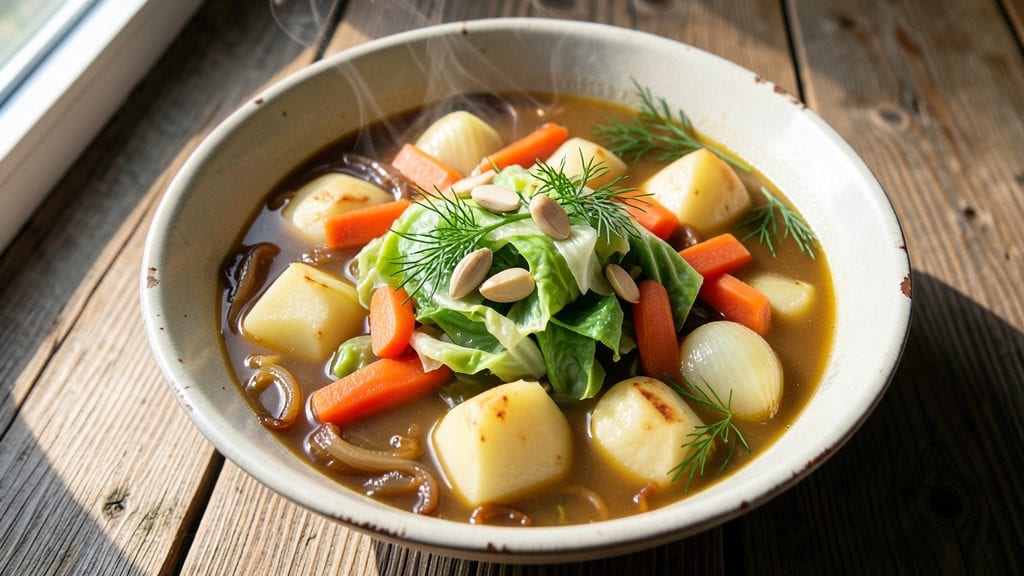
This Russian cabbage soup recipe delivers the comforting, vegetable-rich heartiness of traditional shchi without any meat. The secret lies in slow-simmered root vegetables and cabbage that develop deep, savory flavors while remaining tender. I've perfected this vegetarian version to honor the dish's roots while keeping it approachable for home cooks.
The beauty of this soup is its simplicity—just a handful of fresh ingredients simmered together until the cabbage becomes irresistibly tender. Potatoes and carrots form the base, while onions and garlic build layers of flavor.
The real magic happens when you finish it with a swirl of tangy sour cream and fresh dill, transforming it from hearty to extraordinary.
What you'll end up with is a steaming bowl of golden, aromatic soup that's rich enough to satisfy but light enough for any meal. The vegetables melt into the broth, creating a velvety texture that's pure comfort.
This is the kind of soup that warms you from the inside out—perfect for chilly days or when you crave something nourishing.
Serve it with crusty bread to soak up every last drop of that flavorful broth. The recipe scales easily, so you can make a big batch for the week or a single serving for two. Let's get cooking—your taste buds will thank you.
Ingredients for russian cabbage soup
Here's everything you need for this hearty, sour cream-swirled Russian cabbage soup.
| Ingredient | Amount | Notes |
|---|---|---|
| Vegetable Broth 🥄 | 6 cups | Low-sodium preferred |
| Yellow Onions 🧅 | 1 ½ lb | Diced into 1/2-inch pieces |
| Carrots 🥕 | 3 lb | Peeled, chopped into 1/2-inch pieces |
| Russet Potatoes 🥔 | 2 lb | Peeled, chopped into 1-inch cubes |
| Green Cabbage 🥬 | 4 lb | Quartered, cored, sliced thin |
| Garlic Cloves 🧄 | 6 cloves | Minced, for aromatic base |
| Fresh Dill 🌿 | ½ cup | Chopped for garnish |
| Sour Cream 🧀 | 1 cup | Full-fat for richness |
| Salt 🧂 | 1 ½ tsp | Kosher or sea salt |
| Black Pepper 🌶️ | ¾ tsp | Freshly ground preferred |
| Olive Oil 🫒 | ¼ cup | Extra-virgin for flavor |
| Bay Leaves 🍃 | 3 whole | For depth of flavor |
The star here is the cabbage—4 pounds of it gives you that classic shchi texture. I always grab the green variety from Trader Joe's or my local farmers market for the crispest leaves. The potatoes and carrots need to be evenly sized so they cook together, but no need to peel if you're in a rush. For the broth, low-sodium vegetable stock is a must—you'll be adding salt later anyway. The garlic gets minced right before cooking to avoid bitterness.
No fresh dill? Dried dill works at half the amount, but honestly, it just isn't the same. Want to stretch this further? Add 1 pound of frozen peas or mushrooms for extra texture. The sour cream is non-negotiable though—full-fat only gives that creamy finish. Short on time? Swap the bay leaves for 1 tsp dried thyme. The onions and carrots can be prepped ahead—just store them in water in the fridge until ready to cook. And if you're worried about the cabbage wilting, add it last to keep it crisp.
This soup tastes even better the next day as the flavors meld. Store leftovers in an airtight container for up to 5 days in the fridge. For longer storage, freeze portions for up to 3 months. I always make a big batch and freeze half—just thaw overnight in the fridge. The cabbage will keep its color if you keep it submerged in broth. And don't forget to swirl in that sour cream right before serving—it's the magic touch that makes it special.
Why You'll Love This Recipe
- I swear by this trick: slice the onions and carrots while the broth heats up—no prep ahead, no stress. The potatoes and cabbage go in whole (yes, really), so you’re not drowning in small pieces either. Honestly, I’ve made this while answering emails, and it still turned out rich and hearty.
- No-Fuss Chopping: I swear by this trick: slice the onions and carrots while the broth heats up—no prep ahead, no stress. The potatoes and cabbage go in whole (yes, really), so you’re not drowning in small pieces either. Honestly, I’ve made this while answering emails, and it still turned out rich and hearty.
- Creamy Without Dairy: That blend of caramelized onions and tender potatoes? It melts into the broth like a hug. The cabbage adds this perfect crunch, and the broth—whether homemade or store-bought—soaks up all the sweetness. Between us, it’s the kind of soup that makes you forget it’s just veggies.
- Lunchbox Hero: Pack it cold or warm—this soup keeps like a champ. I’ll make a big batch on Sundays, and by Wednesday, it’s still the star of my lunch. Add a dollop of sour cream or a sprinkle of dill when serving, and suddenly it’s a fancy office meal or a cozy picnic in one bowl.
Step-by-step instructions for Russian cabbage soup
Here's how to create a rich, comforting soup where every ingredient plays its part perfectly.
Sauté the Vegetable Base
Heat the 0.25 cup olive oil in a large Dutch oven over medium heat. Add the 1.5 lb diced yellow onions and cook for 5 minutes until soft and translucent. This is your flavor foundation—don't rush it.
Next, add the 3 lb chopped carrots and continue cooking for 8-10 minutes until they begin to soften and caramelize slightly. The onions should be golden brown by now. Stir occasionally to prevent burning. This step builds the sweet, aromatic base that will carry through the entire soup.
Add the 6 cloves minced garlic and the 3 whole bay leaves to the pot. Cook for 1 minute until the garlic becomes fragrant—this releases its full flavor potential. The bay leaves will infuse subtle earthy notes as the soup simmers.
Build the Soup Structure
Pour in the 6 cups vegetable broth and bring the mixture to a gentle boil. Once boiling, reduce the heat to medium-low and add the 2 lb cubed russet potatoes and 4 lb sliced green cabbage. Stir gently to combine everything.
Let the soup simmer uncovered for 30 minutes. You'll see the potatoes softening and the cabbage wilting slightly. The broth should reduce slightly, intensifying the flavors. This is where the soup comes together—patience here ensures tender vegetables and rich broth.
After 30 minutes, taste the soup and adjust seasoning with the 1.5 tsp salt and 0.75 tsp black pepper. The vegetables should be tender but still hold their shape. If the cabbage is too soft, reduce the simmer time slightly next time—it should remain slightly crisp.
Finish with Fresh Herbs and Creamy Swirl
Remove the 3 whole bay leaves from the soup. Stir in the 0.5 cup chopped fresh dill and let it steep for 5 minutes. The dill will brighten the flavors and add a fresh herbal note that complements the earthy vegetables.
Reduce the heat to low and gently stir in the 1 cup sour cream using a wooden spoon. This is where the magic happens—the sour cream swirls through the soup, creating pockets of creamy richness without curdling. Stir just until combined, being careful not to overmix.
Let the soup sit off the heat for 5 minutes before serving. This resting period allows the flavors to meld completely. Ladle into bowls and serve immediately while the vegetables are still warm and the broth is rich.
Pro Tips For Making Russian Cabbage Soup
- Sauté Onions Until Golden: I used to rush this step and end up with raw onion flavor lurking in the soup. For Russian cabbage soup, cook those onions in butter or oil until they’re deep golden—about 8-10 minutes—so they caramelize and add sweetness. Skip this, and your soup tastes like it’s still raw.
- Dice Potatoes Evenly: Uneven potato pieces mean some get mushy while others stay hard. Cut them into 1-inch cubes so they cook at the same rate—no one wants a forkful of rubbery potato. (Yes, even if you’re impatient like me.)
- Add Cabbage Last: Tossing cabbage in early turns it into sad, limp leaves. Wait until the potatoes are nearly done, then stir it in for just 5-7 minutes—enough to soften without turning it into soup water. Your future self will thank you.
- Salt Broth Early: If you’re using store-bought vegetable broth, salt it before adding it to the pot—it’ll taste flat if you wait. A pinch of salt now makes a real difference, especially since Russian cabbage soup isn’t heavy on extra seasoning. (Your taste buds will notice.)
Common mistakes when making perfect results
Overcooking Cabbage
Cabbage is the star of this soup, and overcooking turns it mushy instead of tender-crisp. The key is adding it after 30 minutes of simmering—any longer and it loses its structure. I've ruined several batches by letting it cook too long.
If your cabbage is already too soft, try adding 1 cup of cold water to dilute the broth slightly and reduce cooking time next time. 🥬
Skipping the Sauté
Rushing the sauté step is a huge mistake. Cooking onions and carrots until they're golden brown (about 15 minutes total) builds deep, sweet flavor that carries through the soup. I once skipped this step and ended up with a bland, watery result.
Use medium heat and stir frequently to avoid burning. The caramelization is what makes this soup truly comforting.
Adding Sour Cream Too Early
Adding sour cream while the soup is still hot causes it to curdle, ruining the creamy finish. Always stir it in off the heat for 5 minutes first. I learned this the hard way when my first batch separated into oily lumps.
For extra insurance, mix the sour cream with a splash of the hot broth first, then swirl it in gently. This maintains that signature silky texture we all love. 🧀
Using High-Sodium Broth
Most store-bought broths contain excessive salt, which can make your soup taste flat or require constant adjustment. Always choose low-sodium vegetable broth—I prefer Imagine or Pacific Foods brands.
If you're using regular broth, reduce the added salt to 1 tsp instead of 1.5 tsp to avoid over-salting. Taste as you go, especially after the initial simmer.
Ignoring the Resting Time
Skipping the 5-minute rest after adding sour cream means missing out on flavor development. This brief pause lets the ingredients meld together, creating a more cohesive dish.
I've noticed that rushed soups often taste disjointed. Use this time to set the table or prepare garnishes—it's worth the wait for that perfect first bite. ⏰
Uneven Vegetable Sizes
Chopping potatoes and carrots into uneven pieces leads to some vegetables cooking faster than others. Aim for ½-inch carrot pieces and 1-inch potato cubes to ensure even cooking. I keep a 2-inch ruler handy for consistency.
If some pieces finish earlier, remove them and return them to the pot at the end to reheat slightly—this prevents a mushy texture in the finished soup.
Nutrition facts
Frequently asked questions
Can I make this Russian cabbage soup without sour cream?
The sour cream adds that signature creamy swirl and tangy finish, but you can substitute it with ½ cup Greek yogurt or ¼ cup crème fraîche for a similar texture. For a dairy-free option, stir in 2 tablespoons lemon juice and 1 tablespoon olive oil at the end. The soup will still be flavorful—just missing that rich, velvety touch.
How long can I store leftovers, and can I freeze it?
Store leftovers in an airtight container in the fridge for up to 5 days. For longer storage, freeze portions for up to 3 months. Thaw overnight in the fridge to preserve texture. Pro tip: Freeze the soup without the sour cream—add it fresh when reheating to keep it creamy.
What if my cabbage turns out too mushy?
Add the cabbage last (after 30 minutes of simmering) to keep it tender-crisp. If it’s already too soft, stir in ½ cup cold water and simmer for 5 more minutes—this dilutes the broth slightly and prevents further breakdown. The ideal texture should be slightly firm with a bite, not mushy.
Can I use white cabbage instead of green?
White cabbage works perfectly and has a milder flavor. For a stronger taste, use ½ green and ½ white cabbage. Just slice it slightly thinner than green cabbage—it cooks faster. The color difference won’t affect the soup’s heartiness or flavor, just the visual appeal.
Is this soup spicy? Can I add heat?
This recipe is naturally mild, but you can easily add heat! Stir in ½ teaspoon smoked paprika during the sauté step or add 1-2 diced jalapeños with the cabbage. For a smoky kick, top with ½ teaspoon cayenne pepper or a dash of hot sauce before serving. Start with ¼ teaspoon if you’re sensitive to spice.