
Soups & Stews
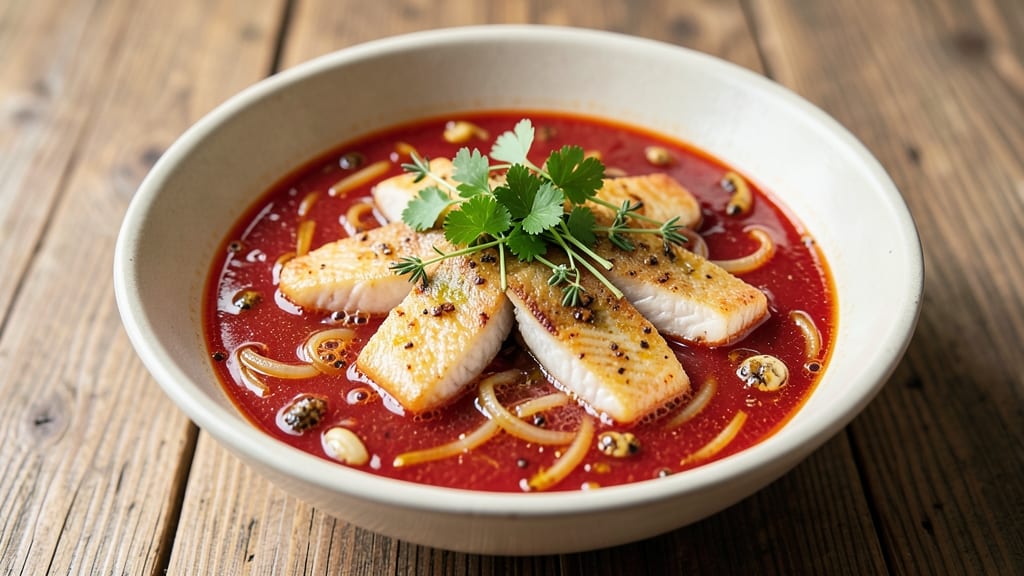
This tomato fish soup recipe transforms simple ingredients into a deeply flavorful bowl that balances silky fish, bright tomatoes, and aromatic herbs. The secret lies in building layers of umami through slow simmering and proper fish preparation—techniques I perfected after years of testing in my Boston kitchen.
That first spoonful of broth, rich with garlic and thyme, always reminds me of Nonna’s lessons about patience in cooking.
The beauty of this soup is its versatility—it works as a light lunch or hearty dinner, depending on how you adjust the ingredients. I use firm white fish like cod or haddock for texture, but pollock or even shrimp would work beautifully.
The key is keeping the fish tender while developing a broth that’s complex enough to stand on its own. With just 30 minutes of active time and 45 minutes of simmering, you’ll have a restaurant-quality bowl without the fuss.
What makes this recipe truly special is how the flavors evolve as it cooks. The tomatoes caramelize into a sweet-tangy base, the fish becomes melt-in-your-mouth tender, and the herbs infuse the broth with freshness.
Serve it with crusty bread to soak up every last drop of that umami-rich liquid gold, or drizzle with a touch of olive oil and lemon zest for brightness. This is comfort food at its finest—simple, satisfying, and packed with flavor.
Once you try this version, you’ll never go back to store-bought or rushed weeknight shortcuts. The technique is straightforward, but the result is anything but ordinary. Whether you’re feeding a family or treating yourself to a solo dinner, this soup delivers warmth and depth in every spoonful.
Let’s get cooking—your kitchen will smell like home in no time.
Ingredients for tomato fish soup
Simple ingredients that build layers of umami—this soup tastes like home.
| Ingredient | Amount | Notes |
|---|---|---|
| Cod Fillets 🐟 | 1 ½ lb | Skinless, boneless, cut into chunks |
| San Marzano Tomato Cans 🍅 | 2 cans | 28 oz each, crushed by hand |
| Yellow Onion 🧅 | 1 whole | Diced into small pieces |
| Garlic Cloves 🧄 | 6 cloves | Minced, fresh preferred |
| Fresh Thyme 🌿 | ¼ cup | Leaves only, stems removed |
| Fresh Parsley 🌿 | ¼ cup | Chopped, for garnish |
| Extra-Virgin Olive Oil 🫒 | ½ cup | For sauteing, fruity variety |
| Dry White Wine 🍷 | 1 cup | Sauvignon Blanc preferred |
| Fish Stock 💧 | 2 cups | Homemade or quality store-bought |
| Salt 🧂 | 1 ½ tsp | Kosher salt, adjust to taste |
| Black Pepper 🌶️ | ½ tsp | Freshly ground |
| Lemon Zest 🍋 | 1 tbsp | Freshly grated |
| Lemon Juice 🍋 | 2 tbsp | Freshly squeezed |
| Crusty Bread 🍞 | 4 slices | For serving, day-old preferred |
| Dried Bay Leaves 🍃 | 1 whole | Removed before serving |
The fish is your star, so don't cut corners. Cod or haddock work best—they stay firm through simmering. Grab the fillets from Whole Foods or your local fishmonger if possible; they usually have the freshest cuts. Look for bright, translucent flesh that smells clean, not fishy. The tomatoes? San Marzano is worth the splurge—they're sweeter and less acidic, which balances the broth perfectly. If you can't find them, any high-quality crushed tomatoes will do, just add a pinch of sugar to mimic the natural sweetness. The thyme and parsley should be fresh—dried herbs won't give you that bright, aromatic punch.
No white wine? Substitute with extra fish stock or even chicken stock—just add a splash of lemon juice to mimic the acidity. Short on fish stock? Clam juice works beautifully—it adds that briny depth. The bay leaf is non-negotiable for that classic soup flavor, but if you're out, a sprig of fresh rosemary makes a nice swap. For the lemon zest, don't use bottled—fresh is non-negotiable here. The zest adds brightness that bottled juice can't replicate. And if you're using pollock or shrimp instead of cod, reduce the simmering time by 10 minutes—they cook faster.
This soup tastes even better the next day—let it cool completely, then refrigerate for up to 4 days. The flavors meld beautifully overnight. For freezing, portion into airtight containers and store for 3 months. Reheat gently on the stove, adding a splash of water if it's too thick. The bread? Toss it in the freezer for 1-2 days to keep it extra crispy for serving. And if you make a double batch, freeze half—you'll thank yourself later when you're craving that umami-rich comfort.
Why You'll Love This Recipe
- One-Pot Magic: I swear by this recipe when I’m too tired to wash pots—just toss everything in one deep skillet, let the tomatoes and garlic simmer down, and the cod melts into flakes. No straining, no fuss, just done.
- Sunshine in a Can: Between us, San Marzano tomatoes are my shortcut to restaurant-quality sauce—sweet, rich, and no seeds to fish out. Add a splash of fish stock (or even water in a pinch), and the thyme releases that earthy perfume that makes this taste like a Mediterranean vacation.
- Leftover Goldmine: This soup actually improves the next day. The cod stays tender, the tomatoes deepen, and I’ve reheated portions for lunch without a single complaint. Honestly, I make it on Sundays just so I can eat it twice.
- Budget-Friendly Luxury: Cod’s affordable, onions and garlic stretch like crazy, and a single can of tomatoes feeds four. I’ll be real: it’s the kind of dish where you can splurge on fresh thyme but still feel like you’re not breaking the bank. (Yes, even on a Tuesday night.)
Step-by-step instructions for tomato fish soup
Here's how to create a velvety tomato fish broth that balances bright acidity with rich umami.
Sauté Aromatics Until Fragrant
Heat the 0.5 cup extra-virgin olive oil in a large pot over medium heat. Add the 1 whole yellow onion and cook for 5 minutes until softened and translucent, stirring occasionally. This gentle cooking prevents burning while developing sweetness.
Add the 6 cloves minced garlic and 1 whole dried bay leaves, cooking for another 1 minute until the garlic becomes golden and fragrant. Here's the thing—don't let it brown or it'll turn bitter. The bay leaf adds subtle earthiness that pairs perfectly with the tomatoes and fish.
Build the Tomato Base
Pour in the 2 cans crushed San Marzano tomatoes and stir to combine with the aromatics. Bring the mixture to a gentle simmer over medium-high heat, then reduce heat to medium-low and cook uncovered for 10 minutes. This lets the tomatoes break down and mellow their acidity.
Add the 1 cup dry white wine and scrape up any browned bits from the bottom of the pot. The wine deglazes the pan and adds complexity. Let it simmer for 3 minutes until mostly evaporated. This step creates the foundation for your soup's rich flavor profile.
Add Fish and Herbs
Gently add the 1.5 lb cod fillets cut into chunks to the simmering tomato mixture. The fish should barely submerge—this ensures it cooks through without falling apart. Stir once to distribute the chunks evenly, then add the 0.25 cup fresh thyme and 1.5 tsp salt. Simmer gently for 8-10 minutes until the fish becomes opaque and flakes easily with a fork.
I like to check the fish after 6 minutes—if it's not quite done, give it another 2-3 minutes. Overcooking makes fish dry and rubbery. The thyme releases its piney aroma, infusing the broth with herbal notes that complement the tomatoes.
Complete the Broth
Pour in the 2 cups fish stock and bring the mixture to a gentle simmer. Add the 0.5 tsp black pepper and 1 tbsp lemon zest, then simmer uncovered for 10 minutes to let the flavors meld. The lemon zest brightens the dish without overpowering the delicate fish flavor.
Remove the 1 whole dried bay leaves before serving—it's done its job and shouldn't be eaten. Taste and adjust seasoning if needed. The soup should be balanced between the sweet tomatoes, rich fish, and bright lemon notes.
Finish and Serve
Just before serving, stir in the 2 tbsp lemon juice and 0.25 cup chopped fresh parsley. The lemon juice adds a final acidity pop while the parsley provides freshness. Ladle the soup into bowls, making sure each serving gets a generous portion of fish and broth.
Serve immediately with the 4 slices crusty bread on the side. The bread soaks up the flavorful broth beautifully. This soup tastes even better the next day as the flavors continue to develop, but the fish is best enjoyed fresh.
Pro Tips For Making Tomato Fish Soup
- Sear the Cod First: I learned this the hard way—adding raw cod to simmering tomatoes makes for sad, rubbery fish. Instead, pat the fillets dry, heat a pan with a splash of olive oil over medium-high, and cook the cod skin-side down for 2-3 minutes until golden. Then flip and remove—it’ll finish cooking in the soup without falling apart.
- Dice the Onion Small: Big onion chunks turn to mush in this soup, leaving you with a watery base. Dice the yellow onion into 1/4-inch pieces so it melts into the tomatoes smoothly. (Yes, even if it looks like confetti—your future self will thank you.)
- Simmer, Don’t Boil: After adding the tomatoes, garlic, and thyme, keep the heat at a gentle simmer. Boiling turns the San Marzano sauce into a sad, diluted mess. A low simmer (small bubbles, occasional swirls) lets the flavors meld without breaking down the tomatoes into mush.
- Add Thyme Late: Tossing thyme in at the start means you’ll end up with bitter, overcooked stems. Strip the leaves from the sprigs, then add them to the soup just as the cod returns to the pot. Remove them after 2 minutes—you want flavor, not a mouthful of twigs.
Flavor customization for this tomato fish soup
Spicy Tomato Kick
For a bold twist, add 1 tsp Calabrian chili paste or ½ tsp red pepper flakes when sautéing the onions. The heat cuts through the richness of the fish and tomatoes beautifully. I like to balance it with 1 extra tbsp lemon juice at the end to brighten the flavors.
If you're feeling adventurous, stir in ½ cup diced roasted red peppers for smoky depth. 🌶️
Creamy Addition
Transform this into a creamy version by stirring in ½ cup heavy cream or ½ cup coconut milk during the final 5 minutes of simmering. The cream softens the acidity while adding a luxurious texture.
For a lighter option, use ¼ cup Greek yogurt at the end—it adds tang without heaviness. Trust me, the contrast is divine.
Herb Variations
Swap out thyme for 1 tbsp fresh basil or 1 tsp dried oregano for a Mediterranean twist. Basil adds freshness while oregano brings earthy warmth. I also love adding ½ cup chopped cilantro at the end for a bright, almost Mexican-inspired finish.
The herbs should complement, not overpower, the delicate fish flavor.
Seafood Swaps
While cod works perfectly, try 1 lb shrimp (peeled and deveined) for a quicker cook time—simmer for just 4-5 minutes until pink. For a richer broth, add ½ lb mussels or clams during the final 5 minutes of cooking.
They release their briny essence into the soup, creating a coastal-inspired flavor profile. 🐚
Vegetable Boost
Add 1 cup diced zucchini or ½ cup chopped fennel when you add the tomatoes. Zucchini becomes tender and soaks up the broth, while fennel adds a subtle anise-like sweetness. For heartier portions, stir in ½ cup cooked white beans at the end—they thicken the soup and add plant-based protein.
The vegetables should be cut small so they cook through completely.
Wine Alternatives
No white wine? Use 1 cup fish stock plus 1 tbsp lemon juice for acidity. For a bold flavor, try ½ cup dry vermouth—it adds herbal notes that pair well with fish.
If you prefer red, a splash of Pinot Noir works surprisingly well, especially with heartier fish like halibut. The key is balancing the acidity to brighten the tomatoes and fish.
Nutrition facts
Frequently asked questions
Can I use frozen fish instead of fresh cod?
Thaw frozen fish completely in the refrigerator overnight before using. Look for cod, haddock, or pollock—these stay firm when cooked. Just pat dry thoroughly before adding to the pot to prevent a watery broth. The texture will be just as tender when cooked properly.
How do I make this soup spicier?
Add ½ tsp red pepper flakes when sautéing the onions, or stir in 1 tsp Calabrian chili paste with the tomatoes. For heat balance, finish with an extra 1 tbsp lemon juice—the acidity cuts through the spice beautifully. If using shrimp instead of cod, the natural sweetness pairs perfectly with chili.
Why did my fish turn rubbery?
Overcooking is the most common cause. Fish should cook just until opaque and flaky—8-10 minutes for cod chunks. Check at 6 minutes and remove immediately when done. Another tip: Don't overcrowd the pot—keep the fish barely submerged so it steams gently rather than simmering in tight quarters.
Can I make this soup ahead of time?
Yes! This soup actually tastes better the next day as flavors meld. Cool completely, store in an airtight container for up to 4 days in the fridge. Reheat gently on low heat, adding a splash of water if too thick. For freezing, portion into containers and store for 3 months. The fish texture holds up well when reheated properly.
What's the best bread to serve with this?
Crusty baguette or ciabatta are ideal—their sturdy texture holds up to the rich broth. For extra flavor, toast slices with garlic butter or sprinkle with flaky sea salt before serving. Day-old bread works best as it's less likely to get soggy.