
Soups & Stews
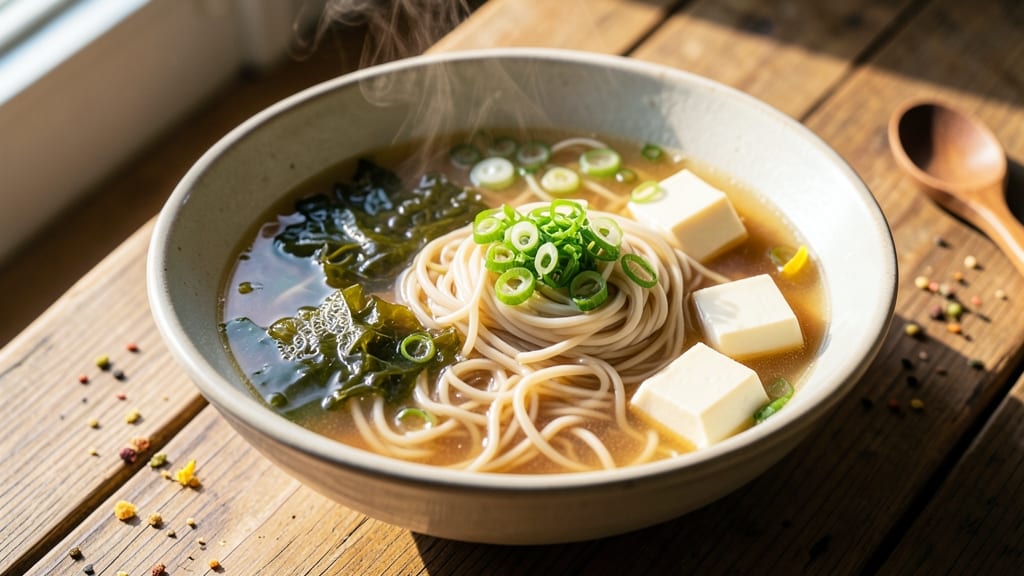
This asari miso soup recipe delivers a symphony of umami and delicate textures—silky rice noodles, tender tofu, and briny asari seaweed all harmonizing in a rich, savory broth.
The secret lies in balancing traditional Japanese techniques with simple pantry staples, creating a dish that feels both comforting and refined without requiring specialty ingredients.
The foundation of great asari miso soup begins with a well-made dashi broth, enhanced by kombu and bonito flakes, which builds depth of flavor. Asari seaweed adds its signature oceanic sweetness, while silky rice noodles provide the perfect textural contrast to the hearty tofu and fresh scallions.
What makes this recipe special is how each element comes together—simple ingredients elevated through proper technique.
By the time you finish, you'll have a steaming bowl of soup where every spoonful delivers layers of flavor: the earthy richness of miso, the delicate sweetness of asari, and the satisfying bite of fresh scallions.
The noodles absorb the broth beautifully, creating a cohesive dish that's both nourishing and deeply satisfying.
This recipe works equally well as a light lunch or comforting dinner, and it scales perfectly for meal prep. Whether you're serving it to guests or treating yourself, the balance of flavors and textures will leave everyone asking for seconds. Let's get started on creating this umami masterpiece.
Ingredients for asari miso soup
Simple yet refined—just twelve ingredients crafting umami harmony in every bowl.
| Ingredient | Amount | Notes |
|---|---|---|
| Dashi Broth 🍜 | 4 cups | Homemade or quality store-bought |
| White Miso Paste 🧈 | ¼ cup | Aged 1-2 years for balance |
| Asari Seaweed (Shirahama) 🌊 | ½ oz | Dried, rehydrated in broth |
| Silken Tofu 🍱 | 8 oz | Soft, cut into small cubes |
| Rice Noodles 🍜 | 4 oz | Fine, dried, soaked in warm water |
| Green Onions 🧅 | ¼ cup | Thinly sliced, white and green parts |
| Kombu Seaweed 🍃 | 1 piece | Dried, 6-inch strip for dashi |
| Bonito Flakes 🐟 | 1 tbsp | High-quality, for dashi depth |
| Sesame Oil 🌰 | ½ tsp | Toasted, for finishing |
| Rice Vinegar 🍶 | 1 tbsp | For subtle acidity balance |
| Soy Sauce 🥫 | 1 tsp | Lightly salted for umami |
| Sugar 🍯 | ½ tsp | White, for subtle sweetness |
The dashi broth is where the magic starts. Kombu and bonito flakes create that signature umami depth—skip the shortcuts here. For kombu, look for Japanese dried strips at Asian markets or specialty stores; the Matsuno brand is reliable. Bonito flakes should be light brown, not yellowed. If making homemade dashi, toast the kombu lightly in a dry pan first to remove bitterness. Store-bought dashi works in a pinch, but it lacks the complexity of homemade. Pro tip: Simmer the kombu just before removing it—those last few minutes release more flavor.
Asari seaweed is the star, but it's often overlooked. Shirahama asari is the gold standard—find it in the freezer section of Asian markets or online. If unavailable, wakame seaweed at half the amount works, though it lacks that oceanic sweetness. The miso paste should be white, not red—Honten brand is a safe bet. For the tofu, silken is non-negotiable; it dissolves beautifully into the broth. No silken? Extra-firm tofu pressed and cubed is your backup. The rice noodles should be fine and dry—Shinramen brand is my go-to, but any good-quality rice noodles work. Soak them in warm water for 10 minutes before adding to the soup—this prevents them from turning mushy.
Dashi broth keeps for 3 days in the fridge, but it's best used fresh. Rehydrated asari seaweed should be stored in its broth and used within 2 days. The miso paste lasts 6-12 months unopened, but once opened, keep it in the fridge and use within 3 months. For meal prep, assemble the soup without the tofu and noodles—add those fresh when serving. The flavors actually improve overnight as the miso melds with the broth. If you're making a big batch, double the dashi and miso, then portion the soup into containers. It reheats beautifully, though the noodles may need a splash of hot water to revive their texture.
Why You'll Love This Recipe
- Five-Ingredient Magic: I swear by this one—just dashi, miso, seaweed, tofu, and noodles. That’s it. No chopping, no fuss, and the umami explosion when those ingredients hit the pot? Chef’s kiss. The asari seaweed adds this briny, ocean-like depth that makes it feel special without the work.
- Umami Bomb: Honestly, the combo of white miso and dashi is next-level. The miso gives this soup that rich, funky depth, while the asari seaweed brings a subtle sweetness that balances it out. And the silken tofu? It melts into the broth like a cloud—no one ever leaves a bite behind.
- Lunchbox Hero: Between us, this is my go-to for meal prep. Toss the noodles and tofu in ahead of time, and the soup stays warm for days. Pack it cold in a thermos, and by lunchtime, it’s like you just reheated a bowl of freshness. My office coworkers think I’m a saint.
- Budget Flex: I make this twice a month, easy. Dashi stock is cheap, miso lasts forever, and asari seaweed is a bulk-bin steal. Even the silken tofu stretches far when you slice it thin. It’s the kind of soup that makes you feel like you’re eating fancy without breaking the bank.
Step-by-step instructions for asari miso soup
This umami-rich soup delivers a perfect balance of silky rice noodles and briny seaweed—every step ensures depth of flavor.
Prepare the Dashi Broth Foundation
In a clean pot, combine the 4 cups dashi broth with the 1 piece kombu seaweed and 1 tablespoon bonito flakes. Bring to a gentle simmer over medium-low heat—you want just enough heat to maintain warmth without boiling vigorously. Simmer for 5 minutes to infuse the broth with kombu's mineral richness and bonito's savory depth.
I like to skim off any foam that rises to the surface during this time—it ensures a crystal-clear broth. The kombu should soften slightly but remain intact. Once simmered, remove the kombu and bonito flakes with a slotted spoon, leaving you with a clean, aromatic base ready for the miso and seaweed.
Infuse the Asari Seaweed
Add the 0.5 oz dried asari seaweed (Shirahama) to the warm dashi broth. Let it steep for 10 minutes—this rehydrates the seaweed and extracts its delicate, slightly sweet oceanic flavor. The seaweed should plump up noticeably but remain tender. If it looks fully rehydrated sooner, you can remove it after 5 minutes to prevent over-softening.
Here's the thing—don't skip this step. The asari's natural umami is what transforms this from ordinary miso soup to something extraordinary. If you're using pre-rehydrated seaweed, simply add it directly to the broth now and proceed.
Dissolve the Miso and Season
Reduce the heat to low and ladle 1 cup of the hot broth into a small bowl. Whisk in the 0.25 cup white miso paste until completely dissolved—this prevents the miso from clumping and losing its velvety texture. Once smooth, pour the miso mixture back into the main pot and stir gently to combine.
Add the 1 teaspoon soy sauce, 1 tablespoon rice vinegar, and 0.5 teaspoon sugar. Let the soup simmer for 2 minutes to allow the flavors to meld. The sugar will subtly round out the acidity from the vinegar, while the soy sauce deepens the umami. Taste and adjust seasoning if needed—this is where you fine-tune the balance between salty, sweet, and briny.
Prepare and Add the Noodles and Tofu
While the soup simmers, prepare the 4 oz rice noodles by soaking them in warm (not boiling) water for 8-10 minutes until pliable but still slightly firm. Drain and rinse briefly under cold water to stop the cooking process—this prevents them from turning mushy in the hot soup.
Cut the 8 oz silken tofu into ½-inch cubes for even cooking. Add both the noodles and tofu to the soup and simmer together for 3-4 minutes on low heat. The noodles should soften completely while the tofu absorbs the broth's flavors without breaking down.
Finish with Garnishes and Serve
Remove the pot from heat and stir in the 0.5 teaspoon sesame oil and 0.25 cup sliced green onions. The sesame oil adds a nutty aroma and rich finish, while the green onions provide a fresh contrast. Let the soup sit for 2 minutes off the heat—this allows the flavors to settle and the noodles to absorb any remaining broth.
Ladle the soup into bowls immediately and serve while steaming hot. Each spoonful should deliver a harmonious blend of silky noodles, tender tofu, briny asari, and the deep umami of the miso broth. The green onions add a bright finish that cuts through the richness, making every bite balanced and satisfying.
Pro Tips For Making Asari Miso Soup
- Dissolve Miso Last: I learned this the hard way—adding miso paste to boiling broth kills its flavor. Instead, stir in the miso when the broth is just simmering (around 170°F/77°C), and let it melt gently for 30 seconds. That way, the umami develops properly without turning bitter.
- Prep Asari Properly: Shirahama asari is delicate—don’t just toss it in dry. Rinse it quickly under cold water, then soak in warm water for 2-3 minutes to soften. This prevents it from curling into a rock-hard ball in your soup. (Yes, I’ve seen it happen.)
- Control Noodle Heat: Rice noodles for this soup should be cooked al dente and added to the broth just before serving. If you overcook them, they’ll turn mushy and sink like lead. Boil them for 1-2 minutes less than the package says, then finish in the hot broth.
- Upgrade with Tofu Texture: Silken tofu in miso soup is usually cubed, but I slice mine into ½-inch thick rectangles. They hold their shape better and absorb the broth’s flavor without falling apart. (Bonus: It looks fancier with zero extra effort.)
Pro cooking tips for perfect results
Dashi Perfection
Your dashi broth is the soul of this soup—never cut corners here. For homemade dashi, simmer the kombu seaweed just until it releases its minerals (5 minutes max), then remove it immediately to prevent bitterness. I use a Matsuno brand kombu strip because it's consistently high quality.
The bonito flakes should be light brown and fresh—if they smell fishy, toss them. For extra clarity, strain the broth through a fine-mesh sieve after simmering. 🌊
Miso Magic
Dissolving miso properly is non-negotiable—clumps ruin the texture. Always whisk it into a small cup of hot broth first, then return it to the pot. I recommend Honten brand white miso for its balanced umami.
If your miso tastes too strong, add ½ teaspoon more sugar to round out the flavors. Pro tip: Never boil miso—simmer gently at 170°F max to preserve its probiotic benefits. 🧈
Seaweed Timing
The asari seaweed needs precise attention. If it over-steeps (10+ minutes), it turns mushy and loses its oceanic sweetness. For best results, use Shirahama brand asari—it's the most flavorful.
If unavailable, wakame works at half the amount, but it lacks that signature briny depth. Always rehydrate in warm broth, not cold water, to extract maximum flavor. 💡
Noodle Texture
Rice noodles are delicate—overcooking turns them to mush. Soak them in warm water (160°F) for exactly 8-10 minutes, then rinse briefly in cold water to stop cooking. I use Shinramen brand noodles because they hold up better.
For meal prep, cook the noodles separately and add them to the hot soup just before serving to maintain perfect texture. 🍜
Tofu Technique
Silken tofu should be cubed ½-inch thick for even cooking. If your tofu is too firm, press it first by placing a weight on it for 15 minutes. Add the tofu to the soup only after the noodles—this prevents it from breaking down.
For extra flavor, marinate the tofu cubes in 1 tsp soy sauce + ½ tsp sesame oil for 10 minutes before adding. 🍱
Final Touches
The sesame oil and green onions are where the soup shines. Add the sesame oil last—its nutty aroma should finish the dish, not overpower it. Thinly slice the green onions on the bias for maximum surface area.
For a restaurant-style presentation, garnish with a sprinkle of toasted sesame seeds and a drizzle of ponzu sauce on the side. 💫
Nutrition facts
Frequently asked questions
What makes asari miso soup different from regular miso soup?
The key difference is the asari seaweed—this dried oceanic delicacy adds a unique briny-sweet flavor that regular miso soup lacks. While traditional miso soup relies on tofu and wakame, asari brings that signature umami depth that makes this version truly special. The rice noodles also create a distinct textural contrast compared to the usual mochi tofu.
Can I substitute asari seaweed if I can't find it?
Yes! Use wakame seaweed at half the amount (about ¼ oz), but expect a milder oceanic flavor. For a vegetarian version, try dried shiitake mushrooms (½ oz) rehydrated in the broth—they add earthy depth. If you want to keep it seafood-forward, dried bonito flakes can enhance the umami without seaweed.
How do I store leftovers without making the noodles mushy?
Store the soup without the noodles—keep them separate in the fridge for up to 2 days. When reheating, warm the broth first, then add the noodles directly to the hot soup just before serving. For tofu, store it in the broth separately and add fresh when reheating. This keeps everything perfectly textured!
Is this recipe vegetarian or vegan?
As written, it's pescatarian due to the dashi (which uses bonito flakes). For a vegetarian version, replace bonito with shiitake dashi powder (1 tbsp) and use vegetable broth. For vegan, substitute miso with vegan miso paste (check for seafood-free labels) and use kombu-only dashi.
Why does my miso soup taste too salty?
Miso paste is naturally salty—if your soup tastes too strong, balance it with ½ teaspoon more sugar or 1 extra tablespoon rice vinegar. The sugar rounds out the saltiness while the vinegar adds brightness. Taste as you go! For future batches, start with ¼ cup miso and adjust to preference.