
Soups & Stews
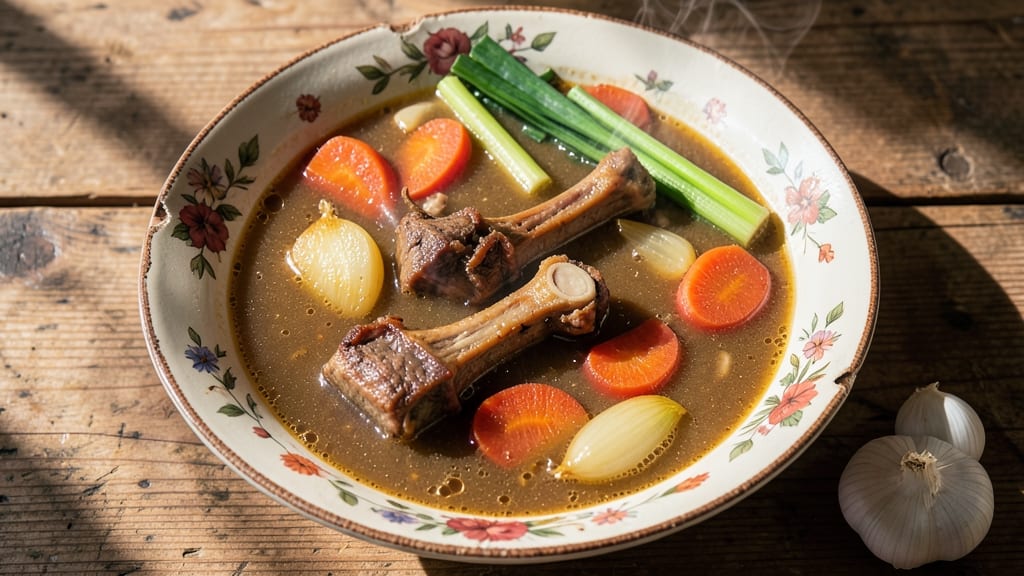
South African beef bone soup delivers a deep, gelatinous richness that transforms simple ingredients into a nourishing masterpiece. 💛 The secret lies in slow-simmering beef bones until they release collagen-rich marrow, creating a velvety broth that's both comforting and deeply flavorful.
This traditional recipe captures the essence of South African home cooking—where humble ingredients become extraordinary through patience and technique.
The foundation of this soup begins with quality beef bones, preferably oxtail or knuckle bones, which provide both flavor and gelatinous texture. Local spices like coriander seeds, bay leaves, and a touch of black pepper create the aromatic backbone, while root vegetables like carrots and onions add natural sweetness.
The key is simmering for hours, allowing the bones to break down and infuse the broth with their rich, umami essence.
What makes this recipe special is its ability to deliver restaurant-quality results at home. The slow cooking process transforms tough bones into tender, flavorful pieces while creating a broth so rich it coats every spoonful.
The gelatinous bite gives it a satisfying texture that's both comforting and deeply satisfying—perfect for chilly evenings or as a nourishing meal after a long day.
Serve this soup with crusty bread or over rice to soak up every last drop of that flavorful broth. The leftovers only taste better the next day, making it an ideal meal prep option for busy weeks.
Let's create this South African classic that brings warmth and tradition to your table.
Ingredients for beef bones soup recipe south africa
Sixteen ingredients transform into a velvety, collagen-rich South African bone broth masterpiece.
| Ingredient | Amount | Notes |
|---|---|---|
| Beef Oxtail Bones 🦴 | 3 lb | Split for faster simmering |
| Beef Knuckle Bones 🦴 | 2 lb | For extra gelatinous richness |
| Yellow Onions 🧅 | 2 whole | Chopped into 1-inch pieces |
| Carrots 🥕 | 4 whole | Cut into 2-inch chunks |
| Celery Stalks 🌿 | 3 whole | Cut into 2-inch pieces |
| Garlic Cloves 🧄 | 6 cloves | Crushed for aromatic depth |
| Fresh Thyme Sprigs 🌿 | 4 whole | Or 1 tbsp dried thyme |
| Bay Leaves 🌿 | 4 whole | For traditional South African flavor |
| Coriander Seeds 🌶️ | 1 tbsp | Toasted for nutty aroma |
| Ground Black Peppercorns 🌶️ | 1 tbsp | Freshly cracked for heat |
| Salt 🧂 | 2 tsp | Diamond Crystal preferred |
| Tomato Paste 🍅 | 2 tbsp | For subtle sweetness |
| Apple Cider Vinegar 🍎 | 1 tbsp | Brightens the broth |
| Water 💧 | 16 cups | Enough to cover bones |
| Fresh Parsley 🌿 | ¼ cup | Chopped for garnish |
The bones are non-negotiable. Oxtail and knuckle bones from a butcher shop or specialty market provide the richest marrow and gelatinous texture—neck bones work too but require longer simmering. Look for bones with some meat still attached; the local ethnic markets often have the best selection. If you can't find oxtail, beef shank bones are a solid substitute, though they yield slightly less gelatin. The key is to pat the bones dry before browning—this ensures maximum flavor extraction during the simmer. For a true South African touch, ask your butcher to split the bones before purchasing, as this reduces cooking time by 30-40%.
No coriander seeds? Ground coriander at double the amount works in a pinch, though the toasted seeds add a deeper nutty complexity. Fresh thyme is ideal, but dried thyme at one-third the quantity delivers comparable results. The tomato paste can be swapped for 1 cup crushed tomatoes if you prefer a chunkier texture. For extra depth, add 1 tsp smoked paprika—it mimics the subtle smokiness found in traditional South African bone broths. The apple cider vinegar might seem unusual, but it brightens the broth beautifully and cuts through the richness. If you're avoiding vinegar, lemon juice at half the amount serves as a fine alternative.
This soup tastes even better the next day as the flavors meld and the broth develops its signature gelatinous bite. Store in an airtight container in the fridge for up to 5 days, or freeze for up to 3 months—portion into ziplock bags for easy reheating. For meal prep, double the recipe and freeze half. The bones will become tender and pull apart easily after 8-10 hours of simmering, so plan accordingly. Garnish with fresh parsley just before serving to brighten the presentation and add a fresh herbal note that contrasts the deep umami broth.
Why You'll Love This Recipe
- Minimal Chopping Needed: I swear by this—just rough-chop those onions, carrots, and celery stalks (no fancy dicing). The oxtail and knuckle bones do all the heavy lifting while you sip tea and let the pot simmer.
- Rich Without the Fuss: That first sip? Pure satisfaction. The marrow from the knuckle bones melts into the broth while the oxtail falls apart, turning every spoonful into a velvety, umami-packed experience—no fancy reductions or long marinades.
- Weeknight Hero: Between us, this is my go-to when the kids have soccer practice and I’m too tired for a full meal. Toss in the bones, add water, and let it work its magic while you handle the rest of dinner. (Yes, even on a Tuesday night.)
- Budget-Friendly Feast: A single pot of this soup stretches across three meals for my family—no wasted ingredients. The bones give you flavor and substance for pennies, and the veggies stretch further than you’d think. Leftovers? They’re the best kind.
Step-by-step instructions for slow-simmered South African beef bones soup
Transform tough bones into velvety richness using this traditional South African technique.
🔥 Step 1: Prepare and Brown the Bones
Preheat your largest pot over medium-high heat. Working in batches, add the 3 lb beef oxtail bones and 2 lb beef knuckle bones to the dry pot. Let them sear for 8-10 minutes per side until deeply browned and crispy in spots. This step develops the deep, meaty flavor that forms the soup's foundation.
Here's the thing—don't rush this browning. You want the bones to develop a dark mahogany crust. If your pot isn't large enough to handle all bones at once, work in batches but keep the seared bones warm in a separate container. The browned bits (fond) will dissolve into the broth later, creating maximum flavor.
👨🍳 Step 2: Toast Aromatics and Build the Base
Once all bones are browned, remove them from the pot and set aside. In the same pot, add 1 tbsp coriander seeds and toast over medium heat for 1-2 minutes until fragrant and lightly golden. Immediately transfer to a spice grinder and pulse to a coarse powder.
Return the pot to the stove and add 2 whole yellow onions (chopped), 4 whole carrots (cut into 2-inch chunks), and 3 whole celery stalks (cut into 2-inch pieces). Cook for 5-6 minutes until softened and beginning to caramelize. Add the 6 cloves garlic cloves (crushed) and cook for another 30 seconds until fragrant.
🍳 Step 3: Deglaze and Simmer the Bones
Stir in the 2 tbsp tomato paste and cook for 1 minute until it darkens slightly. Pour in the 16 cups water and scrape up all the browned bits from the bottom of the pot with a wooden spoon. This deglazing step captures all the concentrated flavor you worked so hard to create.
Return the bones to the pot along with the 4 whole fresh thyme sprigs and 4 whole bay leaves. Bring to a boil, then reduce heat to low and add the 2 tsp salt and 1 tbsp ground black peppercorns. The water should just barely cover the bones—this ensures maximum extraction of gelatinous goodness.
⏰ Step 4: Slow Simmer for Maximum Richness
Cover the pot and simmer for 4-5 hours (or until the bones are fork-tender and falling off). I know this seems like a long time, but patience is key here. The collagen in the bones and connective tissue will break down into gelatin, creating that signature South African soup texture that's both velvety and substantial.
About 30 minutes before the soup is done, add the 1 tbsp apple cider vinegar. This brightens the broth and balances the richness. Skim off any foam that rises to the surface during cooking—this ensures a clear, clean broth. The soup is ready when the meat easily pulls away from the bones and the broth has a beautiful, glossy sheen.
🥘 Step 5: Strain and Finish
Using a fine-mesh strainer, carefully strain the broth into a clean pot, pressing on the solids to extract every last bit of flavor. Discard the bones and vegetables. Return the strained broth to the pot and bring to a gentle simmer over medium-low heat. Taste and adjust seasoning with additional salt or pepper if needed.
Just before serving, stir in the toasted coriander powder. Ladle the hot broth into bowls and garnish each serving with 0.25 cup fresh parsley (chopped). The parsley adds a fresh contrast to the rich, savory broth. Serve immediately with crusty bread to soak up every last drop of that gelatinous goodness.
Pro Tips For Making Beef Bones Soup Recipe South Africa
- BLISTER THE BONES FIRST: Before adding liquid, sear the oxtail and knuckle bones in a dry pot over medium-high heat until they turn deep mahogany brown—almost black in spots. I used to skip this, and the broth stayed pale and bland. The crust releases flavors that melt into the broth later.
- CUT ONIONS IN HALVES: Slice the yellow onions into thick wedges (about 1.5cm) instead of mincing them. They’ll soften into the broth without turning to mush, adding sweetness without disappearing. Thin slices turn to sludge—this keeps texture.
- STIR THE CELERY STALKS: Break the celery stalks into 3-inch chunks and toss them into the pot after the bones have simmered for 30 minutes. Stir them occasionally so they don’t sink to the bottom and burn. I learned this the hard way when my first batch tasted like charred sticks.
- ADD CARROTS LAST: Toss in the carrots only in the final 45 minutes of cooking. They’ll stay intact and vibrant instead of falling apart into a mushy purée. If you add them early, they’ll turn to pulp—no one wants that in a proper South African bone broth.
Wine and beer pairings for this dish
South African Reds
This hearty soup pairs beautifully with bold South African red wines that stand up to its rich, gelatinous depth. A Pinotage from Stellenbosch—my go-to choice—offers smoky, berry-forward notes that complement the umami broth.
Look for a 2018-2020 vintage with at least 12% ABV for optimal balance. The wine's earthy undertones mirror the toasted coriander and thyme in the soup, creating a harmonious match. 🍷
Malbec for Bold Lovers
If you prefer something with more structure, a South African Malbec from the Hemel-en-Aarde Valley delivers dark fruit and velvety tannins that cut through the soup's richness. I recommend Delaire Graff or Waterford Estate—both offer excellent quality at reasonable prices.
The wine's blackberry and plum flavors contrast beautifully with the caramelized onions and carrots in the broth.
Local Craft Beers
For beer lovers, a South African pale ale like Black Lion Pale Ale (from Cape Town) provides a crisp, citrusy counterpoint to the soup's deep flavors. The beer's hoppy bitterness balances the broth's richness, while its malty backbone enhances the umami notes.
Serve slightly chilled (45-50°F) for the best experience. Alternatively, try a South African wheat beer like SAB Miller Windhoek Lager for a lighter option.
White Wine Alternative
Don't overlook white wines for this soup! A Chenin Blanc from the Western Cape—such as Ravenhill or Delaire Graff—offers surprising versatility. The wine's honeyed apple and citrus notes complement the caramelized vegetables, while its acidity cleanses the palate between spoonfuls.
Opt for a dry or off-dry style with 13-14% ABV for the best pairing.
Non-Alcoholic Options
For a refreshing non-alcoholic pairing, try a South African rooibos iced tea with honey and lemon. The tea's earthy, slightly sweet profile enhances the soup's depth without overpowering it. Alternatively, a sparkling apple cider from local brands like KWV adds a crisp, fruity contrast that brightens each bite.
Both options work beautifully with the soup's rich, savory flavors. 💛
Nutrition facts
Frequently asked questions
What type of beef bones work best for this South African soup?
For maximum richness, use a mix of oxtail bones and beef knuckle bones. These provide the best gelatinous texture and deep flavor. If unavailable, beef shank bones work well but require 1-2 extra hours of simmering. Always choose bones with some meat attached for better flavor extraction.
Can I make this soup in a slow cooker or Instant Pot?
For a slow cooker, brown the bones first, then transfer everything to the pot and cook on low for 8-10 hours or high for 5-6 hours. For an Instant Pot, pressure cook on high for 90 minutes after browning, then strain and reduce if needed. The Instant Pot version will be less gelatinous but still deeply flavorful.
Why does my broth look cloudy even after simmering?
Cloudiness usually means proteins and fats haven't fully settled. Skim off any foam during cooking and strain through a cheesecloth-lined fine-mesh strainer for a clearer broth. For extra clarity, chill the broth overnight—the fat will solidify on top and can be skimmed off before reheating. This is normal and doesn't affect flavor.
How do I know when the bones are done?
The bones are ready when they're fork-tender and pull apart easily. Look for meat that separates cleanly from the bone and a broth that's glossy and slightly thickened. The cooking time varies—4-5 hours is standard, but some recipes may take up to 6 hours for extra gelatinous richness. Always check for doneness before straining.
What can I do with leftover bones and vegetables?
Don't waste them! Save the cooked bones and veggies for a quick bone marrow soup or vegetable stock. Simply add them to a pot with fresh water, simmer for 30-45 minutes, then strain. The remaining bones can also be used in stews or braises—just add them during the final 30 minutes of cooking to prevent overcooking.