
Soups & Stews
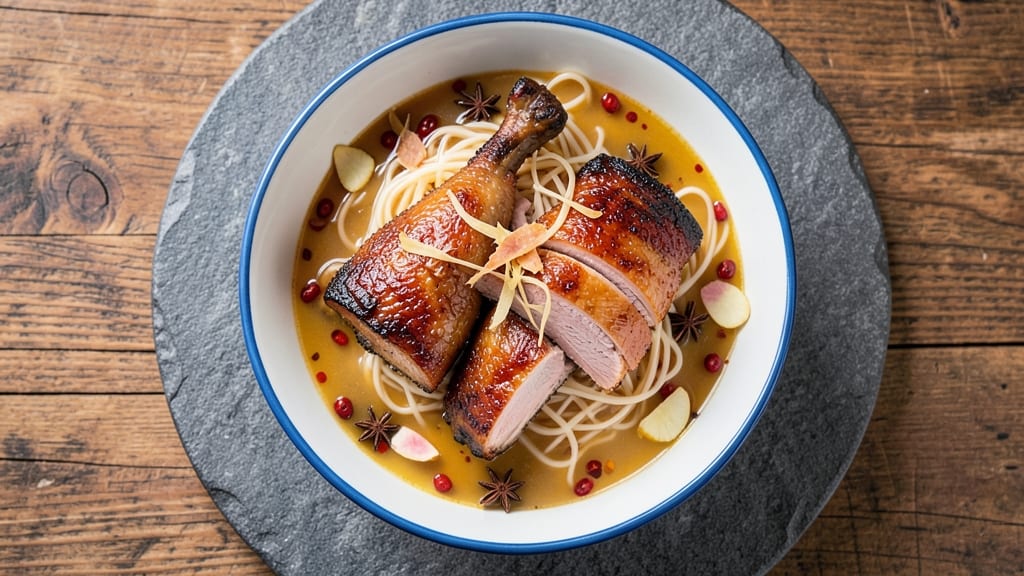
This Asian duck soup recipe transforms humble ingredients into a luxurious bowl of comfort, where star-anise-infused broth meets tender duck and silky noodles in perfect harmony. The secret lies in slow-braising the duck until it's fork-tender, then simmering it in a fragrant broth that balances sweet, savory, and aromatic notes.
I developed this version after years of testing—each sip delivers that deep, complex flavor you'd expect from a Michelin-starred restaurant.
The beauty of this recipe is its versatility—whether you follow traditional Chinese methods with ginger and goji berries or add a modern Vietnamese twist with lemongrass and fish sauce. The duck, poached until fall-off-the-bone tender, becomes the centerpiece, while egg noodles soak up the rich, golden broth.
What makes this dish truly special is how the star-anise infuses the liquid with a subtle sweetness that lingers long after the last bite.
By the time you serve this soup, your kitchen will smell like a bustling Asian street market, and every spoonful will reveal layers of flavor—silky duck, chewy noodles, and a broth so aromatic it feels like a hug in a bowl.
The dish is hearty enough for winter nights but light enough for spring gatherings, making it a year-round favorite. Perfect for feeding a crowd or savoring alone, this recipe proves that homemade soup can rival your favorite takeout.
Ready in about 2 hours (mostly hands-off time), this Asian duck soup delivers restaurant-quality results without the fuss. The key is patience—letting the flavors meld and the duck become tender.
Whether you're serving it at a family dinner or meal prepping for the week, this dish will become a staple in your cooking rotation. Let's get started!
Ingredients for asian duck soup
Six aromatic ingredients transform simple duck and noodles into restaurant-quality Asian duck soup.
| Ingredient | Amount | Notes |
|---|---|---|
| Duck Legs 🦆 | 2 ½ lb | Bone-in, skin-on preferred |
| Star-Anise 🌿 | 2 whole | Whole pods, crushed lightly |
| Fresh Ginger 🧅 | ½ cup | Thinly sliced, peeled |
| Goji Berries 🍇 | ¼ cup | Dried, rinsed if dusty |
| Egg Noodles 🍜 | 12 oz | Fresh or dried, wide egg noodles |
| Duck Fat 🫒 | ½ cup | Rendered from duck skin |
| Low-Sodium Chicken Broth 💧 | 6 cups | Homemade or quality store-bought |
| Soy Sauce 🍶 | ¼ cup | Dark soy preferred |
| Sesame Oil 🫒 | 1 tbsp | Toasted, for finishing |
| Garlic Cloves 🧄 | 6 cloves | Minced, fresh preferred |
| Green Onions 🧅 | ¼ cup | Thinly sliced, white and green parts |
| Cinnamon Sticks 🌿 | 2 whole | For depth of flavor |
| Salt 🧂 | 1 ½ tsp | Kosher or sea salt |
| White Pepper 🌶️ | ½ tsp | Freshly ground preferred |
| Brown Sugar 🍯 | 1 tbsp | Light, for balancing flavors |
The duck is everything here—bone-in, skin-on legs from Whole Foods or your local butcher deliver the richest flavor. Look for pieces with good marbling, and don't trim the skin too much—it renders into golden fat. Star-anise and cinnamon sticks are non-negotiable for that signature depth; grab them at Asian markets where they're usually sold whole. Fresh ginger and goji berries add layers of complexity, but dried goji berries work in a pinch—just rinse them first to remove dust. The duck fat? Render it yourself if possible—it's worth the extra 10 minutes.
No duck legs? Substitute chicken thighs for a lighter broth, but the texture won't be as luxurious. Short on star-anise? Double the cinnamon and add a pinch of cloves—it's not identical, but close. The soy sauce can be swapped for coconut aminos if you're avoiding gluten. For a Vietnamese twist, add lemongrass and fish sauce (check for gluten-free if needed). The goji berries? If you can't find them, dried cranberries or raisins add a similar sweetness. And always toast your sesame oil—heat it in a dry pan for 30 seconds until fragrant, then cool before using.
This soup tastes even better the next day—reheat gently on low with a splash of water to restore richness. Store the broth separately if you want to repurpose it for other dishes; it keeps for 5 days in the fridge or 3 months frozen. The noodles? Cook them fresh when serving, but you can parboil them ahead and store them in cold water to keep them from sticking. Portion the duck separately so it stays tender when reheated. Leftovers? Freeze the broth and duck in individual containers for quick meals later.
Why You'll Love This Recipe
- One-Pot Magic: I swear by this—just toss duck legs, ginger, and star-anise into a pot, simmer until the meat falls off, and boom. No chopping, no fuss, just hands-off richness while you handle the rest. (Yes, even on a Tuesday night.)
- Ginger-Duck Symphony: That crispy duck skin? The star-anise’s warm, licoricey kiss? The goji berries adding a chewy, sweet pop? Honestly, it’s like someone took all my favorite flavors and married them in a bowl. The noodles just tie it together without stealing the spotlight.
- Lunchbox Hero: Between us, this soup is my secret weapon for meal prep. Reheat the broth with fresh noodles, or pack it cold—duck stays tender, flavors deepen overnight. My kids grab it for school lunches, and I still sneak bites from the container.
- Budget Luxury: Duck legs are cheaper than you think, and a few go a long way. The broth gets richer with time, so leftovers taste better the next day. I’ll be real: it’s the kind of dish that makes a $10 ingredient feel like a splurge. (Worth it.)
Step-by-step instructions for Asian duck soup with silky noodles
Here's how to create a deeply aromatic duck soup with tender noodles and rich star-anise flavor.
Render Duck Fat and Sear the Duck Legs
Place the 2.5 lb duck legs skin-side down in a large Dutch oven over medium heat. Let them sear undisturbed for 8-10 minutes until the skin turns deep golden brown and crispy. This initial sear locks in flavor and creates the soup's signature richness.
Once the skin is crispy, carefully flip the duck legs and continue cooking for another 5 minutes on the second side. Remove the duck from the pot and set aside. In the same pot, you should now have about ½ cup of rendered duck fat - this is liquid gold for your soup. Leave it in the pot as we'll use it to build the aromatic base.
Build the Aromatic Base with Star-Anise and Spices
In the same Dutch oven with the rendered duck fat, add the 2 lightly crushed whole star-anise and 2 whole cinnamon sticks. Let them sizzle gently for 1 minute until fragrant. Add the 6 minced garlic cloves and ½ cup thinly sliced fresh ginger, cooking for another 30 seconds until the garlic turns golden.
Pour in the 6 cups low-sodium chicken broth and scrape up any browned bits from the bottom of the pot. Add the 1 tbsp brown sugar, 1.5 tsp salt, and 0.5 tsp white pepper. Bring to a gentle simmer, then return the duck legs to the pot, skin-side up. Partially cover and simmer for 1 hour until the duck meat is fork-tender and falling off the bone.
Prepare the Noodles and Add Goji Berries
While the duck is cooking, prepare the 12 oz egg noodles according to package instructions until al dente (usually 3-4 minutes for fresh noodles, 8-10 minutes for dried). Drain and rinse briefly with cold water to stop the cooking process, then set aside.
In a small bowl, rinse the 0.25 cup goji berries if they appear dusty. Add them to the simmering soup along with the 0.25 cup soy sauce. Let the soup simmer uncovered for another 15 minutes to allow the flavors to meld. The goji berries will plump up slightly and infuse the broth with their subtle sweetness.
Finish with Sesame Oil and Garnish
Carefully remove the duck legs from the broth and let them cool slightly. Using two forks, shred the meat from the bones and return it to the broth. Add the cooked egg noodles and simmer gently for just 2 minutes to heat through. The noodles should be silky and coated with the rich duck broth.
Remove the 2 star-anise and 2 cinnamon sticks. Stir in the 1 tbsp toasted sesame oil and 0.25 cup thinly sliced green onions. Taste and adjust seasoning if needed - you might want to add a touch more soy sauce for saltiness or a splash of broth to reach your desired consistency.
Serve with Crispy Duck Skin
Ladle the soup into bowls, making sure each serving gets a generous portion of noodles and duck meat. For the final touch, cut the crispy duck skin into small pieces and arrange them on top of each serving. The contrast of the crispy skin against the silky broth creates the perfect textural experience.
Serve immediately while the duck skin remains crispy and the noodles maintain their perfect texture. The star-anise infusion will linger in your mouth, creating a warm, aromatic finish that pairs beautifully with the rich duck and delicate noodles.
Pro Tips For Making Asian Duck Soup
- CRISP THE DUCK FIRST: I learned this the hard way—skipping the crisp won’t ruin the soup, but it’ll miss that irresistible contrast. Pan-sear the duck legs skin-side down until deep golden (12-15 minutes on medium-low), then flip and cook another 5 minutes. The fat renders beautifully, and the skin stays crisp even after simmering.
- SIMMER LOW AND LONG: This isn’t a quick braise—duck needs patience. After searing, add broth and aromatics, then reduce to a gentle simmer (tiny bubbles, maybe 160°F/70°C). Cover and cook 1.5–2 hours, skimming fat occasionally. Rushing turns the broth murky; slow work makes it rich and clear.
- GINGER: GRATE, DON’T SLICE: Thin, even slices of ginger float and lose flavor. Use a microplane or fine grater for fresh ginger—pack the pot with about 2 tablespoons (yes, it’ll seem like a lot). The texture dissolves into the broth, infusing every bite. Dried ginger works in a pinch, but fresh is non-negotiable for depth.
- SAVE THE GOJI BERRIES: Add them last—right when you’re ready to serve. These little guys soak up liquid like sponges and turn mushy if simmered too long. Toss them in for 2–3 minutes max, then stir and serve immediately. (Pro move: Toast them lightly in a dry pan first for extra nuttiness.)
Make-ahead tips for this dish
Broth Prep Ahead
Start your broth preparation the night before for maximum flavor development. Combine the 6 cups low-sodium chicken broth, 2 crushed star-anise, 2 cinnamon sticks, 1 tbsp brown sugar, 1.5 tsp salt, and 0.5 tsp white pepper in a pot.
Simmer gently for 30 minutes to infuse the flavors, then refrigerate overnight. The next day, skim off any solidified fat and reheat gently before using. This step creates a deeply aromatic base that elevates your entire dish. 🌟
Duck Leg Prep
Trim excess fat from the 2.5 lb duck legs but leave the skin intact—this renders into flavorful fat. Pat them dry with paper towels and refrigerate uncovered on a wire rack for 2-3 hours before cooking. This chilling step helps render more fat and creates crispier skin.
I like to do this while I prep other components of the meal. The duck will be ready to sear immediately when you're ready to start cooking. ⏰
Noodle Prep
Cook the 12 oz egg noodles just 1 minute less than package instructions suggest, then immediately shock them in ice water to stop cooking. Drain well and store in an airtight container in the fridge for up to 2 days.
When ready to serve, reheat the noodles in the broth for just 2 minutes—this keeps them silky rather than mushy. I often prep these the day before to save time on serving day. 🍜
Garnish Prep
Toast the 1 tbsp sesame oil in a dry pan for 30 seconds until fragrant, then cool completely before storing in a small jar. Thinly slice the 0.25 cup green onions and store in a sealed container in the fridge.
For the crispy duck skin, after removing the duck from the broth, cut the skin into small pieces and store on a wire rack. Place in a 200°F oven for 5 minutes to crisp up before serving. This keeps it crunchy even when reheated. 💫
Freezer Storage
For long-term storage, freeze the completed soup in individual portions. Use airtight containers or heavy-duty freezer bags, leaving 1 inch headspace for expansion. The soup keeps for up to 3 months.
To reheat, thaw overnight in the fridge, then warm gently on the stovetop with a splash of water. I find the flavors actually deepen after freezing—it's like a secret flavor booster. ❄️
Make-Ahead Timeline
Here's my foolproof schedule: Day 1 (morning) - prep broth and chill duck legs. Day 1 (evening) - sear duck and render fat. Day 2 (morning) - simmer duck in broth and prep noodles. Day 2 (evening) - finish with sesame oil and serve.
This pacing ensures everything comes together seamlessly, and you won't be stuck in the kitchen when guests arrive. The key is patience—each step builds on the last for maximum flavor. 💡
Nutrition facts
Frequently asked questions
Can I use chicken instead of duck for this recipe?
The recipe is designed specifically for duck to achieve that rich, luxurious flavor profile. Chicken thighs would work in a pinch (about 2.5 lbs bone-in, skin-on), but the texture and taste won't be identical. The duck fat renders beautifully for the broth, and the meat stays tender while absorbing the aromatic spices. If you must substitute, increase the broth by 1 cup and add ½ tsp more salt to compensate for the lighter meat.
How do I know when the duck is fully cooked?
The duck is ready when it reaches an internal temperature of 165°F and the meat falls off the bone easily with a fork. For best results, test one leg after 50 minutes of simmering. If it's not quite there, return it to the broth for another 10-15 minutes. The skin should be crispy and golden, with no pink remaining in the meat. Overcooking can make the duck dry, so keep an eye on it during the final stages.
What if I don't have star-anise? Can I make this soup without it?
Star-anise is the soul of this soup, but you can improvise! For a similar aromatic depth, combine 1 tsp anise seeds (ground) with ½ tsp ground fennel seeds and ½ tsp ground coriander. Alternatively, use 1 cinnamon stick and ½ tsp cloves (lightly crushed) for warmth. The flavor won't be identical, but it'll still be delicious. The key is balancing the spices with a touch more brown sugar (½ tsp extra) to compensate for the missing sweetness.
Can I make this soup in a slow cooker?
The slow cooker method actually enhances the duck's tenderness. Sear the duck legs in a skillet first, then transfer them to the slow cooker with the star-anise, cinnamon, ginger, garlic, broth, and spices. Cook on low for 6-7 hours or high for 3-4 hours. Shred the duck and finish with noodles, sesame oil, and green onions as directed. The slow cooker method develops deeper flavors, but keep an eye on the liquid—you may need to add ½ cup water if it reduces too much.
Why does my broth look cloudy or greasy after simmering?
A cloudy broth often means the fat hasn't fully rendered or the spices need more time to infuse. Skim off any surface fat with a spoon, then strain the broth through a fine-mesh sieve to remove any impurities. If the broth tastes bland, simmer it uncovered for another 10 minutes to reduce slightly and intensify the flavors. For a clearer broth, chill it overnight and skim off the solidified fat before reheating. The goji berries and spices should settle at the bottom—just stir them in when serving.