
Soups & Stews
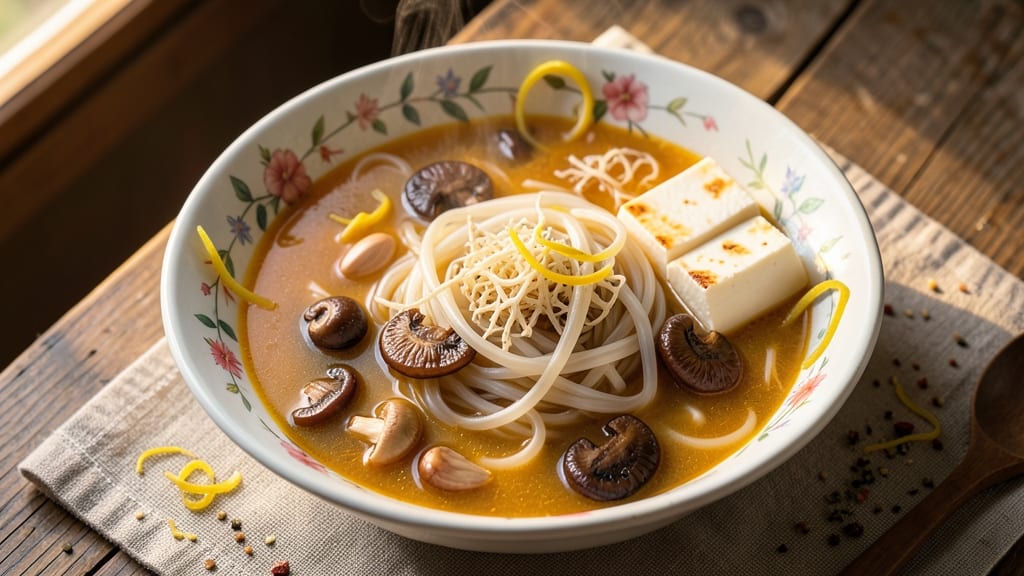
This Asian vegetarian noodle soup transforms simple ingredients into a deeply satisfying bowl of umami-rich comfort. The secret lies in a slow-simmered vegetable broth infused with ginger, garlic, and star anise—building layers of flavor that turn tofu and mushrooms into the stars of the dish.
I developed this recipe after years of adapting traditional Asian soups to be fully plant-based, ensuring every spoonful delivers that perfect balance of savory, spicy, and fresh.
The foundation is a silky, aromatic broth that starts with a base of kombu (seaweed) and shiitake mushrooms, which naturally develop umami as they simmer. Tofu is pressed and pan-seared for a crispy exterior before being added to the broth, while shiitake and wood ear mushrooms add texture and depth.
Fresh herbs like Thai basil and cilantro brighten the dish at the end, cutting through the richness with a burst of freshness.
What makes this recipe special is how it captures the essence of Asian noodle soups without relying on meat. The broth is rich enough to stand alone but light enough to let the noodles—whether rice or egg noodles—absorb its flavors.
Garnishes like lime wedges, bean sprouts, and chili oil add the final touches, turning a simple bowl into a restaurant-quality experience.
Perfect for weeknight dinners or meal prep, this soup scales easily to feed a crowd. The broth can be made ahead and reheated, while the toppings can be assembled fresh. Whether you're a vegetarian or just looking for a flavorful, protein-packed meal, this recipe delivers on every level.
Ingredients for asian noodle soup recipe vegetarian
Simple ingredients create deeply satisfying umami-rich vegetarian noodle soup with silky broth and crispy tofu.
| Ingredient | Amount | Notes |
|---|---|---|
| Kombu (Dried Seaweed) 🌿 | 1 piece | Cut into 2-inch strips |
| Shiitake Mushrooms 🍄 | 8 whole | Stems removed, caps halved |
| Wood Ear Mushrooms 🍄 | 4 pieces | Dried, rehydrated |
| Extra-Firm Tofu 🍲 | 1 lb | Pressed, cut into cubes |
| Fresh Ginger 🧄 | 2 tbsp | Minced, peeled |
| Garlic Cloves 🧄 | 4 cloves | Minced |
| Star Anise 🌟 | 2 whole | Lightly crushed |
| Cinnamon Stick 🌿 | 1 whole | Optional, for warmth |
| Vegetable Broth 💧 | 4 cups | Low-sodium preferred |
| Rice Noodles 🍜 | 8 oz | Uncooked, medium width |
| Thai Basil Leaves 🌿 | ¼ cup | Chopped, for garnish |
| Cilantro Leaves 🌿 | ¼ cup | Chopped, for garnish |
| Lime Wedges 🍋 | 2 whole | For serving |
| Bean Sprouts 🌱 | 1 cup | Fresh, for garnish |
| Sesame Oil 🫒 | 1 tbsp | For finishing |
| Chili Oil 🌶️ | 1 tbsp | Optional, for heat |
| Soy Sauce 🍶 | 2 tbsp | Tamari for gluten-free |
| Neutral Oil 🫒 | 2 tbsp | For tofu pan-searing |
The kombu and shiitake mushrooms are the umami powerhouses here. Look for kombu at Asian markets—it’s dried seaweed, usually sold in sheets. Fresh shiitake mushrooms are ideal, but dried work too (rehydrate first). Wood ear mushrooms add texture, and you can find them dried in bulk bins at Trader Joe's or Whole Foods. The tofu needs pressing—wrap it in a towel, place a heavy pan on top for 15 minutes to remove excess water. Extra-firm holds up best to pan-searing, but silken tofu works too if you prefer a softer texture.
No kombu? Dulse flakes or nori sheets work in a pinch, but they won’t replicate the same depth. Fresh ginger and garlic are non-negotiable for flavor, but powdered ginger or garlic paste can substitute at half the amount. The star anise and cinnamon stick are optional but add warmth—skip them if you’re sensitive to strong spices. For the noodles, rice noodles are traditional, but egg noodles or udon will work too. Just adjust cooking time based on package instructions. The sesame oil and chili oil add finishing touches—store-bought chili oil is fine, but homemade with dried chilies and oil is even better.
The broth can be made up to 3 days ahead and reheated gently—it actually tastes better as flavors meld. Store it in the fridge, covered, and reheat on the stove over medium-low. The tofu and mushrooms can be prepped a day ahead too, but add them fresh to the broth for the best texture. Fresh herbs like Thai basil and cilantro should be added just before serving to keep them vibrant. The noodles cook quickly, so keep them in hot water until ready to serve—2-3 minutes is perfect for al dente.
Why You'll Love This Recipe
- No-Fuss Umami Bomb: The kombu alone does half the work—just soak it in hot water for 10 minutes, and boom, that deep, savory broth magic happens. No stockpot drama, no measuring cups of bouillon. Honestly, I’ve made this on days when I couldn’t even be bothered to chop an onion, and it still tasted like a Michelin-starred moment.
- Mushroom Magic: Shiitakes add that meaty chew, wood ears give a satisfying crunch, and together? It’s like a textural party in your bowl. I’ll be real: my picky-eating kid now asks for seconds just to get the crispy wood ear bits—no joke.
- Lunchbox Hero: This keeps perfectly for days in the fridge, and reheats like a dream. Pack it in thermoses for work or toss cold noodles into bento boxes with pickled veggies. Between us, it’s my go-to for busy mornings when I need something that won’t wilt by noon.
- Budget-Friendly Powerhouse: Tofu’s cheap, dried mushrooms last forever, and kombu is a one-time buy that stretches into dozens of bowls. I’ve fed four people for under $10 with this—no takeout guilt, just flavor that hits different. Plus, the ginger keeps it fresh-tasting even after three days.
Step-by-step instructions for silky mushroom and tofu umami bliss
Here's how to craft a deeply flavorful vegetarian noodle soup with perfect texture balance.
Prepare the Umami Base with Kombu and Aromatics
In a large pot, add the 1 piece Kombu (Dried Seaweed) cut into 2-inch strips and the 4 cups Vegetable Broth. Bring to a gentle simmer over medium heat and let it steep for 10 minutes. This draws out the oceanic depth that defines the soup's character.
While the broth simmers, heat 2 tablespoons Neutral Oil in a separate skillet over medium heat. Add the 2 whole Star Anise (lightly crushed) and 1 whole Cinnamon Stick (if using) and toast for 1 minute until fragrant. Add the 2 tablespoons Fresh Ginger and 4 cloves Garlic Cloves (both minced) and cook for 30 seconds until the garlic turns golden. Immediately pour this aromatic mixture into the simmering broth.
Rehydrate and Sauté the Mushrooms
Soak the 4 pieces Wood Ear Mushrooms in warm water for 15 minutes until pliable, then drain and tear into bite-sized pieces. In the same skillet (no need to clean it), add the 8 whole Shiitake Mushrooms (stems removed, caps halved) and cook over medium-high heat for 5 minutes until deeply browned. Transfer the mushrooms to the broth.
Add the rehydrated Wood Ear Mushrooms to the broth along with the soaked Shiitake mushrooms. Simmer the entire mixture for 10 minutes to allow all flavors to meld. The broth should now have a rich, earthy aroma with layers of umami from both mushroom varieties.
Pan-Sear the Tofu for Texture
Press the 1 lb Extra-Firm Tofu according to package instructions, then cut into 1-inch cubes. Heat 1 tablespoon Neutral Oil in a clean skillet over medium-high heat until shimmering. Add the tofu cubes in a single layer and cook undisturbed for 3 minutes until golden brown on one side. Flip carefully and cook another 3 minutes until evenly crispy.
Transfer the tofu to a plate and immediately add 2 tablespoons Soy Sauce to the skillet, scraping up any browned bits. Let this sauce simmer for 1 minute to concentrate the flavors, then pour it over the tofu. This step creates the perfect balance between crispy exterior and tender interior.
Cook the Noodles and Assemble
Bring a separate pot of water to a rolling boil and cook the 8 oz Rice Noodles according to package directions (typically 3-4 minutes) until just tender. Drain and rinse briefly with cold water to stop cooking, then divide among bowls.
Ladle the hot mushroom broth over the noodles, then arrange the pan-seared tofu cubes on top. Garnish immediately with 1 cup Bean Sprouts, 0.25 cup Thai Basil Leaves, and 0.25 cup Cilantro Leaves. Drizzle with 1 tablespoon Sesame Oil and 1 tablespoon Chili Oil (if using) for finishing touches.
Finish with Lime and Serve
Serve each bowl with 2 whole Lime Wedges on the side. The acidity brightens the rich umami flavors and cuts through the oiliness of the tofu. Encourage diners to squeeze lime directly into their bowls just before eating to maximize freshness.
This soup delivers perfect harmony of textures - silky broth, tender mushrooms, crispy tofu, and fresh garnishes. The balance of umami from kombu and mushrooms, with the brightness of lime and fresh herbs, creates a vegetarian dish that stands up to any meat-based version.
Pro Tips For Making Asian Noodle Soup Recipe Vegetarian
- SOAK KOMBU FIRST: Toss that kombu straight into cold water and let it sit for 10 minutes before heating—this pulls out the umami without bitterness. I used to ignore this and ended up with soup that tasted like overcooked seaweed salad. Trust me, the extra two minutes make a real difference.
- SLICE MUSHROOMS UNEVENLY: Cut shiitake caps thick on one side, thin on the other so they cook in the same time. Wood ear mushrooms? Tear them into irregular pieces—they’ll soften faster and soak up broth better than perfect squares. (Yes, it looks messy, but it works.)
- DON’T BOIL THE TOFU: Simmer tofu in the broth at the very end, not before—it’ll stay firm and absorb flavor instead of turning to mush. I learned this after serving a batch where the tofu had been "pre-cooked" and just sat there like a sad, flavorless sponge.
- GINGER: GRATE, DON’T CHOP: Use a microplane for ginger—no peeling, no big chunks. The finer the texture, the more it blends into the soup without leaving chewy bits. (And skip the pre-minced jar; it’s usually dried out and tastes like sawdust.)
Flavor customization for these flavors
Spicy Heat Level
Want to kick things up? Add 1 tsp of gochujang (Korean chili paste) to the broth while simmering for a deep, fermented heat. For a quicker fix, stir in ½ tsp of chili flakes or 1 tsp of sriracha at the end.
I love a ½ tsp of doubanjiang (Chinese chili bean paste) for a smoky, spicy depth—just mix it into the broth during the final 5 minutes of simmering. 🌶️
Sweet and Tangy Twist
Balance the umami with a touch of sweetness by adding 1 tbsp of hoisin sauce or 1 tsp of coconut sugar to the broth. For tanginess, squeeze in 1 tbsp of rice vinegar or a splash of lime juice after cooking.
A drizzle of chili-lime oil (mix 1 tbsp lime zest with 1 tbsp chili oil) adds brightness and heat in one step.
Herb and Aroma Boost
Swap out Thai basil for cilantro and mint for a Southeast Asian-inspired twist. Add 2 sprigs of lemongrass (bruised) to the broth while simmering for a citrusy aroma. For a Japanese touch, stir in 1 tsp of mirin and garnish with shiso leaves instead of basil.
Fresh green onions or scallions add a crisp, oniony bite that cuts through richness.
Creamy and Rich Variations
Blend in ½ cup of coconut milk at the end for a Thai-inspired creaminess. For a Chinese-style richness, stir in 2 tbsp of sesame paste (tahini works too) and a splash of water to thin it.
A dollop of vegan cream cheese or silken tofu purée on top adds a velvety texture without dairy. 🥥
Regional Flavor Profiles
For a Vietnamese pho-style twist, add 1 cinnamon stick, 3 star anise pods, and 1 tsp of fish sauce substitute (like vegan Worcestershire) to the broth.
A Japanese ramen vibe comes from adding 1 tsp of miso paste and topping with soft-boiled eggs (or marinated tofu for vegan). For Thai tom yum flavors, include 1 stalk of lemongrass and 1 tbsp of lime juice.
Nutrition facts
Frequently asked questions
Can I substitute tofu with another vegetarian protein?
For extra protein, try tempeh (marinate in soy sauce first) or seitan (sliced thinly). Edamame or chickpeas work too—simmer them directly in the broth for 10 minutes until tender. Just adjust cooking times based on the ingredient's density.
How do I make this soup gluten-free?
Replace rice noodles with rice-based or corn noodles. Use tamari instead of soy sauce, and check your vegetable broth for gluten. Kombu and mushrooms are naturally gluten-free, so the broth remains safe. Always verify ingredient labels!
Can I prepare the broth ahead of time?
Yes! The broth keeps well in the fridge for 3 days or freezes for 3 months. Reheat gently on the stove, then add fresh tofu and mushrooms when serving. The flavors actually deepen over time—just strain out the kombu before reheating if you prefer a cleaner texture.
What if I can't find kombu or wood ear mushrooms?
For kombu, use dulse flakes or nori sheets (½ tsp each). Skip wood ear mushrooms and add 1 extra cup shiitake or oyster mushrooms instead. The umami will still shine—just reduce the broth simmer time to 8 minutes to prevent overcooking.
How do I adjust the spice level for kids?
Omit chili oil and reduce soy sauce to 1 tablespoon. Add a splash of coconut milk (½ cup) at the end for creaminess. Garnish with steamed bean sprouts and extra lime to brighten flavors naturally. Serve with a side of mild miso soup for extra comfort.