
Soups & Stews
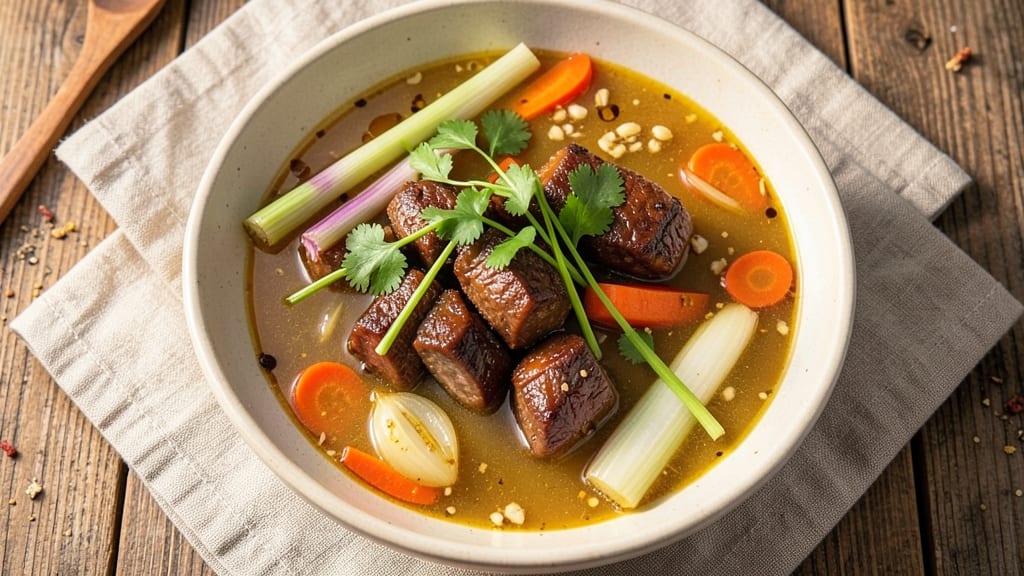
This beef lemongrass soup recipe delivers tender beef and fragrant aromatics in every spoonful, transforming simple ingredients into a restaurant-worthy bowl. The secret lies in slow-cooked beef that practically melts in your mouth, infused with the bright citrus notes of lemongrass and lime.
I developed this recipe after realizing how much depth a proper broth reduction adds—turning basic ingredients into something truly special.
The process begins with searing beef chuck for rich flavor, then simmering it low and slow until fork-tender. Fresh lemongrass, garlic, and ginger create that signature aromatic base, while lime juice adds a refreshing tang at the end.
What makes this soup stand out is how the flavors develop—starting with earthy spices and finishing with bright, citrusy notes that balance the richness.
By the time you're done, you'll have a velvety soup with perfectly tender beef chunks floating in a deeply flavorful broth. The aroma alone will have everyone gathering around the table, and each bite delivers that perfect harmony of savory, aromatic, and slightly tangy flavors.
Serve it with steamed jasmine rice to soak up every last drop of that fragrant broth.
This recipe is designed to impress without being complicated—just follow the steps carefully, and you'll achieve restaurant-quality results at home. The key is patience during the simmering process, which allows all the flavors to meld together beautifully. Trust me, this soup will become a staple in your meal rotation.
Ingredients for beef lemongrass soup
Simple ingredients that pack a punch—lemongrass, tender beef, and bright citrus notes transform into a velvety, aromatic bowl.
| Ingredient | Amount | Notes |
|---|---|---|
| Beef Chuck Roast 🥩 | 1 ½ lb | Cut into 1-inch cubes |
| Fresh Lemongrass 🌿 | 3 stems | Bruised and cut into 2-inch pieces |
| Garlic Cloves 🧄 | 6 cloves | Minced for aromatic base |
| Fresh Ginger 🌿 | 2 tbsp | Grated, peeled |
| Yellow Onion 🧅 | 1 whole | Diced, medium size |
| Carrots 🥕 | 4 medium | Peeled, cut into chunks |
| Beef Broth 💧 | 4 cups | Low-sodium, homemade preferred |
| Coconut Milk 🥥 | 1 can (13.5 oz) | Full-fat for creaminess |
| Lime Juice 🍋 | 2 tbsp | Freshly squeezed |
| Fish Sauce 🍶 | 1 tbsp | For umami depth |
| Brown Sugar 🍚 | 1 tbsp | Lightly packed |
| Salt 🧂 | 1 tsp | Kosher or sea salt |
| Black Pepper 🌶️ | ½ tsp | Freshly ground |
| Cilantro Leaves 🌿 | ¼ cup | Chopped, for garnish |
| Jasmine Rice 🍚 | 1 cup | Uncooked, for serving |
The beef is everything here—chuck roast gives you that melt-in-your-mouth texture, while lemongrass delivers that signature aroma. Most grocery stores carry fresh lemongrass near the Asian produce section, but if you can't find it, substitute with 1 tbsp lemongrass paste (the kind in tubes). For garlic and ginger, I always grab the organic bunch from Whole Foods—they keep longer that way. The carrots can be baby carrots if that's what you've got, but regular carrots add more natural sweetness to the broth. If you're making a big batch, Costco sells chuck roast in bulk—way more cost-effective.
No fish sauce? Soy sauce or Worcestershire sauce works in a pinch, though fish sauce adds that unmistakable umami. Fresh lemongrass stems should be bright green and firm—avoid any that feel woody or dry. The coconut milk is non-negotiable for creaminess, but if you're avoiding dairy, full-fat coconut milk is the way to go. For lime juice, Mexican limes (key limes) have more tang, but regular limes work fine. The brown sugar balances the acidity—lightly packed means no shaking the container. Want extra depth? Add 1 tsp of shrimp paste if you're feeling adventurous.
This soup tastes even better the next day—reheat gently and add a splash of water if it thickens too much. Store in an airtight container for 4-5 days in the fridge or 3 months in the freezer. I like to portion it into soup bowls so it's ready to serve straight from the freezer. The jasmine rice? Cook it ahead—it reheats beautifully and soaks up all that fragrant broth. Garnish with cilantro right before serving, or it'll wilt in the heat.
Why You'll Love This Recipe
- One-Pot Magic: I swear by this recipe—just dump everything into one pot, simmer, and walk away. No chopping boards to scrub, no extra bowls to wash. That beef chuck roast practically melts into the broth while the lemongrass infuses its bright, citrusy punch with zero fuss.
- Aroma Therapy: The moment I crush fresh ginger and garlic into the hot oil, my whole kitchen smells like a Thai street market. That first sip? Warm, fragrant, and packed with depth—like a hug in a bowl. The lemongrass doesn’t just flavor it; it transforms the broth into something luxurious.
- Leftovers That Shine: Between us, this soup only gets better the next day. I’ll make a double batch on Sundays, and by Wednesday, it’s still rich and tender. Toss in some rice or noodles for lunch, or freeze half for those nights when takeout feels like too much work.
- Budget-Friendly Luxury: Here’s what sold me—this tastes like a five-star restaurant dish but costs next to nothing. A chuck roast on sale, a stalk of lemongrass from the ethnic market, and a handful of garlic. It’s the kind of meal that makes you feel fancy without breaking the bank.
Step-by-step instructions for beef lemongrass soup
Here's how to build a rich, fragrant soup where tender beef meets bright lemongrass aromatics.
Prepare the Aromatic Base
In a large pot, combine the 1.5 lb beef chuck roast cut into 1-inch cubes, the 3 stems lemongrass (bruised and cut into 2-inch pieces), 6 cloves minced garlic, and 2 tbsp grated ginger. This aromatic trio forms the soul of your soup - the lemongrass should release its citrusy oils immediately when heated.
Add the 1 whole yellow onion (diced) and 4 medium carrots (peeled and chunked) to the pot. Pour in 4 cups beef broth and bring everything to a rolling boil over medium-high heat. Once boiling, reduce heat to medium-low and let it simmer uncovered for 10 minutes - this allows the flavors to meld while the beef begins to tenderize.
Cook the Beef Until Fork-Tender
After the initial simmer, partially cover the pot and continue cooking for 1.5 to 2 hours until the beef becomes fork-tender (it should easily pull apart with minimal resistance). I check for doneness by piercing a beef cube - if it offers no resistance and the juices run clear, it's ready.
During this time, the broth will reduce slightly, intensifying the flavors. If the liquid level drops below halfway up the beef cubes, add ½ cup hot water to maintain proper cooking conditions. This long simmer transforms tough chuck roast into melt-in-your-mouth tenderness that's essential for this Thai-inspired dish.
Build the Lemongrass-Coconut Sauce
Once the beef is tender, carefully remove the lemongrass stems and discard them (their job is done). Using a slotted spoon, transfer the beef to a plate and set aside. In the same pot, stir in the 1 can (13.5 oz) full-fat coconut milk, 2 tbsp lime juice, 1 tbsp fish sauce, 1 tbsp brown sugar, 1 tsp salt, and 0.5 tsp black pepper. The coconut milk should create a velvety base that carries all those bright, aromatic flavors.
Return the beef to the pot and bring everything to a gentle simmer over medium heat. Let it cook for 10-15 minutes, allowing the flavors to meld completely. The soup should have a rich, slightly thickened consistency with a balance of sweet, sour, and umami notes - this is where all your hard work pays off in a truly satisfying broth.
Finish and Serve with Jasmine Rice
Remove the pot from heat and let the soup rest for 5 minutes to allow the flavors to settle. Before serving, taste and adjust seasoning if needed - you might want to add a touch more fish sauce for umami or lime juice for brightness. The soup should be balanced with all flavors harmonizing.
Ladle the soup over 1 cup cooked jasmine rice in each bowl (cooked separately according to package instructions). Garnish with 0.25 cup chopped cilantro leaves just before serving - this adds a fresh herbal note that brightens each spoonful. The rice helps soak up the rich broth while providing a neutral base that lets the beef and lemongrass flavors truly shine.
Pro Tips For Making Beef Lemongrass Soup
- Trim the Lemongrass Right: Split the stalks lengthwise with a heavy knife—no need to peel the tough outer leaves. The fibrous edges add texture, but the pale inner flesh is where the flavor hides. I used to waste time peeling every layer until I realized the outer layers just soften into the broth.
- Sear the Beef in Batches: A crowded pan steams instead of sears, and you’ll end up with gray, sad beef. Work in 2-inch-thick slices, pressing down with a spatula until deep brown crust forms—about 2 minutes per side. The Maillard reaction here is non-negotiable for depth of flavor.
- Bruise the Ginger Hard: Don’t just slice it—smash the ginger with the flat side of your knife or a mortar and pestle until it’s purple-speckled and releases its oils. Fresh ginger’s heat mellows into the broth, but chopped chunks just sit there like sad, underused garnishes.
- Simmer Low and Long: After the initial boil, drop the heat to a bare simmer where bubbles rise just occasionally. High heat turns beef tough and muddies the broth with starch. I’ve ruined batches by rushing this—your patience will pay off with melt-in-your-mouth beef and a clear, fragrant broth.
Essential equipment for this dish
Large Stockpot
Start with a heavy-bottomed 6-8 quart stockpot—I swear by the All-Clad Stainless Steel Stockpot—to handle the long simmering time without burning flavors. The deep sides prevent spills when stirring, and the stainless steel construction distributes heat evenly.
Avoid thin, reactive metals like aluminum that can impart off-flavors during the extended cooking process. 🔥
Immersion Blender
An immersion blender (like the Ninja Professional or KitchenAid KSB1251ER) is essential for achieving that signature velvety texture without over-blending. Pulse the broth for 10-15 seconds after removing the beef to create a smooth but still chunky consistency.
This tool makes it easy to blend directly in the pot, eliminating the need for transferring hot liquid to a blender. Pro tip: Let the soup cool slightly before blending to prevent steam burns.
Measuring Tools
Precision matters with this recipe, so invest in a set of stainless steel measuring spoons (like OXO Good Grips) and a digital kitchen scale for accurate measurements.
The 1 tbsp fish sauce and 2 tbsp lime juice are critical for balance—too much or too little can throw off the entire dish. I also keep a microplane handy for freshly grating ginger and garlic, which adds more surface area for better flavor extraction. 🌶️
Slotted Spoon
A long-handled slotted spoon (I use OXO Good Grips) makes transferring beef in and out of the broth effortless. The wide slots help strain out lemongrass stems while keeping the beef intact.
This tool is especially useful when removing the cooked beef to build the coconut milk sauce—it prevents broth loss and keeps your hands safe from hot liquid. Look for one with a sturdy, heat-resistant handle for comfort during long cooking sessions.
Instant-Read Thermometer
An instant-read thermometer (like ThermoWorks ThermoPop) ensures your beef reaches the perfect fork-tender stage without overcooking. The ideal internal temperature for beef chuck in this recipe is 195-200°F—this guarantees melt-in-your-mouth texture while keeping the broth flavorful.
I check the temperature of a few beef cubes before removing them from the pot to avoid guesswork. This tool also helps monitor the broth's temperature during the simmering process. ⚡
Nutrition facts
Frequently asked questions
Can I use ground beef instead of chuck roast?
Ground beef won't work for this recipe because it lacks the necessary texture and flavor depth. Chuck roast is specifically chosen for its ability to become fork-tender when slow-cooked, creating those melt-in-your-mouth beef chunks. If you're looking for a quicker option, consider using beef short ribs instead—they'll give you similar results with a slightly richer flavor.
How do I know when the lemongrass is done?
You'll remove the lemongrass stems after the initial 10-minute simmer—they've done their job by releasing aromatic oils into the broth. The stems should be soft enough to easily crush between your fingers but still maintain some structure. Never let them turn mushy, as this can make the broth bitter. Fresh lemongrass should be bright green and firm before cooking.
Can I make this soup in a slow cooker? Use the same ingredients but transfer everything to your slow cooker after the initial 10-minute simmer on the stovetop. Cook on low for 6-8 hours or high for 3-4 hours until the beef is fork-tender. The slow cooker method actually enhances the beef's tenderness even more. Just
What if my soup is too thin or too thick?
For a thicker soup, simmer uncovered for 10-15 extra minutes to reduce the broth naturally. If it's too thick, stir in 2-4 tbsp hot water at a time until you reach the desired consistency. The coconut milk should create a velvety texture, but if it separates, gently reheat the soup while stirring continuously. Never add cold water directly to hot soup—it can cause the coconut milk to curdle.
Can I prepare this soup ahead of time?
This soup tastes even better the next day! Store it in an airtight container in the refrigerator for 4-5 days or freeze for 3 months. When reheating, warm it gently on the stove over medium-low heat, stirring occasionally. If it thickens too much, add a splash of hot water or beef broth. The flavors actually deepen as they sit, making it perfect for meal prep.