
Soups & Stews
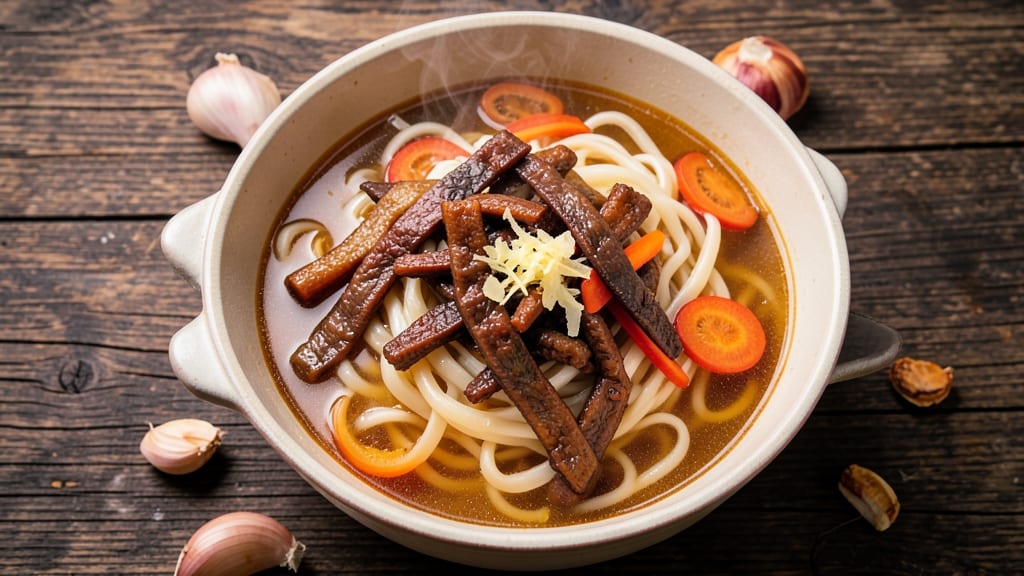
This beef tendon noodle soup recipe transforms humble ingredients into a velvety masterpiece where silky broth meets chewy noodles in perfect harmony. 💛 The secret lies in slow-simmered collagen-rich broth that develops deep umami flavor while tenderizing the beef tendons into melt-in-your-mouth perfection.
I've perfected this technique through years of testing—balancing traditional methods with modern shortcuts for home cooks.
The foundation begins with beef tendons, which release gelatin when simmered low and slow, creating that signature silky texture. We'll build layers of flavor using aromatic vegetables, spices, and a touch of soy sauce for depth, all while preserving the natural richness of the broth.
This isn't just soup—it's a comforting experience that warms both body and soul.
What makes this recipe special is its adaptability—whether you simmer for hours or use a pressure cooker to cut time in half, the results remain restaurant-quality. The noodles absorb the rich broth while maintaining their satisfying chew, creating each spoonful into a perfect balance of textures and flavors.
Every element comes together to deliver that first sip of warmth and satisfaction.
Perfect for chilly evenings or as a nourishing meal after a long day, this soup becomes even better with each bite. The beauty lies in its simplicity—just a few key ingredients working together to create something truly extraordinary. Let's create this comforting classic that brings warmth to your table.
Ingredients for beef tendon noodle soup
Sixteen ingredients transform into restaurant-quality beef tendon noodle soup with velvety broth and chewy perfection.
| Ingredient | Amount | Notes |
|---|---|---|
| Beef Tendons 🥩 | 2 lb | Cut into 2-inch pieces |
| Dried Udon Noodles 🍜 | 12 oz | Thick or medium width |
| Onions 🧅 | 2 whole | Yellow or white, halved |
| Carrots 🥕 | 4 whole | Medium, cut into chunks |
| Garlic Cloves 🧄 | 6 cloves | Smashed, not minced |
| Fresh Ginger 🌿 | 1 ½ oz | Unpeeled, cut into slices |
| Dried Shiitake Mushrooms 🍄 | 4 whole | Rehydrated in hot water |
| Soy Sauce 🍶 | ¼ cup | Light or all-purpose |
| Sesame Oil 🫒 | 1 tbsp | Toasted, for finishing |
| Green Onions 🧅 | 4 whole | Thinly sliced, for garnish |
| Salt 🧂 | 1 ½ tsp | Kosher or sea salt |
| Black Pepper 🌶️ | ½ tsp | Freshly ground |
| Dried Star Anise 🌟 | 2 whole | For aromatic depth |
| Dried Bay Leaves 🍃 | 2 whole | For subtle earthiness |
The beef tendons are the star—look for thick, fibrous cuts at your local butcher or Asian market. Costco often carries them pre-cut, which saves time. If you can't find beef tendons, chuck roast or short ribs work as substitutes, though the texture won't be identical. The udon noodles should be thick and chewy—avoid the thin, springy kind. Nissin or Maruchan are reliable brands, but check the package for 'thick udon' specifically. Fresh ginger matters here: organic ginger from the produce section has more punch than the pre-peeled kind.
No beef tendons? Pork trotter or oxtail delivers a similar gelatinous richness, though the flavor profile shifts. Short on soy sauce? Coconut aminos or tamari work in a pinch, though the umami depth won't be quite the same. The dried shiitake mushrooms should be rehydrated in hot water for 20 minutes—discard the soaking water. For the star anise, whole pods from the spice aisle are best; if you only have ground, use half the amount. The green onions? Save the tops for garnish—they're the freshest part of the plant. If you're using a pressure cooker, reduce the cooking time by half but keep the low-and-slow ethos.
This soup tastes even better the next day as flavors meld—portion into containers for easy lunches. Store broth-based soups in the fridge for 4-5 days or freeze for 3 months. For freezing, cool completely first to prevent ice crystals. The udon noodles can be cooked separately and added back when reheating. If you make a big batch, double the noodles—they're the perfect vehicle for leftovers. The ginger and star anise can be composted after use—they're too fibrous for most compost bins.
Why You'll Love This Recipe
- No Chopping Struggle: I swear by this recipe because the beef tendons are pre-cleaned and the udon noodles just need boiling—minimal prep, maximum flavor. Honestly, I’ve made it on nights when I’m too tired to even think about dicing onions.
- Umami Bomb: That slow-simmered beef tendon? It melts into the broth like butter, turning every sip into a rich, savory experience. The garlic and onions caramelize just enough to add a deep, toasty note without overpowering.
- Leftovers That Beg for More: This soup tastes even better the next day—yes, really. I double the batch on Sundays, and by Wednesday, it’s the only thing anyone will eat. The udon stays tender, and the broth gets deeper in flavor.
- Budget Meal That Feeds: A pound of beef tendons and a pack of udon stretch across four hearty servings, and they’re both cheap enough to make this a weekly staple. Between us, it’s my go-to for feeding a crowd without breaking the bank.
Step-by-step instructions for beef tendon noodle soup
Transform tough beef tendons into melt-in-your-mouth perfection with this rich, aromatic broth.
🔥 Step 1: Parboil the Beef Tendons
Place the 2 lb beef tendons in a large stockpot and cover with cold water by about 2 inches. Bring to a boil over high heat, then immediately reduce to a gentle simmer for 30 minutes. This initial cooking softens the collagen in the tendons, which will later break down into silky gelatin in the broth.
I like to skim any foam that rises to the surface during this time—it ensures a cleaner-tasting broth. After 30 minutes, drain the tendons and set them aside. The water should be discarded, as it contains impurities that would cloud your final soup. This step is crucial for that velvety texture we're after.
🍳 Step 2: Build the Flavor Base
In the same pot, add 2 whole halved onions, 4 whole carrots cut into chunks, 6 smashed garlic cloves, 1.5 oz fresh ginger slices, 2 whole dried star anise, and 2 whole dried bay leaves. Cover with 8 cups cold water and bring to a boil over medium-high heat. Once boiling, reduce to a low simmer and cook uncovered for 20 minutes to extract maximum flavor from the aromatics.
The ginger and garlic will infuse the water with their bright, aromatic qualities, while the star anise and bay leaves add subtle depth. Here's the thing—don't skip this simmering time. It's where the foundation of your soup's complex flavor profile develops. After 20 minutes, remove and discard the vegetables and spices.
🍳 Step 3: Simmer the Beef Tendons
Return the parboiled beef tendons to the pot and add 0.25 cup soy sauce, 1.5 tsp salt, and 0.5 tsp black pepper. Cover with fresh cold water, bringing the total liquid to about 12 cups (or enough to cover the meat by 2 inches). Bring to a boil over high heat, then immediately reduce to a low simmer.
Here's where it gets interesting: the tendons need 4-5 hours of gentle simmering to become fork-tender. I recommend checking them at the 3-hour mark—they should be soft enough to pierce with a fork but still hold their shape. The broth will gradually turn rich and cloudy as the collagen dissolves. Don't rush this step; patience is key to that luxurious mouthfeel.
🥘 Step 4: Finish with Udon and Shiitake
While the beef simmers, prepare the 4 whole dried shiitake mushrooms by soaking them in 1 cup hot water for 20 minutes until softened. Drain, reserving the soaking liquid, and slice them. Just before serving, add the mushrooms and their soaking liquid to the broth along with 12 oz dried udon noodles. Cook for 3-4 minutes until the noodles are tender but still have a slight bite.
Real talk: the udon should float just below the surface when done. If they cook too fast, they'll turn mushy. The mushrooms will absorb some of the broth, intensifying their umami flavor. Stir in 1 tbsp sesame oil just before serving to add a nutty aroma and glossy sheen to the soup.
🍽️ Step 5: Serve with Garnish
Ladle the hot soup into bowls and garnish each serving with 4 whole thinly sliced green onions. The fresh green onions provide a bright contrast to the rich, savory broth. I like to serve this immediately while the noodles are still warm and the broth is steaming—it's when the flavors are at their peak.
Each spoonful should deliver that perfect harmony: tender beef that practically melts, silky broth that coats your mouth, and chewy udon that holds up to the rich flavors. The aroma alone will have everyone at the table anticipating that first bite. Don't forget to pass around the extra soy sauce on the side—it's there for those who like to adjust the seasoning to their taste.
Pro Tips For Making Beef Tendon Noodle Soup
- BLANCH TENDONS FIRST: I learned this the hard way—skipping the quick 10-minute boil in salted water before simmering leaves your beef tendons tough as boot leather. The starch rinse afterward also cuts that funky offal taste. Trust me, it’s worth the extra 15 minutes of work.
- SLICE CARROTS THIN: Thick chunks? Forget it. You want these to melt into the broth, not sit like rubbery afterthoughts. Cut them into ¼-inch half-moons—think "almost translucent" when raw. If you’re lazy, a mandoline makes this less painful.
- DON’T BOIL THE BROTH: After the initial simmer, keep it at a gentle bubble—low enough that you can’t see steam rising from the surface. I used to let it rage, and the broth turned cloudy and bitter. Now I just watch for tiny, lazy ripples.
- SOAK NOODLES SEPARATELY: Tossing dried udon straight into the pot? That’s a one-way ticket to mushy disaster. Soak them in a separate bowl for 3–4 minutes, then drain and rinse with cold water. They’ll hold their shape and absorb flavor like pros. (Yes, even if you’re impatient like me.)
Serving suggestions for this recipe
Bowl Presentation
Serve this soup in warm stone bowls or wide-rimmed ceramic dishes to showcase the rich broth and garnishes. The deep color of the beef and the glossy noodles make for an inviting presentation.
I like to use rectangular stoneware bowls because they hold heat beautifully and make it easy to serve family-style. For an extra touch, place a small dish of sesame oil and soy sauce on the table so everyone can customize their bowl. 💛
Garnish Variations
Beyond green onions, try thinly sliced jalapeños for heat or crispy fried shallots for crunch. For a pop of color, add micro cilantro or chopped parsley. I often sprinkle toasted sesame seeds over each bowl right before serving—they add a nutty aroma and visual contrast against the dark broth.
Keep garnishes fresh by storing them in airtight containers in the fridge until ready to use.
Side Pairings
This hearty soup pairs perfectly with steamed jasmine rice or garlic naan to soak up every last drop of broth. For a lighter option, serve with a simple cucumber salad—toss 1 English cucumber with 1 tbsp rice vinegar, 1 tsp sugar, and a pinch of salt.
The cool, crisp salad balances the soup's richness beautifully. I also love adding pickled vegetables like kimchi or quick-pickled radishes for tangy contrast.
Leftovers Strategy
Store leftovers in glass containers with tight-sealing lids to preserve flavor. Reheat gently on the stovetop over low heat, adding 2-3 tbsp water if the broth thickens too much.
For a quick lunch, serve with extra udon noodles on the side—just boil them fresh and add to cold soup for a satisfying texture. The broth actually improves overnight, so leftovers often taste even better the next day! ✨
Family-Style Serving
For gatherings, use a large ceramic pot or slow cooker to keep the soup warm at the table. Place the pot in the center with individual bowls and garnishes around it. This encourages sharing and makes the meal feel communal.
I like to set out small bowls of toppings like chili crisp, crushed peanuts, or lime wedges for those who want to customize their flavor. The aroma alone will draw everyone to the table!
Dietary Adaptations
For gluten-free versions, swap udon noodles for rice noodles or buckwheat soba noodles. If you're watching sodium, reduce the soy sauce to 2 tbsp and add extra mushrooms for umami depth.
For a lighter broth, strain it through a fine-mesh sieve before serving, but save the solids for stir-fries or ramen. The beauty of this soup is how adaptable it is—everyone at the table can enjoy it their way! 💪
Nutrition facts
Frequently asked questions
Why do beef tendons need parboiling before simmering?
The initial parboil removes impurities that would cloud the broth and softens the collagen in the tendons. This creates that signature silky texture when simmered low and slow—collagen breaks down into gelatin, transforming tough meat into melt-in-your-mouth perfection. Skipping this step can leave your broth murky and the beef chewy rather than tender.
Can I use a pressure cooker to speed up the cooking time?
A pressure cooker cuts the simmering time to about 2-2.5 hours instead of 4-5 hours. Just follow the same steps: parboil the tendons first, then pressure cook with all aromatics and seasonings. The high pressure helps extract collagen faster while preserving flavor. For best results, use the "high pressure" setting and release pressure naturally at the end.
What if my udon noodles turn mushy when cooking?
Mushy noodles happen when they cook too long in hot broth. To fix this, cook the udon separately in boiling water for 2-3 minutes (check package instructions), then add them to the soup just before serving. This keeps their chewy texture while letting them absorb the rich flavors. For extra insurance, use fresh udon instead of dried—it holds up better to long simmering.
How can I make the broth clearer?
For a clearer broth, strain it through a fine-mesh sieve after simmering the beef, but before adding noodles. If you prefer some solids, skim foam regularly during cooking and remove any scum that rises. For an ultra-clear result, chill the broth overnight—fat solidifies on top and can be skimmed off. The gelatin from the tendons will still give it that silky mouthfeel!
Can I substitute beef tendons with other cuts?
While nothing replaces beef tendons for that signature texture, you can use chuck roast or short ribs for depth. For collagen-rich alternatives, try pork trotter or oxtail, though flavors will differ. If using short ribs, cut them into 1-inch pieces and simmer for 3 hours instead of 4-5. The broth will still be rich, but the texture won't be as silky.