
Soups & Stews
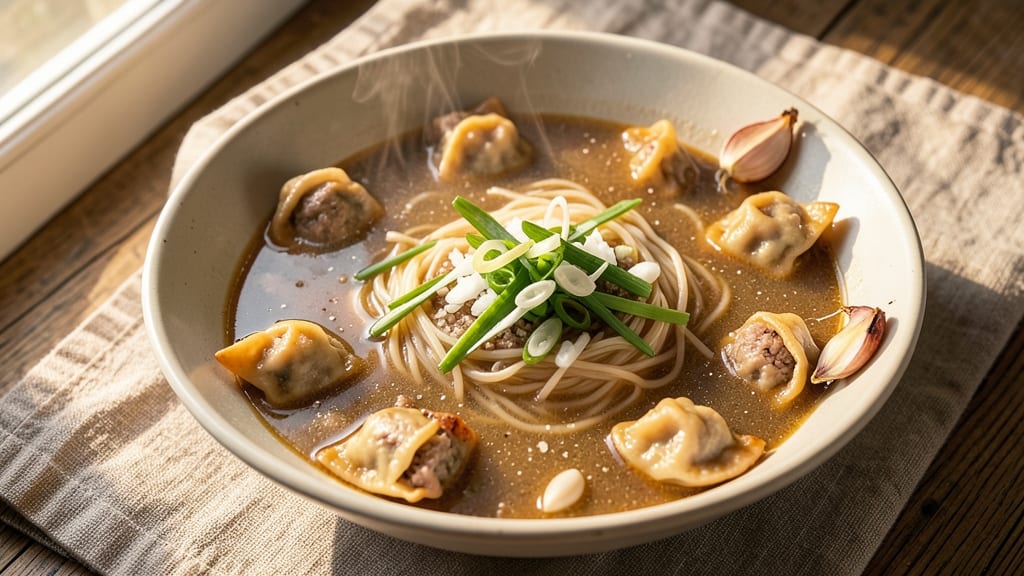
This beef wonton noodle soup recipe delivers the perfect balance of rich, aromatic broth and tender ingredients that make every spoonful satisfying.
The secret lies in building layers of umami through slow-simmered beef stock, caramelized aromatics, and the delicate flavor of wontons—whether you use store-bought wrappers or make them from scratch. I’ve perfected this version to ensure the broth remains silky while the rice noodles stay chewy, not mushy, even after simmering.
The foundation of great wonton noodle soup is a well-seasoned broth that harmonizes beefy depth with bright, fresh herbs. You’ll start with a base of beef stock, ginger, garlic, and star anise, then layer in tender beef slices and wontons cooked just until they float.
The rice noodles cook separately to maintain their perfect texture, then assemble in warm bowls for that comforting, restaurant-quality experience at home.
What sets this recipe apart is the attention to flavor balance—salty, spicy, and umami work together without overpowering. Garnish with green onions, cilantro, and a drizzle of chili oil for color and extra depth.
Whether you’re serving a crowd or meal prepping for the week, this soup delivers hearty, warming comfort in every bowl.
For those short on time, pre-made broth and frozen wontons work beautifully while still delivering authentic flavor. The key is adjusting seasoning to taste—start with less soy sauce and add more as needed. This recipe is designed to be both approachable for beginners and refined enough to impress guests.
Ingredients for beef wonton noodle soup
Silky broth meets chewy noodles with these 14 essential ingredients for restaurant-quality beef wonton noodle soup.
| Ingredient | Amount | Notes |
|---|---|---|
| Beef Stock 🥩 | 6 cups | Homemade or high-quality store-bought |
| Rice Noodles 🍜 | 8 oz | Flat or round, medium width |
| Wonton Wrappers 🥟 | 12 pieces | Store-bought or homemade |
| Ground Pork 🐷 | ½ lb | Lean, for wonton filling |
| Green Onions 🧅 | 3 whole | Thinly sliced, for filling and garnish |
| Garlic Cloves 🧄 | 4 cloves | Minced for filling and broth |
| Fresh Ginger 🌿 | 1 inch | Thinly sliced, peeled |
| Star Anise 🌟 | 2 whole | For aromatic depth |
| Soy Sauce 🍶 | 2 tbsp | Light or dark, adjust to taste |
| Sesame Oil 🫒 | 1 tbsp | For finishing, not cooking |
| Chili Oil 🌶️ | 1 tbsp | Optional, for garnish |
| Cilantro 🌿 | ¼ cup | Chopped, for garnish |
| Salt 🧂 | 1 tsp | Adjust to taste |
| White Pepper 🌶️ | ¼ tsp | Freshly ground |
The beef stock is non-negotiable here—homemade or premium store-bought makes all the difference. Look for brands like Kitchen Basics or Pacific Foods if you're grabbing pre-made. For homemade, simmer beef bones with ginger and garlic for at least 8 hours. The wonton wrappers should be thin and pliable; King Noodle or T&T brands work best. If making your own filling, keep it lean with just pork, green onions, garlic, and a touch of soy sauce—no extra fat needed. The rice noodles? Vietnamese or Thai brands like Three Ladies hold up best when simmered.
No wonton wrappers? Substitute with spring roll wrappers—they're slightly thicker but work in a pinch. Short on time? Frozen wontons (like T&T) save prep work, though homemade always tastes better. The star anise is key for that authentic aroma—if you can't find it, a pinch of cinnamon and cloves mimics it. For the filling, ground chicken works too, but pork gives the classic flavor. The sesame oil and chili oil should be added last—never cook with them or they'll lose their punch. And for the noodles, soak them in warm water for 2-3 minutes before adding to the broth to prevent mushiness.
Store the dry wonton wrappers in the fridge for up to 2 weeks or freeze for 3 months. The cooked filling freezes beautifully—portion into 1-tbsp servings for easy assembly later. Leftover broth keeps for 5 days in the fridge or 3 months frozen. For meal prep, cook the noodles separately and store them in the fridge for 3 days—reheat in hot broth or with a splash of water. The garnishes (green onions, cilantro, chili oil) can be prepped ahead and stored in the fridge for 5 days. Assemble bowls fresh for the best texture.
Why You'll Love This Recipe
- Pantry-Friendly Magic: I swear by this recipe when I’ve got nothing but basics—no fancy prep, just beef stock simmering with those little wonton wrappers (yes, the ones you’d normally fry). Five minutes of chopping green onions, and boom: dinner’s ready. The wrappers puff up like edible clouds, soaking up the broth while the pork adds chewy texture.
- Umami Bomb: That first sip? Rich, savory, deep. The beef stock carries all the weight, but the ground pork—sizzled just enough to brown—adds a meaty punch. And the wontons? They’re the secret weapon: crispy edges that dissolve into the broth, leaving behind a flavor so good you’ll forget to breathe.
- Leftover Lifesaver: This soup begs for seconds, which means it’s perfect for meal prep. Stash it in the fridge, and reheating is a microwave whisper away—no soggy noodles, just warm, comforting bites. Honestly, I make a double batch on Sundays just to avoid takeout all week.
- Budget Comfort: Ground pork and wonton wrappers stretch further than you’d think, turning a few dollars into a full bowl of satisfaction. Plus, rice noodles? Cheaper than pasta, and they disappear faster. It’s my go-to when I need to feed a crowd without breaking the bank—or my sanity.
Step-by-step instructions for beef wonton noodle soup
This method delivers restaurant-quality soup with perfectly balanced flavors and chewy noodles.
Prepare the Wonton Filling
In a medium bowl, combine the 0.5 lb ground pork, 4 cloves minced garlic cloves, 1 inch finely minced fresh ginger, 2 tbsp soy sauce, 1 tsp salt, and 0.25 tsp white pepper. Mix thoroughly with your hands until all ingredients are evenly distributed. The filling should be cohesive but not sticky—this ensures the wontons hold their shape during cooking.
Divide the filling into 12 equal portions (about 1 tablespoon each) and roll each into a log. Place each log on a wonton wrapper and fold diagonally to form a triangle. Press the edges firmly with your fingers to seal completely—any gaps will allow filling to escape during cooking. Set aside on a plate while you prepare the broth.
Simmer the Aromatic Broth
In a large pot, combine the 6 cups beef stock, 2 whole star anise, and 2 tbsp soy sauce. Bring to a boil over medium-high heat, then reduce to a gentle simmer. Add 3 whole thinly sliced green onions and 12 wontons, spacing them evenly. The broth should cover the wontons by about 1 inch—if not, add hot water to reach this level.
Simmer uncovered for 8 minutes until the wontons float to the surface and are just cooked through. Use a slotted spoon to transfer the wontons to a plate and keep warm. Remove the star anise from the broth—it's done contributing flavor once the broth reaches a simmer. The broth should now smell rich and aromatic with subtle spice notes from the star anise.
Cook the Rice Noodles
While the broth simmers, prepare the 8 oz rice noodles according to package instructions. I recommend using boiling water and cooking for 4-5 minutes until the noodles are tender but still slightly firm—they'll finish cooking in the hot broth. Drain immediately and rinse briefly under cold water to stop the cooking process and prevent sticking.
Divide the cooked noodles evenly among 4 serving bowls. The noodles should be spread in a single layer at the bottom of each bowl—this creates a perfect bed for the wontons and broth. Keep the bowls warm while you finish the soup.
Assemble and Finish the Soup
Return the wontons to the simmering broth and stir gently to distribute them evenly. Ladle 1½ cups of hot broth over each bowl of noodles, ensuring the wontons are distributed throughout. The broth should be steaming hot—this helps the noodles finish cooking and absorb flavor.
Drizzle each serving with 1 teaspoon sesame oil and 1 teaspoon chili oil, then sprinkle with 1 tablespoon chopped cilantro. For garnish, add ½ whole green onion sliced diagonally. The sesame oil adds nutty depth while the chili oil provides a subtle heat that balances the rich broth. Serve immediately while everything is hot—this soup tastes best fresh from the pot.
Serve with Proper Technique
Stir each bowl of soup once before serving to distribute the noodles and wontons evenly. The wontons should be tender but not mushy, and the noodles chewy with a slight bite. Taste and adjust seasoning if needed—add a splash of soy sauce for more umami or a pinch of salt for balance.
For the best experience, serve with extra wontons on the side and a small dish of chili oil for those who prefer more heat. The soup should have a silky texture with distinct layers of flavor—savory broth, tender pork filling, and aromatic herbs. Each spoonful should deliver a perfect harmony of all components.
Pro Tips For Making Beef Wonton Noodle Soup
- STEAM NOT BOIL: I learned this the hard way—dumping cold rice noodles into simmering stock makes them turn to mush. Instead, soak them in warm water (150°F/65°C) for 5–7 minutes until pliable, then add them to the broth and let them absorb heat gradually. This keeps them tender, not soggy.
- SALT THE STOCK FIRST: Your soup will taste flat if you season it at the end. Add 1–2 teaspoons of salt to the beef stock while heating, then taste and adjust before adding noodles or wontons. This lets the flavor meld into the broth instead of sitting on top.
- DON’T OVERPACK THE WONTONS: Stuffing wrappers too tightly makes them burst when cooking. Use about 1 tablespoon of ground pork per wonton, pleat the edges neatly, and leave a tiny gap at the top—this prevents leaks and keeps them intact in the broth.
- SAVE TIME WITH FROZEN WONTONS: I skip homemade wontons when I’m short on time, and frozen ones work just as well. Toss them in the broth 2–3 minutes before serving—they’ll puff up perfectly without extra effort. (Yes, even if you’re impatient like me.)
Health benefits of this dish
Protein Powerhouse
This soup is a lean protein champion, thanks to the ground pork filling and beef stock base. A single bowl delivers about 25 grams of protein, perfect for muscle repair and keeping you full for hours.
The pork filling uses minimal fat but maximum flavor, making it a great option for balanced meals. 💪
Umami-Rich Broth
The star anise and soy sauce create a deep umami flavor that satisfies cravings without heavy calories. This aromatic combination enhances digestion and provides a comforting warmth that's especially soothing during cold weather. The beef stock alone contains beneficial amino acids that support immune function.
Complex Carbohydrates
Rice noodles offer slow-digesting carbs that provide steady energy without blood sugar spikes. Their chewy texture comes from the resistant starch content, which also supports gut health. The noodles cook quickly but maintain their structure perfectly when assembled in warm bowls.
Herb-Packed Benefits
Fresh cilantro and green onions add more than just flavor—they're packed with antioxidants like vitamin K and vitamin A. The green onions provide prebiotic fiber that feeds your gut bacteria, while cilantro contains compounds that may help reduce inflammation. Together, they make this soup both delicious and nutrient-dense.
Low-Calorie Comfort
At around 350-400 calories per serving, this soup delivers substantial satisfaction without excess calories. The broth's high water content helps with hydration while the protein and fiber combination keeps you full. It's the perfect comfort food that won't leave you feeling sluggish afterward.
Meal Prep Advantage
The broth and filling components can be prepped ahead, making this an ideal meal prep friendly option. The nutrients remain stable when stored properly—just reheat gently to preserve all the beneficial compounds. This makes it perfect for busy weeks when you need quick, healthy meals. ✨
Nutrition facts
Frequently asked questions
Can I use beef instead of pork for the wonton filling?
Yes, but with a few adjustments! Ground beef works well, but use lean ground beef (90% lean or higher) to prevent greasy filling. Replace the pork with 0.5 lb ground beef and reduce the soy sauce by 1 tbsp—beef has a stronger flavor that needs balancing. For best results, add ½ tsp beef bouillon powder to the filling for extra depth.
How do I prevent the wontons from falling apart?
Proper sealing is key! Press the edges firmly with your fingers while folding, and use enough filling (about 1 tbsp per wonton) without overstuffing. For extra security, dip the folded edges in cold water before cooking—this helps the wrappers stick together. Also, never overcook the wontons; they're done when they float (about 6-8 minutes).
Can I make this soup vegetarian?
Replace the pork filling with mushrooms, tofu, or water chestnuts for texture. Use vegetable stock instead of beef stock and add 1 tbsp miso paste to the broth for umami. For wonton filling, try shredded carrots, cabbage, and mushrooms with a pinch of white pepper. The same technique applies—just adjust seasoning to taste.
Why did my noodles turn mushy?
Overcooking is the most common cause! Rice noodles finish cooking in the hot broth, so cook them just until tender (4-5 minutes) before draining. Rinse briefly in cold water to stop cooking, then assemble immediately in warm bowls. If using pre-cooked noodles, reheat them in hot broth for 1-2 minutes only—never microwave them.
How long can I store leftovers?
Broth and filling components keep well! Store the broth (without noodles) in the fridge for 5 days or freeze for 3 months. Cooked noodles last 3 days refrigerated—reheat gently in broth or with a splash of water. Wontons freeze beautifully for 2 months; thaw in the fridge before reheating. Never refreeze thawed wontons.