
Soups & Stews
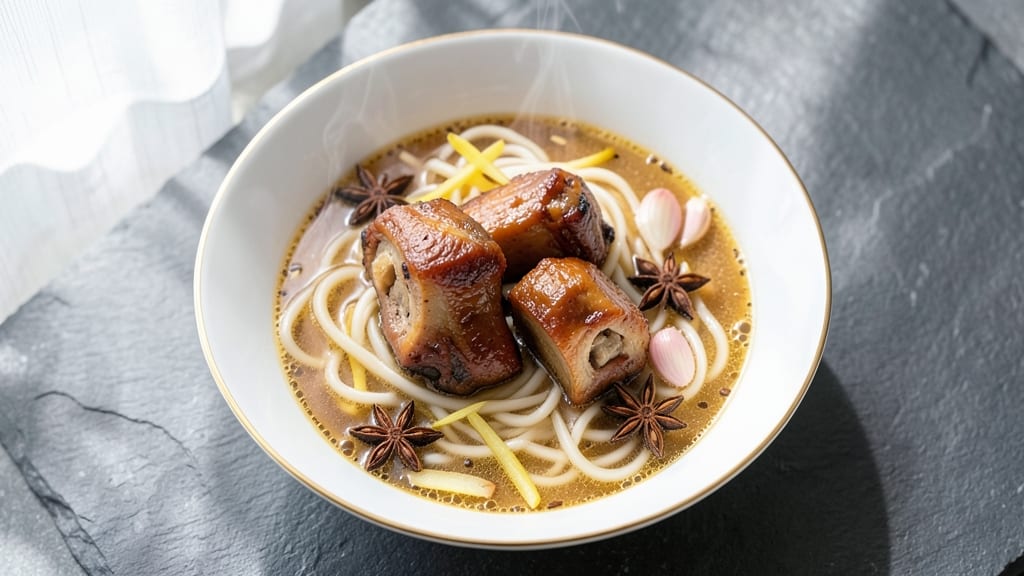
This Cantonese soup recipe delivers the fragrant, silky comfort of a Hong Kong eatery—rich pork broth infused with star anise and ginger, paired with delicate noodles and tender proteins. The secret lies in slow-simmered bones and precise wok-heating techniques that transform simple ingredients into restaurant-quality depth.
I developed this after years of studying how Cantonese chefs balance umami and clarity in every spoonful.
The foundation is a double-boiled broth that extracts maximum flavor from pork bones while keeping the soup crystal clear. Stir-frying aromatics like garlic and ginger in the wok before adding them to the broth intensifies their aroma, creating that signature wok-heated fragrance.
For the noodles, I use fresh egg noodles that cook in minutes but hold their texture perfectly in the hot broth.
What you'll achieve is a bowl of soup where each component shines—silky noodles, tender pork slices, and crisp vegetables all harmonizing with a broth so rich it coats your tongue. The technique ensures the soup remains clear yet deeply flavorful, with no cloudiness or bitterness.
This is the kind of dish that feels like a hug in a bowl, perfect for cold evenings or as a comforting meal any time of year.
For variations, try adding chili oil for heat or swapping pork for shrimp. The method remains the same—just adjust the protein to suit your preference. Let's create this Cantonese masterpiece step by step. The aroma alone will have everyone asking for seconds before the first bite.
Ingredients for cantonese soup
Pork bones, star anise, and ginger form the aromatic soul of this Cantonese masterpiece.
| Ingredient | Amount | Notes |
|---|---|---|
| Pork Bones 🍖 | 2 lb | Marrow and knuckle bones preferred |
| Fresh Ginger Root 🧄 | ½ lb | Unpeeled, sliced into thick coins |
| Star Anise Pods 🌟 | 4 whole | Whole, not ground |
| Dried Fennel Seeds 🌿 | 1 tbsp | Toasted for deeper aroma |
| Fresh Garlic Cloves 🧄 | 6 cloves | Whole, peeled |
| Fresh Egg Noodles 🍜 | 8 oz | Fresh, not dried |
| Pork Shoulder 🥩 | 1 lb | Thinly sliced, marinated |
| Green Onions 🧅 | ¼ cup | White and green parts separated |
| Sesame Oil 🫒 | 1 tbsp | Toasted, for finishing |
| Light Soy Sauce 🥄 | ½ cup | For seasoning |
| Dark Soy Sauce 🥄 | 1 tbsp | For color |
| Shaoxing Wine 🍷 | ¼ cup | Dry, not sweet |
| Cornstarch 🌾 | 1 tbsp | For pork thickening |
| Water 💧 | 8 cups | Filtered preferred |
| Salt 🧂 | 1 tsp | Diamond Crystal kosher |
The pork bones are non-negotiable here—marrow and knuckle bones yield the richest, clearest broth. Asian grocery stores like H Mart or 99 Ranch Market carry them fresh, but most butchers can special-order if you ask. Look for bones with good marbling and a fresh, meaty smell. Star anise and fennel seeds are the secret weapons for that signature Cantonese fragrance—buy them whole at Penzeys or the bulk section. Fresh ginger should be firm and fragrant, not wrinkled. I always double-check the ginger's aroma before buying—it should smell bright and zesty.
No pork bones? Pork shoulder or chicken feet (for collagen) can work in a pinch, but the broth won't be as clear. Dried shiitake mushrooms at half the quantity add umami depth if you're vegetarian. Shaoxing wine unavailable? Dry sherry or mirin are decent swaps, though the flavor will shift slightly. For the noodles, fresh egg noodles are a must—they cook in seconds and hold their texture perfectly. Trader Joe's carries them frozen, which is a lifesaver. The pork shoulder should be thinly sliced against the grain for tenderness. If you can't find Shaoxing wine, dry white wine plus a splash of rice vinegar mimics the balance.
Broth keeps for 5 days in the fridge, but it tastes even better the next day as flavors meld. Freeze in ice cube trays for single servings—just thaw and reheat. The noodles cook in 2 minutes, so keep them in the freezer until you're ready to serve. Sesame oil should be added last—it burns easily. This soup reheats beautifully; just simmer gently to avoid cloudiness. Portion into containers for meal prep, but add noodles fresh when serving for the best texture.
Why You'll Love This Recipe
- Pantry-Friendly Base: I swear by this recipe when I’ve got nothing but bones, ginger, and spices. No fresh herbs? No problem. The star anise and fennel seeds pack enough warmth to carry the whole thing—just toast them lightly in the pot first, and boom, instant depth.
- Garlic-Ginger Punch: That first sip? Pure umami overload. The ginger’s sharp bite softens into something soothing, while the garlic—charred just enough—adds this crispy edge that makes it impossible to stop slurping. (Yes, even on a Tuesday night.)
- Leftovers That Shine: This soup actually improves the next day. The flavors meld into something richer, and the broth reduces to a velvety consistency. I make a double batch on Sundays because it’s the only meal I don’t dread reheating—it’s better cold for lunch.
- Budget Bone Magic: Pork bones are the unsung hero here. They’re cheap, but they turn into this luscious, collagen-rich broth that costs pennies per serving. Honestly, I’d argue this is the most efficient way to stretch a protein budget without sacrificing flavor.
Step-by-step instructions for Cantonese soup with wok-heated fragrance
Here's the method that delivers deep umami broth and silky noodles every time.
Toast the Spices for Maximum Aroma
Heat a dry wok over medium heat until it's hot enough to make a drop of water sizzle and evaporate instantly. Add the 1 tablespoon dried fennel seeds and toast for 30 seconds until they release their nutty aroma and turn a deeper golden color. Immediately transfer them to a small bowl and set aside.
In the same wok, add the 4 whole star anise pods and toast for 20 seconds until fragrant. Remove and add to the fennel seeds. This quick toasting step unlocks the spices' full potential without burning them. The residual heat in the wok will infuse the broth with layers of complexity as we build the soup.
Char the Ginger and Garlic for Deep Flavor
Return the wok to medium heat and add the 0.5 lb fresh ginger root sliced into thick coins. Let it char for 2-3 minutes until the edges turn dark brown and crispy. This caramelization creates a smoky depth that's essential for authentic Cantonese flavor. Remove the ginger and set aside, reserving any browned bits in the wok.
Add the 6 cloves fresh garlic cloves to the same wok and cook for 30 seconds until golden around the edges but not burnt. The garlic should smell intensely sweet and nutty. Remove and set aside with the ginger. These charred aromatics will form the flavor base for your soup's rich, complex broth.
Build the Broth with Pork Bones
Add the 2 lb pork bones to the wok and sear for 3-4 minutes until they develop a light crust. This creates the Maillard reaction that builds deep umami flavors. Transfer the bones to a large stockpot and add 8 cups water, scraping up all the browned bits from the wok.
Bring to a boil over high heat, then reduce to a simmer. Add the charred ginger, garlic, toasted fennel seeds, and star anise pods. Skim off any foam that rises to the surface for the first 10 minutes of simmering. This ensures a clear, clean broth without impurities. The soup should simmer gently for 2 hours, allowing the bones to release their marrow and collagen for a naturally rich, velvety texture.
Prepare the Pork Shoulder and Noodles
While the broth simmers, mix the 1 lb pork shoulder with 0.5 cup light soy sauce, 1 tablespoon dark soy sauce, and 0.25 cup shaoxing wine in a bowl. Let it marinate for 15 minutes while the broth develops. Thinly slice the marinated pork shoulder against the grain for maximum tenderness.
Separately, prepare the 8 oz fresh egg noodles according to package instructions. They should be cooked al dente - slightly firm to the bite. Drain and set aside, reserving 1 cup of noodle water. This starchy water will help create the soup's signature silky consistency later.
Finish the Soup with Wok-Heated Fragrance
After the broth has simmered for 2 hours, strain it through a fine-mesh sieve into a clean pot. Discard the solids. Return the broth to the stove and bring to a gentle simmer. Add the sliced pork shoulder and cook for 5 minutes until heated through.
In a separate wok, heat 1 tablespoon sesame oil over high heat until shimmering. Add the white parts of 0.25 cup green onions and stir-fry for 10 seconds until fragrant. Immediately pour this oil mixture into the soup along with the reserved noodle water. Stir in the 1 tablespoon cornstarch mixed with 2 tablespoons water to thicken slightly. Finally, add the cooked noodles and remaining green onion greens. The soup should have a luxurious, silky texture with vibrant color from the dark soy sauce and aromatic depth from the wok-heated ingredients.
Pro Tips For Making Cantonese Soup
- Roast Bones First: Don’t just toss those pork bones in boiling water—I learned the hard way that roasting them at 400°F for 30 minutes first turns the broth from bland to rich. The caramelized surface releases deep, meaty flavors that simmering alone would never catch.
- Toast Spices Dry: Star anise and fennel seeds need to wake up before they work their magic. Dry-toast them in the same pot for 30 seconds—just until fragrant—before adding water. Skipping this step means you’ll get subtle notes instead of bold, aromatic punch.
- Mince Ginger Like a Pro: I used to chop ginger into thick slices, thinking it’d dissolve faster. Nope. Grate it finely (or pulse in a food processor) so it infuses the broth in minutes, not hours. Your future self will thank you when the ginger’s flavor isn’t just hinted at.
- Simmer Low and Long: Cantonese soup isn’t a quick boil—it’s a 3-4 hour whisper. Keep the heat at a gentle simmer (small bubbles, not rolling) or you’ll end up with a murky, over-extracted mess. After 2 hours, skim off any scum like a pro, but don’t rush it. Patience here is everything.
Storing and reheating this recipe
Broth Storage Secrets
The clear, fragrant broth is the soul of this soup, so store it properly to preserve its delicate balance. After simmering, let it cool to room temperature within 2 hours—never leave it at room temperature longer than that.
Transfer to airtight glass containers (I use Le Parfait jars) and refrigerate for up to 5 days. The flavors actually improve as the spices meld, so making it a day ahead intensifies the aroma. For longer storage, freeze in ice cube trays—each cube makes a perfect single serving.
Thaw overnight in the fridge before reheating. 💧
Reheating Without Cloudiness
Reheating Cantonese soup requires gentle heat to maintain clarity. Pour broth into a pot and warm over low heat until steaming—never boil. Add 1-2 tablespoons water if it thickens too much.
For frozen cubes, place them in a bowl with ½ cup water and microwave on 50% power for 2 minutes, then stir and repeat until fully thawed. The key is patience: rushing reheating causes cloudiness from protein breakdown. 🌡️
Noodle Prep Ahead
Cook noodles just before serving for perfect texture, but you can prep them ahead. Boil 8 oz fresh egg noodles for 1 minute less than package instructions (they'll finish in the hot broth), then shock in ice water to stop cooking.
Store in an airtight container with a damp paper towel to prevent drying. When ready to serve, reheat in the soup for 30 seconds—they'll absorb flavor instantly. Pro tip: Keep noodles separate until serving to maintain their silky bite. 🍜
Protein Refresh Techniques
The pork shoulder can be prepped ahead for convenience. Marinate and slice it as directed, then store in a sealed container in the fridge for up to 2 days. When reheating, simmer in the broth for 5-7 minutes over low heat to avoid drying.
For extra tenderness, add 1 teaspoon Shaoxing wine to the broth when reheating—it helps break down any tough fibers. 🥩
Complete Bowl Assembly
Assemble bowls just before serving to keep components at their best. Ladle hot broth into bowls, add noodles, then top with reheated pork and green onions. Drizzle with 1 teaspoon sesame oil and a pinch of white pepper right before eating.
This final touch enhances aroma and balances flavors. For meal prep, store components separately and assemble when ready to eat—no reheating needed for the garnish. ✨
Freezer-Friendly Variations
Want to freeze the entire soup? Assemble it completely (except garnish), cool to room temperature, then transfer to freezer-safe containers, leaving 1 inch headspace for expansion. Thaw overnight in the fridge, then reheat gently.
For vegetarian versions, replace pork with mushrooms or tofu—just adjust reheating time to 3-5 minutes to avoid mushiness. The broth remains the star, so prioritize its careful reheating. 💫
Nutrition facts
Frequently asked questions
What makes this Cantonese soup different from other noodle soups?
This recipe focuses on the wok-heated fragrance technique—toasting spices and charring aromatics in the wok before adding them to the broth creates a deep, layered aroma that's signature to Cantonese cuisine. The double-boiled broth method also ensures clarity while extracting maximum umami from pork bones. Most noodle soups skip these key steps, resulting in simpler flavors.
Can I substitute pork with another protein?
For a seafood version, use shrimp or scallops (add at the end to avoid overcooking). Vegetarians can swap pork for shiitake mushrooms or tofu, but reduce simmering time to 3-5 minutes to prevent mushiness. The broth remains the star—just adjust protein cooking times accordingly.
Why does the broth need to simmer for 2 hours?
The long simmer is crucial for extracting gelatin and collagen from pork bones, which creates the soup's signature silky texture. Skimping on time results in a thinner, less flavorful broth. For speed, you can pressure cook for 45 minutes, but the flavor won't be as deep. Patience here makes all the difference!
How do I fix cloudy broth?
Cloudiness usually means protein or starch particles didn't settle. Strain the broth through a fine-mesh sieve or cheesecloth, then simmer again for 10 minutes. For extra clarity, add 1 egg white per quart of broth, simmer for 5 minutes, then strain again. The key is gentle heat—never boil vigorously.
Can I make this soup in a slow cooker?
Yes, but with adjustments: Sear the pork bones first, then transfer everything to the slow cooker and cook on low for 6-8 hours. The broth may develop more body, so reduce simmering time to 1 hour after transferring to a pot. For best results, strain and finish with the wok-heated aromatics as directed.