
Soups & Stews
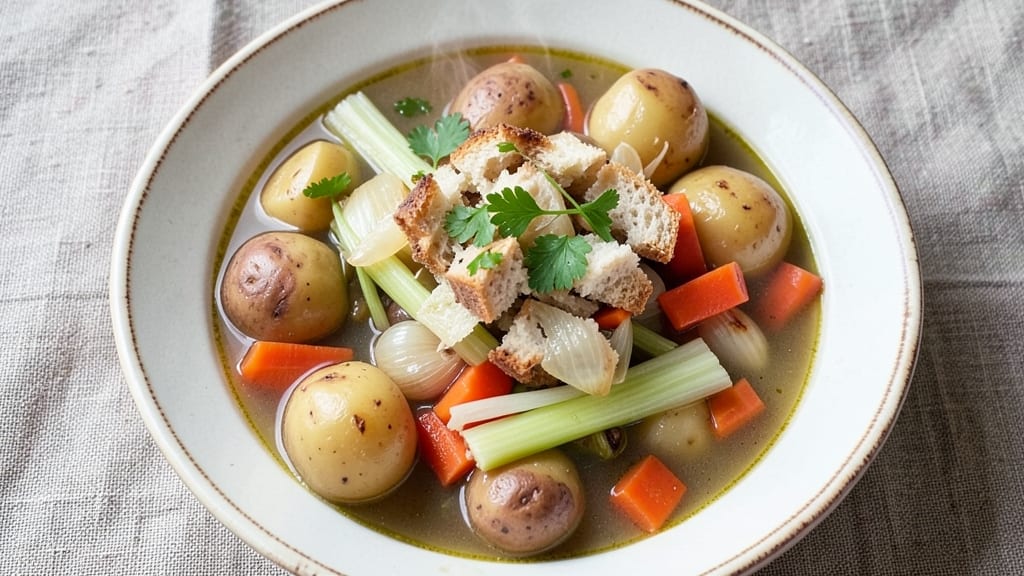
This peasant soup recipe transforms humble ingredients into a hearty, crispy-topped vegetable stew that tastes like a hug from tradition. The secret lies in layering flavors—simmered root vegetables, earthy herbs, and a golden bread crust that adds texture without effort.
I first made this during a cold winter when pantry staples became the stars of the meal, and it’s been a staple ever since.
The beauty of peasant soup is its adaptability—whether you use leftover bread for the topping or swap in seasonal vegetables, the foundation remains simple yet deeply satisfying. The broth develops rich depth from slow simmering, while the crispy bread topping adds a satisfying crunch that balances the stew’s warmth.
This recipe delivers comfort food at its finest, with minimal prep and maximum flavor.
By the time you serve it, you’ll have a steaming bowl of rustic goodness—crispy bread topping floating on a velvety broth, loaded with tender vegetables and aromatic herbs.
It’s the kind of dish that feels like a homecoming, perfect for chilly evenings or when you crave something hearty yet unpretentious. Let’s get cooking!
For those with dietary preferences, this recipe can easily be adapted by omitting meat or using plant-based broths. The crispy bread topping remains a standout feature, proving that even the simplest dishes can shine with the right technique. Ready to master this classic?
Ingredients for peasant soup
Pantry staples meet rustic tradition in this comforting peasant soup with golden bread topping.
| Ingredient | Amount | Notes |
|---|---|---|
| Vegetable Broth 💧 | 6 cups | Homemade or high-quality store-bought |
| Russet Potatoes 🥔 | 2 lbs | Peeled and cut into 1-inch cubes |
| Carrots 🥕 | 1 ½ lbs | Peeled and sliced into rounds |
| Onions 🧅 | 2 whole | Yellow or red, sliced into wedges |
| Celery Stalks 🥬 | 4 whole | Trimmed and cut into 1-inch pieces |
| Garlic Cloves 🧄 | 6 cloves | Minced for aromatic depth |
| Fresh Thyme 🌿 | ½ ounce | Or 2 tbsp dried thyme |
| Bay Leaves 🍃 | 2 whole | Removed before serving |
| Stale Bread 🍞 | 1 ½ cups | Day-old loaf, torn into chunks |
| Extra-Virgin Olive Oil 🫒 | ¼ cup | For crispy bread topping |
| Salt 🧂 | 1 ½ tsp | Kosher or sea salt |
| Black Pepper 🌶️ | ½ tsp | Freshly ground preferred |
| Parsley 🌿 | ¼ cup | Fresh, chopped for garnish |
| Butter 🧈 | 2 tbsp | For bread topping richness |
The vegetables form the heart of this soup, so prioritize freshness and quality. Russet potatoes should feel firm and heavy for their size, while carrots and celery should snap when broken. For the best flavor, Whole Foods or local farmers markets offer the freshest produce—look for vibrant colors and crisp textures. The stale bread is key for the crispy topping; day-old loaves work best, but if you're in a pinch, toast a few slices and let them cool completely. Garlic and thyme should be aromatic with no signs of wilting or discoloration—Penzeys or local spice shops carry high-quality dried herbs if fresh isn't available.
No vegetable broth? Chicken or beef broth works equally well, though the flavor profile will shift slightly. Swap carrots for turnips or parsnips if preferred, but keep the total weight consistent. The bread topping can use panko or crushed crackers instead of stale bread, though texture will differ. Fresh herbs like thyme and parsley can be substituted with dried at one-third the amount, but fresh is always preferable for that bright, vibrant taste. If you're missing butter for the topping, olive oil or melted margarine will suffice, though butter adds the best richness.
This soup tastes even better the next day as flavors meld. Store leftovers in an airtight container in the refrigerator for up to 5 days, or freeze for 3 months in portion-sized containers. The bread topping can be made ahead and reheated separately—just pop it in the oven at 375°F for 5-7 minutes until crispy again. For a lighter version, reduce the butter in the topping or use whole-grain bread. The crispy topping reheats beautifully, making this an ideal make-ahead dish for busy weeknights.
Why You'll Love This Recipe
- Just Three Chops: I swear by the "mirepoix trifecta"—onion, carrot, celery—because it’s the backbone of flavor without fuss. Dice them once, toss them in, and let the broth do the work while you stir. (Yes, even on a Tuesday night.)
- Creamy Without Cream: That buttery Russet potato breaking down in warm broth? Pure magic. It’s rich enough to satisfy but light enough you won’t feel weighed down—no heavy cream or cheese needed. Honestly, the first time I skipped the dairy, I thought I’d ruined it. Then I took a bite.
- Leftover Goldmine: This soup only gets better the next day. The potatoes soften just right, the broth deepens, and you’ll find yourself sneaking extra bowls. I’ve turned a single batch into three lunches by adding a splash of broth to reheat—no soggy mess, just perfect texture.
- Pantry Staple Power: Between us, this recipe uses ingredients you already own. Vegetable broth, root veggies, and a pinch of salt? That’s it. I’ve made it for potlucks, sick days, and even as a side for roasted meats. It’s the ultimate "I’ve got nothing" solution that somehow feels special.
Step-by-step instructions for rustic vegetable stew with crispy bread topping
Here's how to craft a hearty peasant soup where tender vegetables blend with rich broth and finish with golden, crispy bread topping.
Sauté the Vegetable Base
Heat the 0.25 cup extra-virgin olive oil in a large Dutch oven over medium heat. Add the 2 whole onions, 4 whole celery stalks, and 1.5 lbs carrots, cutting them into even pieces as you go. Cook for 8-10 minutes until the vegetables soften and the onions become translucent.
Add the 6 cloves minced garlic cloves and 0.5 ounce fresh thyme, stirring for 30 seconds until fragrant. This step builds the aromatic foundation that carries through the entire soup. If the vegetables begin to brown too quickly, reduce heat slightly to prevent burning before adding the broth.
Simmer the Vegetable Broth
Pour in the 6 cups vegetable broth and bring to a gentle boil. Add the 2 lbs russet potatoes (cut into 1-inch cubes), 2 whole bay leaves, 1.5 teaspoons salt, and 0.5 teaspoon black pepper. Stir gently to combine.
Reduce heat to low and let the soup simmer uncovered for 30-35 minutes until the potatoes are fork-tender and the vegetables are fully cooked. You'll know it's ready when the potatoes collapse easily under gentle pressure and the broth has thickened slightly from the vegetables releasing starch. Skim any foam that rises to the surface during cooking for a cleaner broth.
Prepare the Crispy Bread Topping
While the soup simmers, pulse the 1.5 cups stale bread in a food processor until it resembles coarse crumbs. In a small bowl, combine the bread crumbs with 2 tablespoons butter and 1.5 teaspoons salt. Mix until evenly distributed, then stir in 0.25 cup extra-virgin olive oil until the mixture holds together when pressed.
Form the mixture into small, flat patties or leave as loose crumbs. Heat 0.25 cup extra-virgin olive oil in a separate skillet over medium-high heat until shimmering. Add the bread mixture in batches, pressing down gently to ensure even contact. Cook for 3-4 minutes per side until golden brown and crispy. The edges should be deeply browned while the centers remain slightly soft for texture contrast.
Finish and Serve
Remove the 2 whole bay leaves from the soup and adjust seasoning if needed. Ladle the hot soup into bowls, placing 1-2 crispy bread topping pieces on top of each serving. Garnish with 0.25 cup chopped parsley just before serving to add freshness and color.
Serve immediately while the bread topping is still crispy. The contrast between the warm, hearty broth and the golden, crunchy bread topping creates the perfect balance of textures. For extra richness, drizzle a little more olive oil over each bowl before serving.
Pro Tips For Making Peasant Soup
- SOAK THE POTATOES: Cut your Russets into even 1-inch chunks and soak them in cold water for 10 minutes before cooking. I learned this the hard way—skipping it means your soup turns gluey instead of creamy. Drain and pat dry before adding to the pot.
- SWEAT THE AROMATICS: Cook onions, carrots, and celery in a dry pot for 5 minutes over medium heat before adding broth. This builds flavor without burning. I used to rush this step and wondered why my soup tasted bland.
- SKIP THE BOIL: Simmer, don’t boil, once the potatoes are added. A gentle simmer (tiny bubbles at the edges) keeps them tender without falling apart. Boiling turns them to mush—your future self will notice.
- STIR IN THE BROTH HOT: Heat your vegetable broth until it’s steaming before pouring it into the pot. Cold broth shocks the veggies and slows cooking. Sounds weird, but it works—your soup will be ready faster and taste deeper.
Wine and beer pairings for peasant soup
Earthy Reds & Whites
This rustic soup pairs beautifully with Pinot Noir, a light-bodied French red with bright acidity that cuts through the richness of the broth. Look for a 2022 Oregon Pinot Noir from Willamette Valley—its red berry notes complement the carrots and thyme while the crisp finish balances the stew’s heartiness.
The tannins are gentle enough to avoid overwhelming the dish’s delicate flavors. 🍷
Creamy White Wine Twist
For a refreshing contrast, try a Chardonnay with a touch of oak, like a 2021 Chablis from Burgundy. The buttery notes from the wine’s aging mirror the richness of the butter in the bread topping, while its bright citrus undertones cleanse your palate between savory bites.
A $25 bottle delivers excellent value for this pairing.
Craft Beer Complements
A Belgian Witbier like Hoegaarden brings citrusy brightness and a light spice that enhances the thyme in the soup. The effervescence helps cleanse your palate, making each spoonful of stew taste fresher.
For a malty option, a German Hefeweizen with clove and banana notes adds unexpected depth that pairs surprisingly well with the earthy vegetables. 🍺
Local Lager Balance
If you prefer beer, a crisp American lager like Coors Banquet or Budweiser provides a neutral canvas that lets the soup’s flavors shine.
The slight sweetness of the lager complements the natural sweetness of the carrots, while its carbonation helps cut through the richness of the butter in the bread topping. It’s a simple but effective match for casual gatherings.
Sparkling Alternative
For a festive touch, serve with Prosecco or a Cava from Spain. The bubbles and bright acidity refresh your palate, making the soup’s depth taste even more pronounced. A $15 bottle of Prosecco adds a touch of celebration to your rustic meal without overpowering the dish’s simplicity. 🥂
Nutrition facts
Frequently asked questions
Can I make this peasant soup without the crispy bread topping?
The bread topping adds a satisfying crunch, but you can easily skip it! Serve the soup as-is with a sprinkle of fresh parsley or a drizzle of olive oil. For extra texture, toast garlic breadcrumbs separately and serve on the side. The soup still delivers rich, comforting flavors without the topping.
How can I make this soup vegetarian or vegan?
Use vegetable broth instead of meat-based broths, and swap butter for olive oil or vegan butter in the bread topping. For extra protein, add white beans or lentils to the soup. The dish remains hearty and flavorful while staying plant-based.
What if I don’t have stale bread for the topping?
No problem! Use panko breadcrumbs, crushed crackers, or even toasted bread cubes for texture. For extra crispiness, press the mixture firmly in the pan and cook until golden brown. The key is ensuring the topping stays crunchy, not soggy.
Can I prepare this soup ahead of time?
Make the soup up to 3 days in advance and store it in an airtight container. Reheat gently on the stove, then crisp the bread topping fresh in a skillet before serving. The flavors deepen overnight, making it even more delicious. Perfect for meal prep!
What’s the secret to the crispy bread topping?
Use stale bread (or dry panko) and press the mixture firmly in the pan over medium-high heat. Don’t overcrowd the pan—cook in batches for even browning. A little extra butter or oil ensures golden crispiness. Patience is key: cook until edges are deep brown, but centers stay slightly soft.