
Soups & Stews
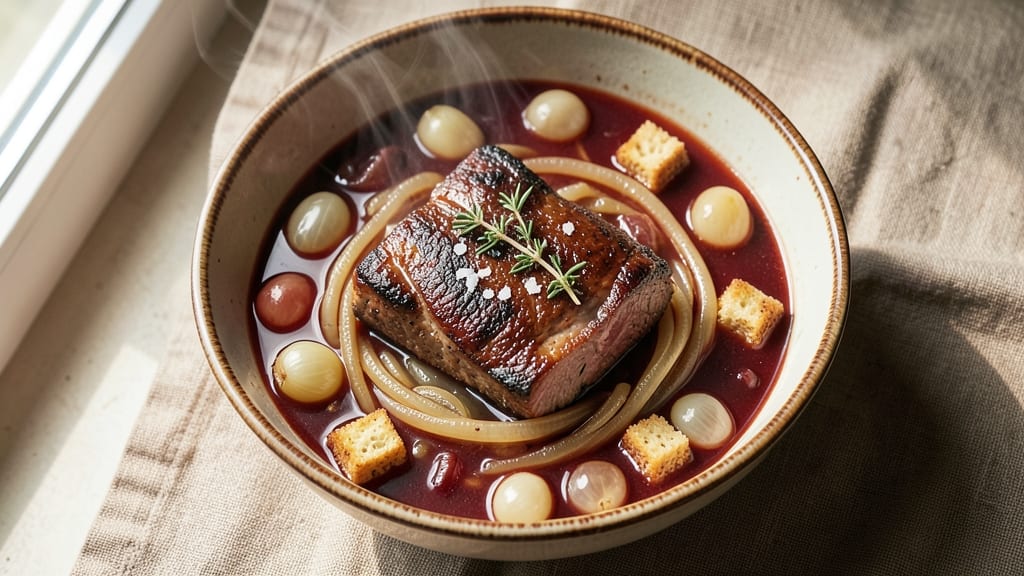
This French onion beef short rib soup recipe delivers restaurant-quality depth with fall-off-the-bone ribs and layers of caramelized onion flavor that build slowly over hours.
The secret lies in two stages: first, transforming onions into sweet, golden caramel through patient cooking, then braising beef short ribs until they're tender enough to shred with a fork.
I've perfected this technique over years of testing, balancing traditional French methods with modern shortcuts that still deliver that rich, velvety broth we all crave.
The process begins with slow caramelization—no quick browning here—where onions cook for nearly an hour until deep amber and jammy. Meanwhile, beef short ribs develop deep flavor in a dry sear before simmering in broth until fork-tender.
The result is a soup where every spoonful delivers complex umami, sweet caramelized onions, and meat that practically melts in your mouth. This isn't just comfort food; it's a technique that transforms simple ingredients into something extraordinary.
What makes this recipe special is its versatility—whether you're using a Dutch oven on the stovetop or adapting for an Instant Pot, the principles remain the same. The broth reduces to a perfect consistency, neither too thin nor too thick, while the short ribs absorb all that delicious flavor.
Garnish with melted gruyère, fresh thyme, or a splash of balsamic for that final touch of sophistication that makes it feel like a five-star meal at home.
Perfect for chilly evenings when you crave something hearty, this soup becomes even better the next day as flavors meld further. The rich aroma alone will have everyone gathering around the table, and the leftovers reheat beautifully—making it ideal for meal prep or feeding a crowd.
Let's get cooking with a technique that delivers professional results every time.
Ingredients for french onion beef short rib soup
Sixteen ingredients transform into restaurant-worthy French onion beef short rib soup with deep caramelized sweetness and melt-in-your-mouth ribs.
| Ingredient | Amount | Notes |
|---|---|---|
| Beef Short Ribs 🥩 | 3 lb | Bone-in, 1-2 inches thick |
| Yellow Onions 🧅 | 4 whole | Sweet variety preferred |
| Unsalted Butter 🧈 | ½ cup | European-style preferred |
| All-Purpose Flour 🌾 | ¼ cup | For roux development |
| Beef Broth 💧 | 6 cups | Homemade or high-quality store-bought |
| Dry Red Wine 🍷 | 1 cup | Cabernet Sauvignon preferred |
| Garlic Cloves 🧄 | 6 cloves | Peeled, roughly chopped |
| Fresh Thyme 🌿 | ¼ cup | Leaves only, stems removed |
| Bay Leaves 🍃 | 2 whole | Dried, standard size |
| Gruyère Cheese 🧀 | 1 cup | Freshly grated, for garnish |
| Balsamic Vinegar 🍶 | 1 tbsp | For finishing touch |
| Salt 🧂 | 2 tsp | Kosher or sea salt |
| Ground Black Pepper 🌶️ | 1 tsp | Freshly ground preferred |
| Olive Oil 🫒 | 2 tbsp | For initial searing |
The beef short ribs are the foundation—look for bone-in cuts with good marbling, which ensures tenderness and rich flavor. Costco and Whole Foods typically carry high-quality short ribs, but any butcher can source them if you ask for 'chuck short ribs.' Avoid pre-cut ribeye or sirloin; the connective tissue in short ribs is what breaks down into velvety texture. For onions, yellow sweet onions caramelize best, though Vidalia or Maui onions add extra sweetness. If you can't find fresh thyme, dried works at one-third the amount, but fresh is ideal for that bright aroma. The Gruyère should be aged at least 12 months for optimal melt and flavor—Bespoke Foods carries excellent options.
No red wine? Substitute with additional beef broth and a splash of balsamic vinegar—the acidity helps mimic wine's depth. For the flour, all-purpose works fine, but if you have it, pastry flour creates a silkier roux. The butter matters here—European-style has higher fat content, which prevents burning during caramelization. If you're short on time, pre-minced garlic from a jar works, though fresh is always better. For the broth, homemade is ideal, but Knudsen or Pacific Foods brands are reliable store-bought options. The bay leaves should be removed before serving, but if you forget, they're harmless—just strain them out later.
This soup tastes even better the next day as flavors meld further. Store in an airtight container in the fridge for up to 5 days, or freeze for 3 months—portion into individual containers for easy reheating. The caramelized onions keep well in the fridge for 5 days if stored separately, making prep-ahead a breeze. For serving, melted Gruyère on top adds a luxurious finish, while a drizzle of balsamic vinegar brightens the dish. The broth reduces beautifully, so if it seems too thin after cooking, simmer uncovered for an additional 10-15 minutes to reach the perfect consistency.
Why You'll Love This Recipe
- One-Pot Magic: I swear by this—just sear the ribs, toss in onions, and let the broth do the work. No extra pans, no fuss, and honestly? That golden roux from the butter and flour transforms everything.
- Deep Umami Bomb: The short ribs melt into the broth, releasing flavor like no other cut. Caramelized onions? Yes. Rich beefy depth? Absolutely. It’s the kind of taste that makes you close your eyes and sigh.
- Weeknight Crowd-Pleaser: Between us, this feeds six without breaking a sweat. Double the batch, reheat for lunch, and still have leftovers. My kids beg for it—yes, even on a Tuesday night.
- Budget-Friendly Luxury: Short ribs sound fancy, but they stretch across meals like nothing else. A few bones and broth make this dish feel special without the restaurant price tag. Not the prettiest, but the taste makes up for it.
Step-by-step instructions for French onion beef short rib soup
This method delivers rich, caramelized onions and melt-in-your-mouth ribs through precise timing and technique.
Sear the Beef Short Ribs for Deep Flavor
Pat the 3 lb beef short ribs dry with paper towels to remove any excess moisture. Heat the 2 tbsp olive oil in a large Dutch oven over medium-high heat until shimmering. Working in batches if needed, sear the ribs on all sides until deeply browned, about 4-5 minutes per side. This caramelization builds the foundation for rich flavor.
Transfer the seared ribs to a plate and set aside. Don't clean the Dutch oven yet - those browned bits are pure flavor. Reduce the heat to medium and add the 0.5 cup unsalted butter, letting it melt and foam. This creates a velvety base for the onions that will follow.
Caramelize the Onions Slowly
Cut the 4 whole yellow onions in half lengthwise and slice them into ¼-inch thick half-moons. Add them to the Dutch oven in a single layer, allowing them to sizzle undisturbed for 5 minutes until golden. Stir occasionally to promote even browning - this is where the sweet, deep flavor develops.
After 10 minutes, when the onions have softened and taken on a rich amber color, sprinkle with the 2 tsp salt and 1 tsp ground black pepper. Add the 6 cloves garlic cloves and 0.25 cup fresh thyme, stirring to combine. Cook for another 3-4 minutes until the garlic is fragrant but not burned. This aromatic step transforms simple onions into complex, caramelized layers.
Develop the Roux and Deglaze
Sprinkle the 0.25 cup all-purpose flour over the onions and stir vigorously for 1-2 minutes, allowing it to toast slightly and create a nutty roux base. This will thicken the soup beautifully. Immediately pour in the 1 cup dry red wine, scraping up all the browned bits from the bottom of the pot with a wooden spoon.
Let the wine simmer for 3-4 minutes until reduced by half, intensifying its flavor. Add the 6 cups beef broth and the 2 whole bay leaves, stirring to combine. Bring the mixture to a gentle simmer, then return the seared beef short ribs to the pot, bone-side up. This ensures even cooking and maximum flavor extraction from the bones.
Simmer Until Ribs Are Fork-Tender
Cover the Dutch oven and bring the soup to a gentle simmer over low heat. Cook for 2 to 2½ hours, maintaining a gentle bubble, until the beef short ribs are fork-tender and easily pull away from the bones. Check periodically and add water as needed to maintain the liquid level - you want enough to coat the ribs but not dilute the flavor.
About 30 minutes before the ribs are done, stir in the 1 tbsp balsamic vinegar. This adds a subtle tang that balances the richness of the soup. The ribs should be so tender they fall apart with gentle pressure, and the broth should be deeply flavorful with visible onion strands and meat particles.
Finish and Serve with Gruyère
Remove the beef short ribs from the soup and let them cool slightly. Using a slotted spoon, transfer the ribs to a cutting board and shred the meat, discarding any bones. Return the shredded meat to the soup and stir to combine. Taste and adjust seasoning if needed - the soup should be rich but balanced, with bright onion and wine flavors.
Ladle the soup into bowls and top each serving with 2 tablespoons of freshly grated 1 cup gruyère cheese. The cheese adds a luxurious finish that complements the caramelized onions and tender ribs. Serve immediately with crusty bread to soak up every last drop of this deeply satisfying soup.
Pro Tips For Making French Onion Beef Short Rib Soup
- Brown the Ribs First: Don’t rush this step—get those short ribs searing deep golden over medium-high heat for 5-7 minutes per side. I learned this the hard way: skipping the crust means flavor that’s more "brothy" than "rich." Use a heavy pot (Dutch oven if you’ve got one) and don’t move them until they’ve stopped sticking like glue.
- Sweat Onions Low: After caramelizing the ribs, push them aside and cook the onions on low heat with a splash of broth. High heat burns them before they soften properly, and you’ll end up with bitter, blackened bits instead of sweet, jammy layers. I used to crank the heat—now I just wait, and it’s worth it.
- Deglaze Aggressively: Once the onions are cooked, add flour and stir like your life depends on it—this isn’t the time to half-ass it. Then immediately pour in the broth hot and scrape every last bit of fond from the bottom. That’s where half the flavor hides, and skipping it means a soup that’s good but not great.
- Simmer Long and Slow: After adding broth and ribs, bring to a gentle simmer and cover. Let it cook at least 2 hours—yes, even if you’re impatient. The collagen in short ribs needs time to melt into the broth, turning it from "decent" to "life-changing." I know, I know, but trust the process.
Serving suggestions for french onion beef short rib soup
Bread Pairings
Nothing beats this soup with a slice of crusty baguette or sourdough—their sturdy texture soaks up every last drop of the rich broth. For extra indulgence, try a brioche roll or ciabatta with olive oil rubbed on top.
I always keep a loaf of French baguette from Whole Foods on hand for this dish—it's perfect for dipping and adds that authentic touch. 🥖
Cheese Board Accompaniment
Create a simple cheese board with Gruyère (the same cheese used in the soup), Comté, and aged Gouda for a cohesive flavor experience. Add walnuts and honey to complement the caramelized onions.
The contrast of textures and flavors makes the soup even more satisfying. I like to serve this board alongside the soup for a shareable, interactive meal. 🧀
Wine Pairings
A bold Cabernet Sauvignon or Syrah enhances the deep flavors of the beef and caramelized onions. For something lighter, a Pinot Noir with its red fruit notes balances the richness beautifully.
I often reach for a California Cabernet like Louis M. Martini—it's reliable and pairs perfectly with the wine used in the recipe. 🍷
Garnish Variations
Beyond Gruyère, try Parmigiano-Reggiano for a sharper, nuttier finish or fontina cheese for extra creaminess. A sprinkle of fresh thyme or rosemary adds a bright herbal note, while a drizzle of balsamic glaze or honey brings sweetness to cut through the richness.
I love adding a soft-poached egg on top for extra decadence. 🍳
Side Dish Ideas
Pair with roasted root vegetables like carrots, parsnips, and sweet potatoes for a hearty meal. A simple arugula salad with lemon vinaigrette provides freshness to balance the richness. I also enjoy serving crispy potato wedges or garlic mashed potatoes—both add a satisfying crunch and creaminess. 🥔
Presentation Tips
Serve the soup in deep, rustic bowls to highlight the layers of caramelized onions and shredded ribs. Garnish with fresh thyme sprigs and a drizzle of olive oil for a polished look.
For a dramatic touch, place a small gratin dish with extra Gruyère on the table so guests can melt cheese on their own bowls. This makes the dish feel even more special. ✨
Nutrition facts
Frequently asked questions
Why do the onions need to cook for so long in this recipe?
Slow caramelization develops deep sweetness and complex flavors that quick cooking can't achieve. The 45-60 minutes of gentle cooking transforms simple onions into jammy, golden layers that form the soul of this soup. This is where the magic happens—patience pays off with that rich, almost candy-like depth.
Can I use beef chuck roast instead of short ribs?
While possible, short ribs are ideal because their connective tissue breaks down into velvety texture. Chuck roast would work if sliced thin and cooked 1.5 hours less, but you'd miss that luxurious melt-in-your-mouth quality. For best results, stick with bone-in short ribs—they're worth the extra time and cost.
How do I fix soup that's too thin or too thick?
For thin soup, simmer uncovered for 10-15 minutes to reduce. If too thick, whisk in 1-2 tbsp beef broth at a time until reaching desired consistency. The perfect texture should coat the back of a spoon but still flow easily. Adjust gradually—you can always add more liquid later.
Is this soup better the next day?
The flavors deepen as the onions reabsorb the broth and the meat continues to tenderize. Store in an airtight container for up to 5 days in the fridge. Reheat gently on low heat, stirring occasionally—never microwave directly from cold, as it can make the broth oily.
Can I make this in an Instant Pot?
Yes, but with adjustments: Sear ribs in a skillet first, then transfer to the Instant Pot with all ingredients except wine (add it after pressure cooking). Use high pressure for 60 minutes, then natural release. The texture will be slightly different but still delicious. For caramelized onions, cook them separately on the stovetop before adding to the pot.